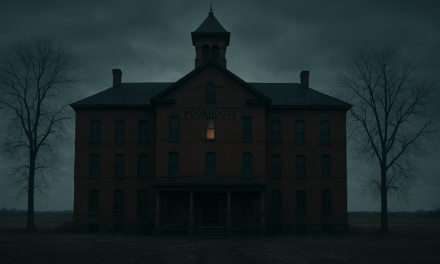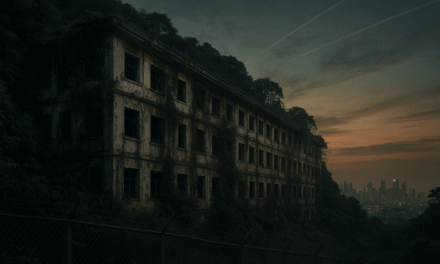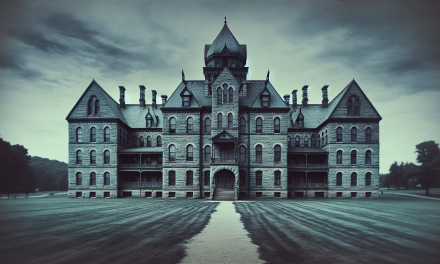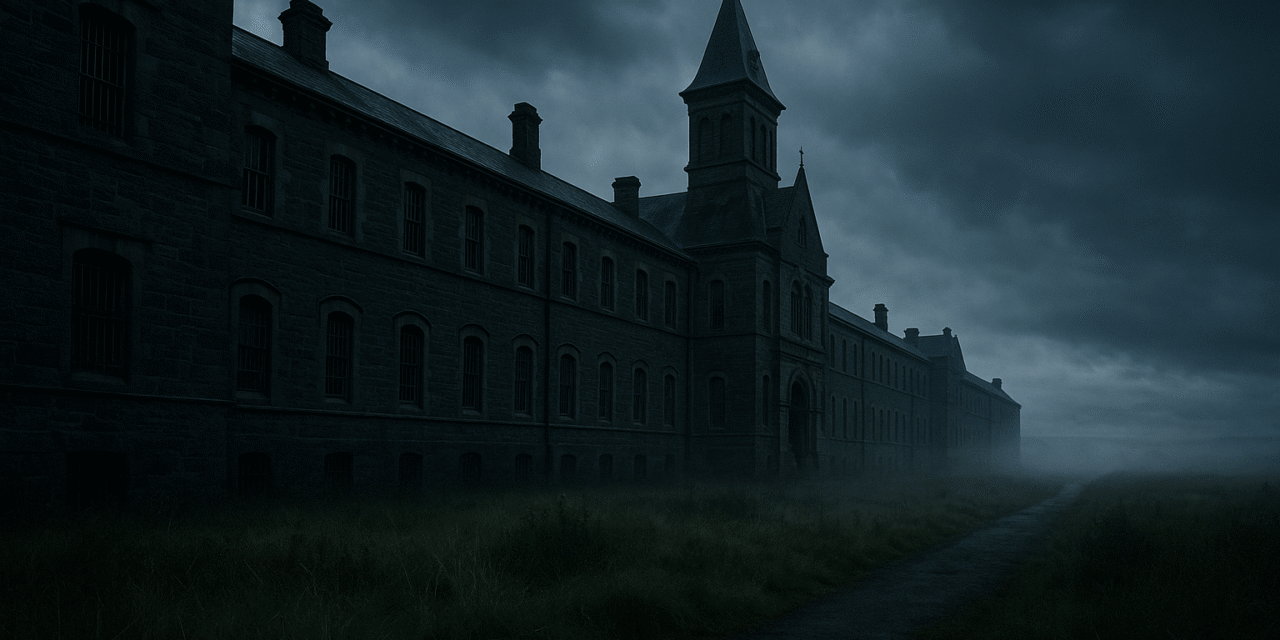
On the edge of Ararat in Victoria’s Western District, Aradale Mental Hospital stands as one of the largest surviving examples of Victorian-era psychiatric architecture in the Southern Hemisphere. Opened in 1867 according to the Kirkbride plan — a philosophy that held that beautiful, well-ventilated wings set in working farmland could heal troubled minds — Aradale was built with genuine therapeutic intent. What it became was something else. Over the next 130 years, the institution held thousands of patients committed under a definition of mental illness broad enough to include poverty, grief, and nonconformity. By the time it closed in 1998, approximately 13,000 people had died within its walls — more than twice the current population of the town outside its gates — buried in unmarked rows still visible as subtle depressions in the grass.
The scale of Aradale’s history resists easy summary. The buildings are enormous, the corridors seemingly endless, and the records document a century of treatments that shifted from the aspirational to the mechanically brutal as medical fashions changed. The adjacent J Ward held patients deemed criminally insane in cells barely large enough to stand in, under conditions closer to a prison than a hospital. Both structures were left largely intact when the facility closed, their long sightlines and institutional weight unchanged.
Ghost tours now run through those wards, and the accounts they generate are unusually consistent. Visitors describe directional voices in empty corridors, sudden temperature drops in J Ward’s cells, and the specific sensation in the female ward of being watched by someone standing just out of sight. With 13,000 dead interred on its grounds, Aradale’s reputation as Australia’s most haunted site carries a weight that no theatrical framing is needed to supply.
Story Source: www.aradale.com.au
Address: 13 Heath St, Ararat VIC 3377, Australia
Accessibility Rating: Booking Recommended
Google Map
What Others Have Experienced
George Fiddimont, the last Governor of the gaol attached to Aradale, suffered a fatal heart attack while leading a group down a stairwell in 1886. Today, tour guides and visitors consistently report hearing heavy footsteps and loud banging sounds on that same staircase — but when anyone goes to investigate, no one is there. The stairwell is now considered one of the most reliably active paranormal locations in the entire 70-building complex.
— from Follow Our Travels
Visitors walking past the former Superintendent’s office at Aradale report a sudden and unexplained bitter taste in their mouths — one that appears specifically at that location and fades as they move away. The office belonged to Dr. William L. Mullen, who died there in 1912 after swallowing cyanide. The sensation has been noted across multiple independent visitor accounts and paranormal investigations, with no ordinary explanation identified.
— from Most Haunted Australia
Nurse Kerry is among the most frequently reported presences at Aradale. Said to haunt the former women’s wards, she is heard rather than seen: witnesses describe the distinct click of women’s high heels moving through empty corridors, accompanied by the soft sound of a woman’s voice. On some occasions, figures in old-time nursing uniforms have been spotted and then watched as they walked directly into solid stone walls and disappeared.
— from Most Haunted Australia
Gary Webb, a career criminal held at Aradale under special legislation that prevented his release, is said to haunt the room where he was confined. Tour visitors describe being screamed at upon entering and, in some accounts, physically shoved toward the door. At the adjacent J Ward, other visitors have reported being bitten by unseen hands, hearing a slow rhythmic banging on walls — as though someone is striking the wall with their head — and slipping into trance-like states that lifted the moment they stepped outside.
— from Most Haunted Australia
Aradale has developed a documented reputation for causing electronic equipment to malfunction: cameras cut out, EMF meters spike without explanation, and recording devices pick up indistinct whispers and stifled screams in rooms confirmed empty before and after. Visitors independently describe phantom scents — cooking smells, antiseptic, and what some call the smell of decay — that appear briefly in specific locations and vanish without trace. Both phenomena recur consistently across ghost tour reports and paranormal investigation teams.
— from Most Haunted Australia