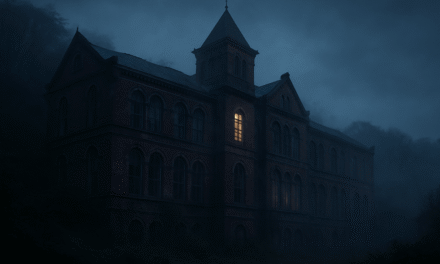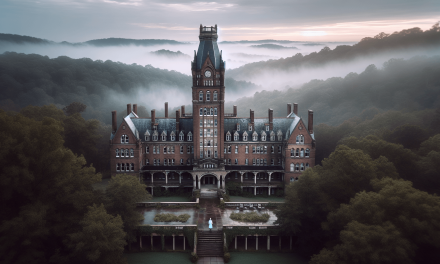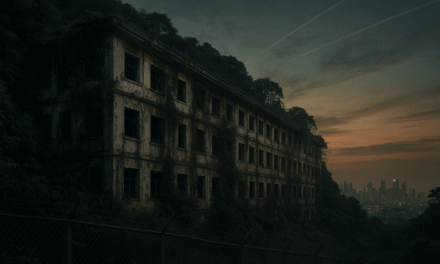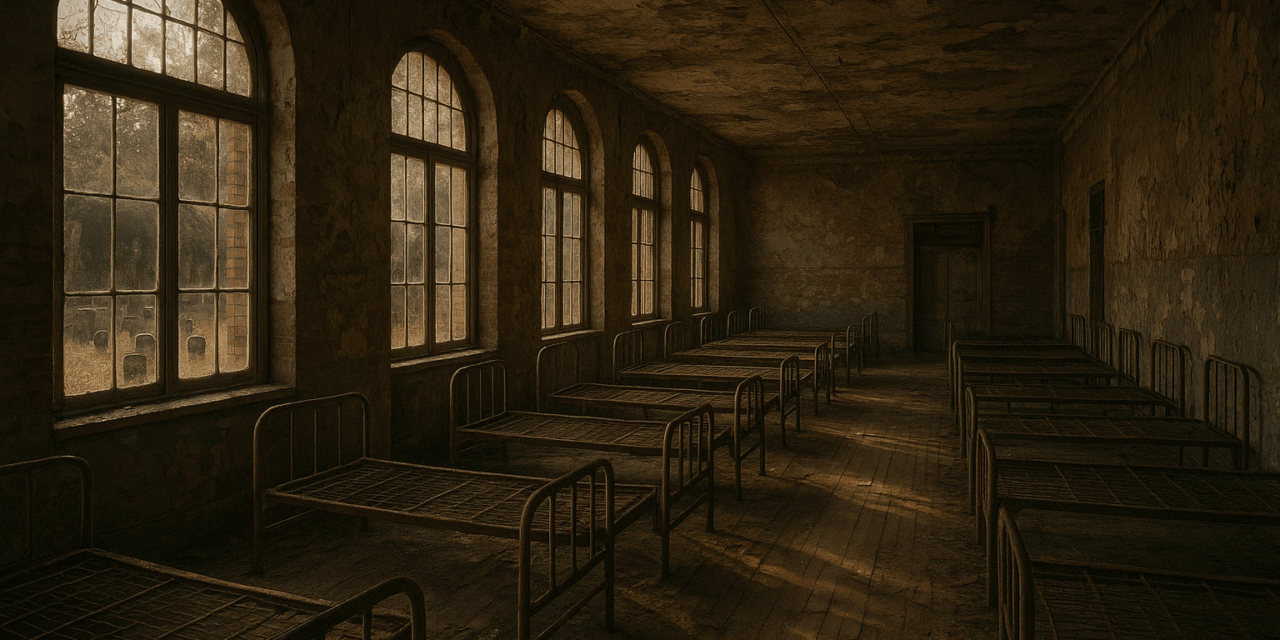
Central State Hospital in Milledgeville, Georgia, was founded in 1842 as the Georgia Lunatic Asylum, built on the reform-era conviction that the mentally ill deserved specialized care rather than jails and poorhouses. Within a century, that vision had collapsed under the weight of its own ambition. By the early 1960s, the campus held approximately 12,000 patients—making it the largest psychiatric institution in the United States—crammed into a facility that had never been designed for that scale. Wards built for fifty held two hundred. A single attendant might oversee hundreds of patients. People with epilepsy, intellectual disabilities, alcoholism, and depression were confined alongside the severely mentally ill, and many entered the gates and never left.
The suffering at Central State during its peak years was systematic and well-documented. Patients slept in hallways and attic spaces. Food was inadequate, heat unreliable, and treatment consisted largely of whatever somatic therapies were fashionable in a given decade—hydrotherapy, insulin coma, electroconvulsive shock without anesthesia. African American patients were housed in segregated wards that received fewer resources and harsher management throughout the Jim Crow era. The cemetery on the grounds holds approximately 25,000 burials, many marked only with numbered metal stakes rather than names. Volunteer organizations have spent years attempting to match numbers to identities. The effort is incomplete.
The deinstitutionalization movement emptied the campus over the following decades, leaving behind an enormous collection of Victorian brick and institutional concrete in various states of abandonment. Ghost accounts from security staff and investigators are numerous and consistent: footsteps in empty corridors, voices in vacant rooms, and in one former isolation building, a sensation of increasing psychological pressure the further inside one goes—as though the space has retained something of what it once held.
Story Source: dbhdd.georgia.gov
Address: 2450 Vinson Hwy, Milledgeville, GA 31062, USA
Accessibility Rating: Booking Required — Open to visitors but requires advance reservation, ticket purchase, or tour booking.
Google Map
What Others Have Experienced
Central State Hospital is less a building than an entire ghost town — nearly 200 structures spread across 2,000 acres outside Milledgeville. At its peak it held more than 13,000 patients, and an estimated 25,000 people are buried across its grounds, represented by roughly 2,000 numbered grave markers at Cedar Lane Cemetery. Visitors describe the scale of the abandonment as deeply disorienting in a way that photographs do not prepare you for.
— from The Line-Up
Visitors and former staff have reported disembodied voices in the empty wards, unexplained footsteps in corridors no one walks, and sudden cold spots in sealed rooms. Some describe seeing apparitions near the older buildings, while others have reported objects thrown at them from upper-floor windows while standing outside — a pattern noted by multiple separate accounts from the site.
— from A Night Among Ghosts
Those who have toured the grounds describe an experience as emotionally heavy as it is unsettling. One group of investigators noted an unusual tension between genuine curiosity and an almost overwhelming sadness — the sense that the suffering embedded in the site’s history was not entirely historical. For many, this emotional weight outlasts any specific paranormal encounter and stays with them long after leaving.
— from A Night Among Ghosts
The hospital’s paranormal reputation sits on a history that was brutal by any measure. A 1959 investigation found just 48 doctors — none licensed psychiatrists — overseeing thousands of patients. Treatments included electroshock therapy without sedation, insulin shock, lobotomies, ice-cold baths, and prolonged isolation. Some staff members had originally been patients hired directly out of the institution.
— from The Line-Up
A particular stillness settles over Cedar Lane Cemetery, where numbered metal markers stand for those buried without names or family to claim them. Thousands more remain in unmarked plots scattered across the wider grounds. Visitors consistently describe the burial area as the emotional centre of the site — the place where the scale of what happened here becomes impossible to process from a comfortable distance.
— from A Night Among Ghosts