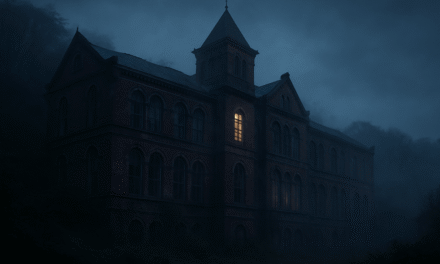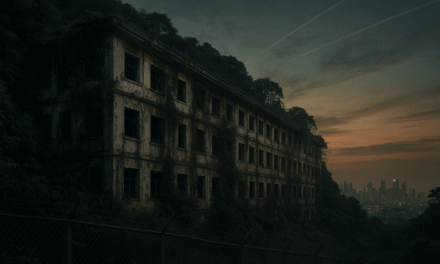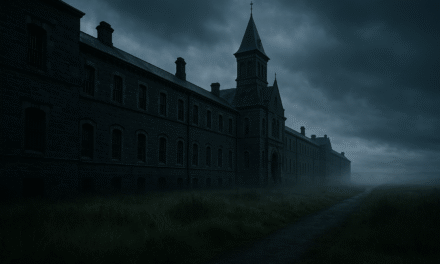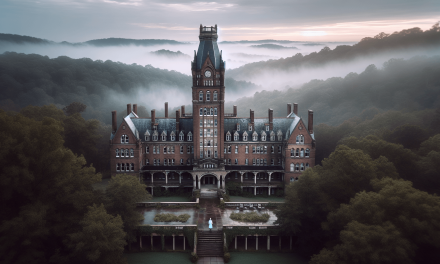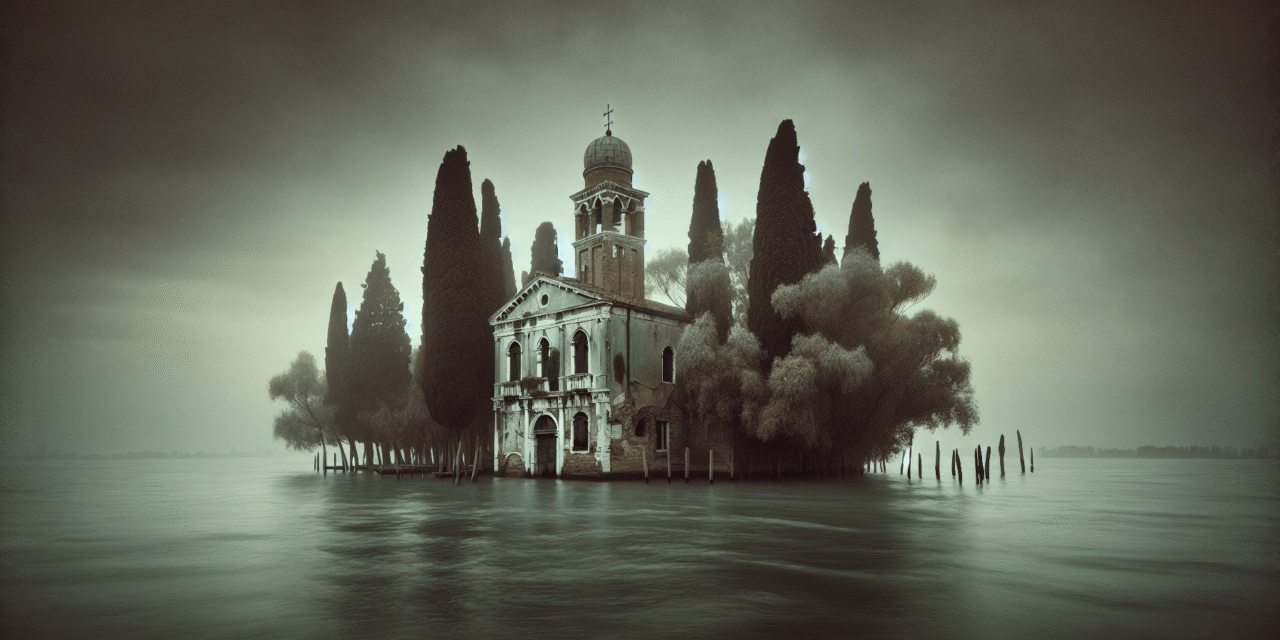
The water taxi cuts its engine two hundred meters from the shore and the driver offers no explanation. He simply stops. Across the olive-green water of the Venice Lagoon, a low, tree-choked island appears to be sinking into its own reflection — the campanile of an old church listing to one side, stone buildings dissolving back into the earth, no lights, no docks accepting visitors. The driver watches you watch the island, then turns the boat around. This is Poveglia. The being-turned-away is as close as almost anyone gets.
In 1776, the Venetian Republic established a permanent quarantine station on the island. Ships from the eastern Mediterranean were required to stop, offload sick passengers, and wait. Those who showed plague symptoms were landed and could not leave. Over the years that followed, the dead accumulated. Estimates drawn from historical records and archaeological surveys place the number buried on Poveglia — on twenty-two acres — between 100,000 and 160,000. The soil is not metaphorically saturated with death; significant portions of it are literally composed of human remains. Venetian fishermen have long avoided the waters around the island. Their nets sometimes came up with bones.
The quarantine station eventually closed. The island was abandoned. Today it is owned by the Italian government, officially shut, prohibition enforced by the carabinieri, signs posted on the water approaches. Unauthorized visits do occur and result in fines. In 2014 it was briefly offered for auction. Recent concession agreements may bring partial visitor access in the coming years. The campanile has been stabilized. For now, Poveglia remains a place you pass by water and observe from a distance.
Story Source: www.visitvenezia.eu
Address: Poveglia Island, Venice Lagoon, Venice, Italy
Accessibility Rating: No Public Access — Private property, active restricted site, or location no longer physically accessible to visitors.
Google Map
What Others Have Experienced
Poveglia has been effectively closed to tourists for years — no authorized tours dock there, no tickets exist, and landing is prohibited. In 2025 the island was formally leased under a 99-year agreement to a Venetian civic association for development as a locals-only park, ending even the rare special-permission access that film crews and researchers occasionally secured. For the story’s adventure travel audience, the island remains unreachable by any legal means.
— from CNN
The island’s prohibition has historically made it more compelling rather than less — an estimated 160,000 plague dead buried in its soil, a former mental asylum whose director reportedly conducted experimental procedures, and a complete absence of any authorized way to visit has made Poveglia one of the most discussed off-limits locations in the world. Those who have reached it illicitly describe arriving to find the buildings in advanced decay and a silence unlike anywhere else in the Venetian lagoon.
— from Walks of Italy
The Ghost Adventures television crew secured special government permission to film on Poveglia and described the experience as among the most distressing of any location they investigated. Their accounts of unexplained voices, physical sensations, and a pervasive oppressive atmosphere contributed substantially to the island’s global reputation, and the episode remains one of the most discussed in the show’s history.
— from Mysterious Adventures Tours
By boat, the closest most visitors can get to Poveglia is a view from the Venetian lagoon — the crumbling octagonal tower visible above the trees, the abandoned buildings along the waterfront, the overgrown gardens behind the perimeter wall. For many visitors to Venice, this distant view has become a form of destination in itself: something that can be seen but not reached, which given the island’s history feels entirely appropriate.
— from Venice Insider Guide
The island’s inaccessibility creates an unusual relationship between the site and its reputation — unlike most haunted locations, almost no body of contemporary visitor testimony exists to test the stories against. The accounts that do exist are exceptional (film crews with government permits, rare authorized researchers), meaning Poveglia’s reputation rests almost entirely on documented history rather than accumulated visitor experience.
— from Abandoned Photos