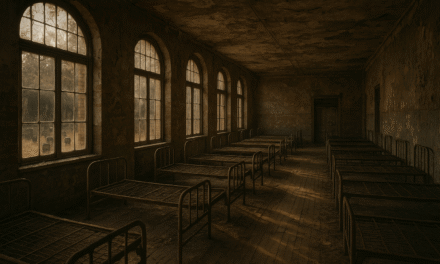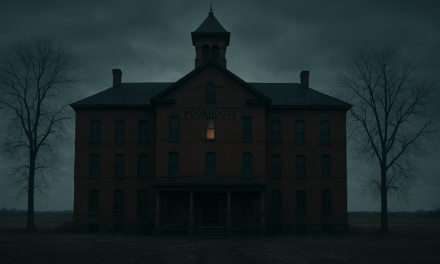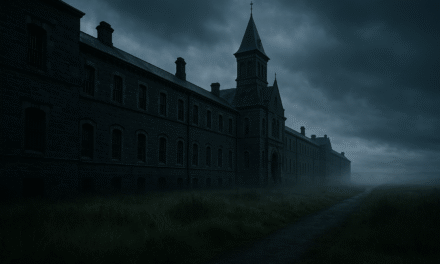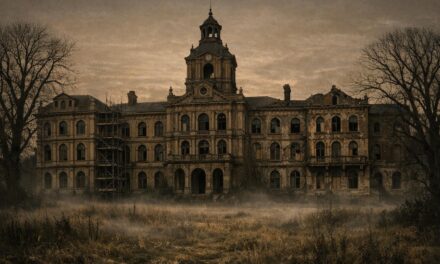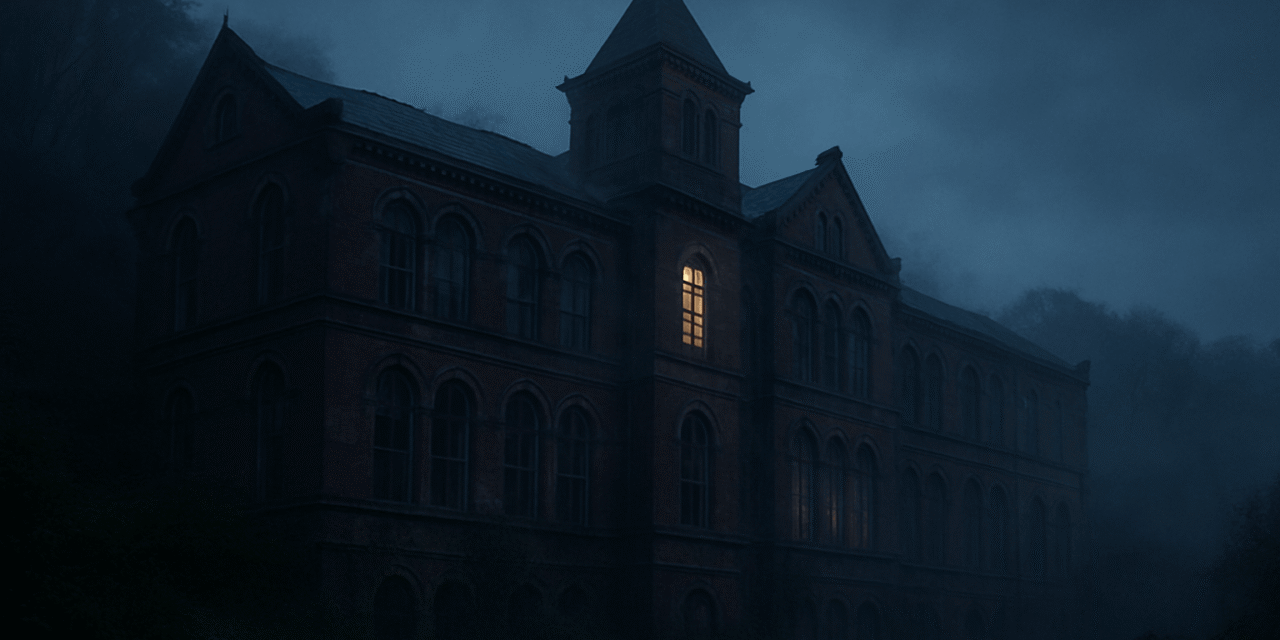
The building on the hill above Radford, Virginia has been many things — a Lutheran preparatory school, a psychiatric hospital, a place that people describe as never quite emptying out. St. Albans Sanatorium sits on elevated ground above downtown Radford in the western reaches of Virginia’s Blue Ridge region, large and brick and institutional in the particular way of late-Victorian public buildings: high ceilings, wide corridors, windows that admit considerably less light than they once did.
The institution opened in 1892 as a Lutheran college preparatory school for boys. Within a few decades it had been converted into a psychiatric hospital and sanatorium, serving patients for much of the twentieth century before eventually closing. The architecture of that transition — a school built to last, repurposed for confinement and treatment, carrying the marks of both purposes in its walls — gives the building a layered quality that visitors notice before they know the history.
St. Albans is now one of the most visited haunted sites in Virginia, operating as a venue for ghost tours and paranormal investigations. Television crews have documented the property repeatedly. What investigators consistently report is not a single dramatic event but a cumulative pressure: sounds without sources, cold corridors, a heaviness in the basement rooms that had other uses during the hospital years. The building gives the impression of a place that absorbed more than its walls were designed to hold.
Story Source: TV episode titled “St. Albans Sanatorium” — Ghost Asylum (Travel Channel, 2015)
Address: St. Albans Sanatorium, 231 West Main Street, Radford, VA 24141
Accessibility Rating: Booking Required — Open to visitors but requires advance reservation, ticket purchase, or tour booking.
Google Map
What Others Have Experienced
Upon entering the building, visitors describe an immediate and palpable heaviness in the air — something beyond the visible decay of peeling paint and graffiti — a sense of dread that settles before anything unexplained has even happened. The place seems to communicate its history through atmosphere alone.
— from Bloody Disgusting
During one early visit, an unseen force hurled a couch cushion out of a room and directly into a hallway the group had just walked through. Rather than driving them away, the incident deepened their interest in the site — a response that, in retrospect, the author came to see as part of the building’s pull.
— from Bloody Disgusting
The hydrotherapy room and the so-called suicide bathroom were so overwhelming — not with theatrical fright but with something harder to name — that a longtime paranormal investigator could not remain in either space. The discomfort was immediate and physical, not imagined.
— from Bloody Disgusting
During a haunted house rehearsal, a close friend who was acting in the production was scratched across the back by something unseen — an incident witnessed directly and without ambiguity. The scratch appeared immediately, and whatever caused it seemed, in the author’s words, angry.
— from Bloody Disgusting
Professional investigation teams who have visited St. Albans frequently leave with the same cluster of experiences: batteries that drain to zero within minutes of entering certain rooms, thermal camera footage of full-body apparitions, and physical sensations — scratches, sudden sharp chills — that appear with no logical source.
— from Paranormal Traveler