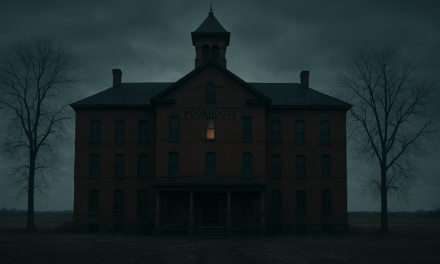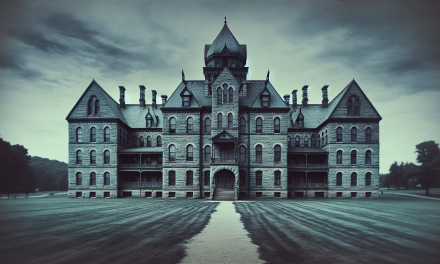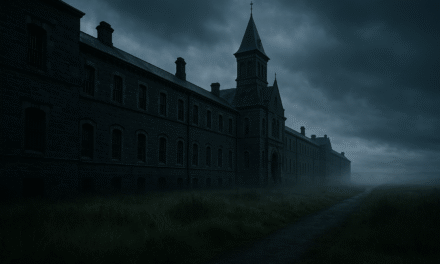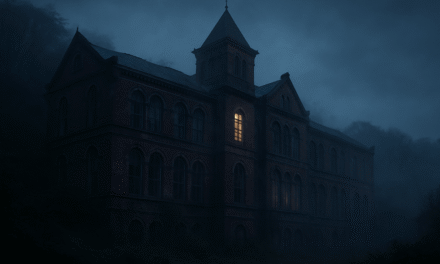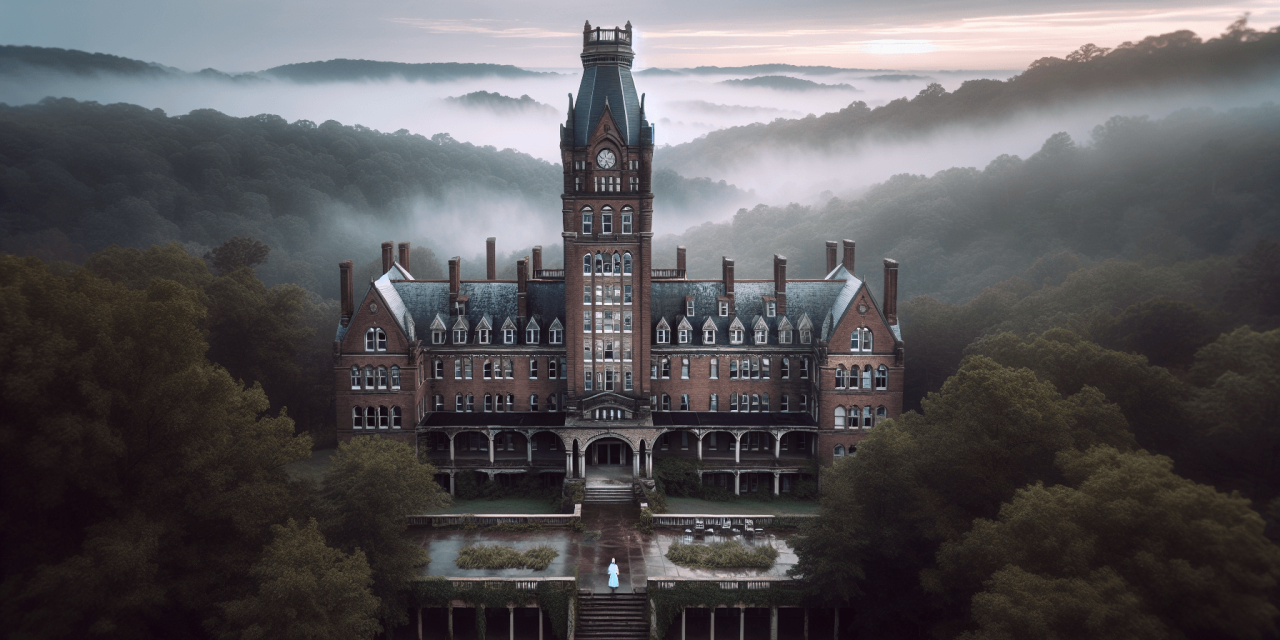
The driveway up Waverly Hill is longer than you expect. Dense Louisville woodland climbs with you until the sanatorium breaks the treeline — five stories of Gothic Revival brick, its arched windows like hollow eyes watching the road below. Built in the 1920s to contain a tuberculosis crisis the city could not control, it holds 180,000 square feet of corridors: operating theaters, patient wards, rooftop terraces where the dying were wheeled into direct sunlight as their prescribed cure. The building was full for a long time.
The feature most visitors ask about first is the body chute. A five-hundred-foot tunnel through the hillside, equipped with a motorized rail system, was built for fuel and supplies. When patient deaths mounted, it found a second use: moving bodies out of sight so patients still fighting to survive would not watch a hearse arrive at the front entrance each day. Staff called it the Death Tunnel. The name stuck. On the top floor, Room 502 — originally a nurses’ washroom — carries circulating accounts of two nurse suicides. Researchers have found no documentation of either death in the historical record.
The epidemic ended. Waverly Hills closed. The building remained on the hill — listed on the National Register of Historic Places, thirty minutes from downtown Louisville — silent and very large. Paranormal investigators have logged footsteps inside the Death Tunnel, voices without source, thermal recordings of movement in corridors confirmed physically sealed. Visitors report disorientation in Room 502. Historical daytime tours walk the corridors and rooftop solarium; evening paranormal tours take smaller groups with investigation equipment. What the building holds is a conclusion each visitor reaches independently.
Story Source: thewaverlyhillssanatorium.com
Address: 4400 Paralee Dr, Louisville, KY 40272
Accessibility Rating: Booking Required — Open to visitors but requires advance reservation, ticket purchase, or tour booking.
Google Map
What Others Have Experienced
The five-story building sits on a forested hill above Louisville and is most striking on approach — the structure visible through the trees before arrival creates an expectation that the interior, with its 400-foot-long central corridor stretching into darkness, largely fulfills. Visitors who take both the historical day tour and an evening paranormal tour describe each as revealing different dimensions of the same building.
— from Mysterious Adventures Tours
Room 502 on the fifth floor generates a disproportionate number of visitor accounts — where a nurse was reportedly found hanged in 1932 and another is said to have died by suicide under disputed circumstances. Visitors describe an oppressive quality in the room attributed partly to the barred window overlooking the grounds where thousands of patients were buried, and partly to something less easily explained.
— from US Ghost Adventures
The Body Chute — a 500-foot tunnel used to remove deceased patients without others in the wards seeing the constant stream of bodies — is consistently cited as the most psychologically affecting part of any Waverly Hills tour. The tunnel’s length, slope, and darkness combine with knowledge of its original function to produce what multiple visitors describe as the single most unsettling thing they have encountered at any haunted site.
— from Haunt Scout
The overnight investigation generates the most detailed paranormal accounts from Waverly visitors. Reports include disembodied voices in specific wards, equipment anomalies in the operating theater, and full-body apparitions in the central corridor — with the consistency of location-specific reports across unrelated overnight visitors noted by regular investigators as the site’s most significant characteristic.
— from TripAdvisor
Visitors who arrive having watched Waverly Hills on television consistently describe the on-site experience as more affecting than the footage suggests — cameras cannot convey the smell of the building, the sensation of the air in the wards, or the specific quality of silence that a structure of this size and history produces. Those details, visitors note, are what distinguish the experience from anything a screen can provide.
— from Haunted in America