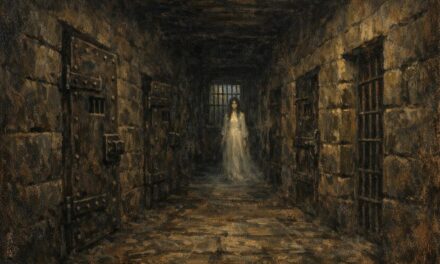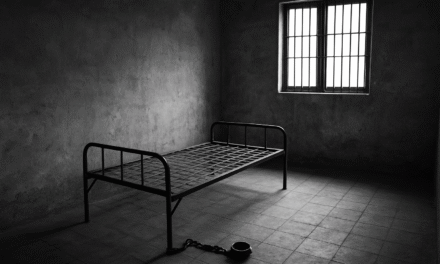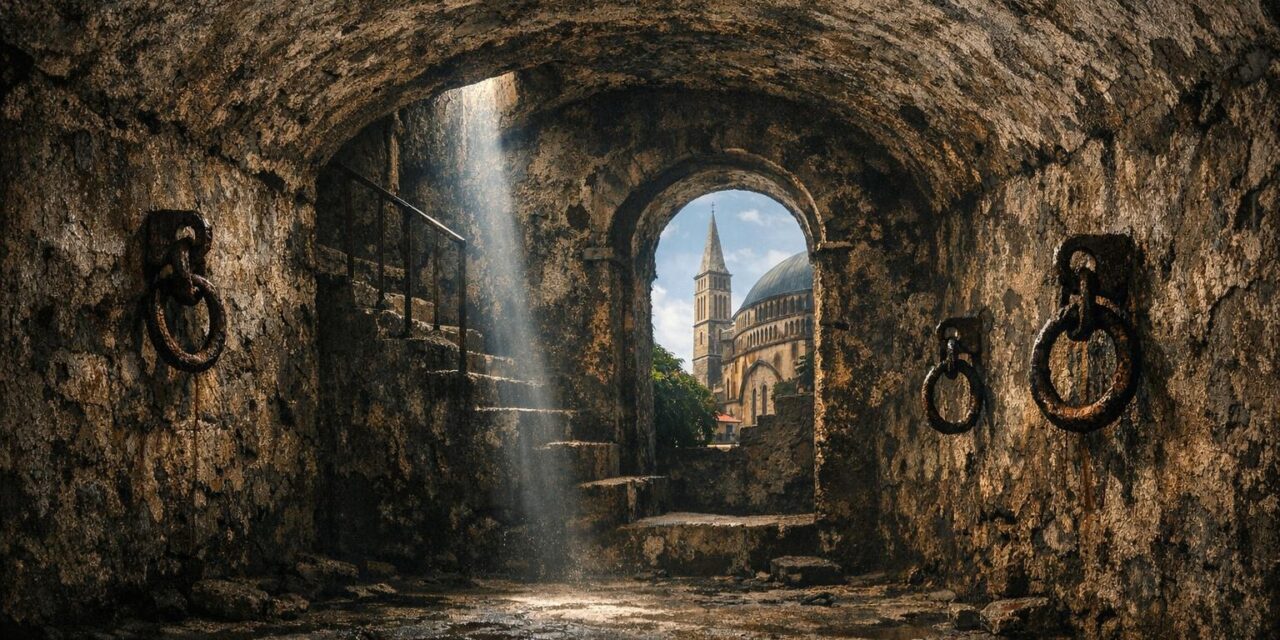
The stairwell takes you down faster than you expected. One moment you are in the cathedral — high windows, carved wood, the altar positioned where the whipping post stood — and then you are in the cells, and the ceiling is too low and the walls are coral stone and the iron rings are bolted into them the same way they were bolted in during the nineteenth century when this was the holding chamber of East Africa’s largest slave market. The air is different here. Cooler than the street, heavier than the church, in the way that enclosed spaces are always heavier when what has been enclosed in them was not weather.
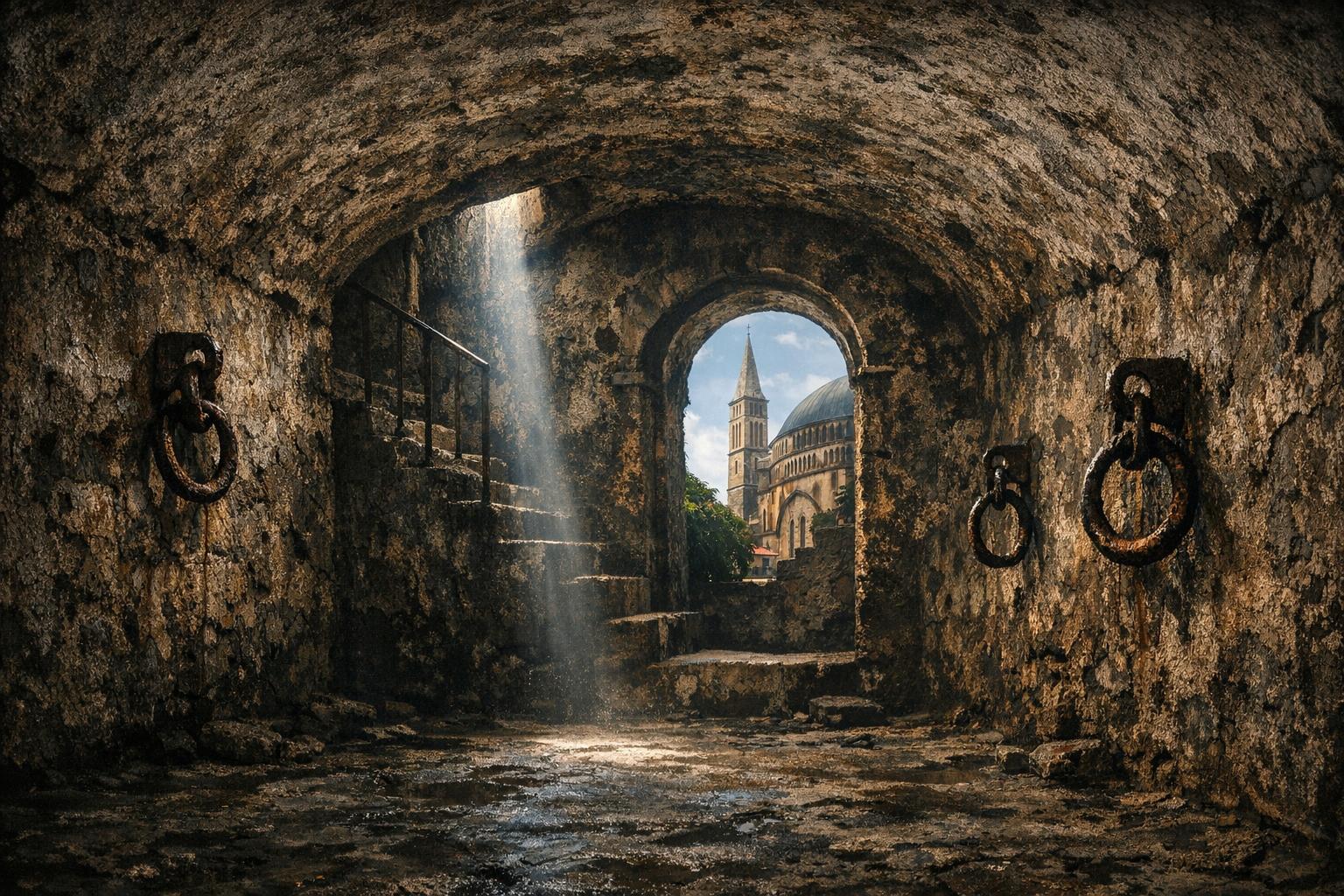
Arab traders ran the market. Dhow ships brought enslaved people from the mainland — packed so tightly that many did not survive the crossing, thrown overboard when the passage went badly. Those who arrived were held in these rooms with the low ceiling and the iron rings while buyers came and went above. The British shut it down in 1873. They built the cathedral on the site the following year, deliberately, placing consecrated ground where the market had been and the altar exactly where the whipping post had stood. They left the cells intact beneath it.
You can feel the weight of the decision to leave them. Not the weight of the history — that word is too abstract for what this room does to you — but the specific, physical weight of a low ceiling and iron in the wall and the knowledge that these are the same walls, the same iron, the same compressed space. Most visitors do not stay long. This is usually described as understandable. It is more than that. The cells are still exactly what they always were, and being inside them makes that impossible to maintain at a comfortable distance.
Story Source: seeingthissphere.wordpress.com
Address: Mnazi Mmoja, Stone Town, Zanzibar City 71103, Tanzania
Accessibility Rating: Open to All — Freely accessible to the public with no advance requirement. Includes hotels, restaurants, bars, and public historic sites where visitors may walk in without prior booking.
Google Map
What Others Have Experienced
The visit began at a memorial where the original shackles used to chain enslaved people together were still present and visible, making the history immediate and hard to look away from. Moving from the memorial into the underground cells and then up into the cathedral built deliberately on the same ground, the whole site felt like a deliberate act of witness.
— from TripAdvisor
The museum was described as deeply somber, the exhibits tracing the mechanics of the East African slave trade in ways that left visitors quiet long after leaving. The underground cells, cramped and low-ceilinged, made the scale of suffering concrete in a way no information board alone could achieve.
— from TripAdvisor
A history enthusiast who had specifically sought out this site described the stone chambers as the most emotionally significant stop on the entire island. The physical scale — the crushed ceiling height, the tiny slit windows — made the abstract history suddenly concrete in a way no amount of prior reading had prepared them for.
— from TripAdvisor
A family visitor described leaving with a feeling that was difficult to name — not quite grief, not quite anger, but something heavy and persistent. The combination of the exhibition’s depth and the physical reality of the cells made it feel less like a museum visit and more like a reckoning.
— from TripAdvisor
One traveler found that the brevity of the visit worked against it — a few panels, a few rooms, a few minutes in the cells — but the cells themselves needed no elaboration. The dimensions, the darkness, the low stone overhead said everything the panels were struggling to put into words.
— from TripAdvisor