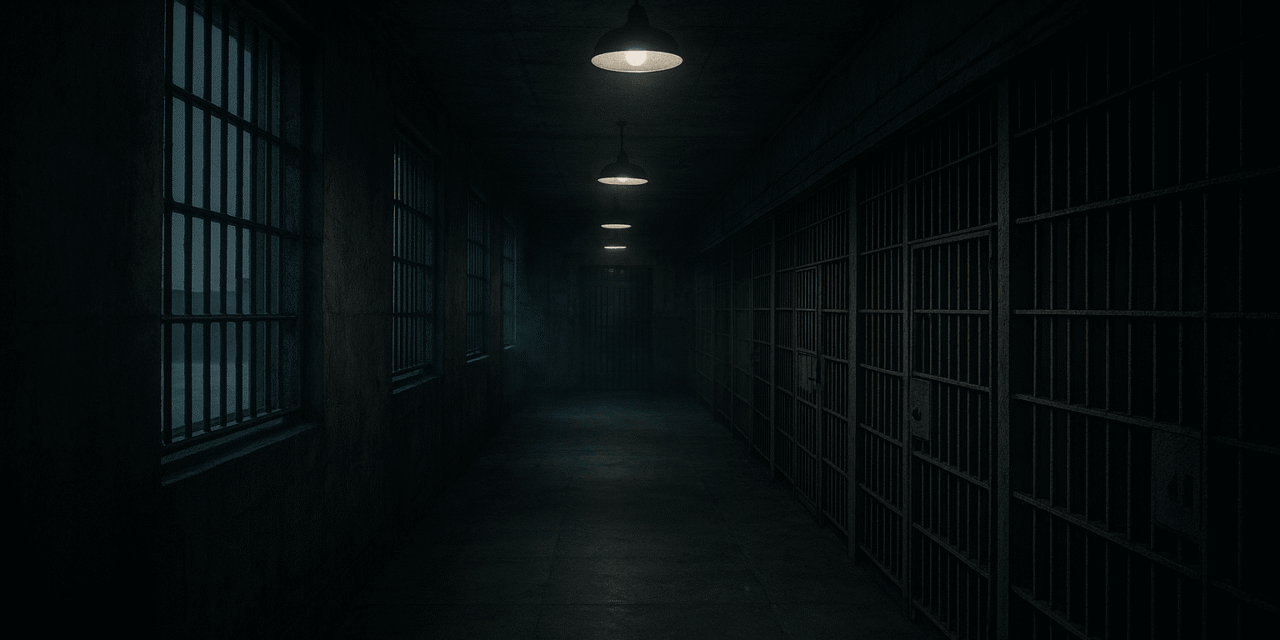
The ferry from Fisherman’s Wharf takes twelve minutes to cross San Francisco Bay to Alcatraz, and by the time you arrive, the city has receded into something theoretical. The federal penitentiary that operated here from 1934 to 1963 occupies a mass of rock that made escape nearly impossible—the cold water, the distance, and something the island itself seemed to enforce. What the National Park Service now preserves is the cell house, the isolation block, and a silence that has never quite returned to ordinary.
Al Capone was among the first famous inmates when the prison opened in 1934, and he played banjo in the prison band during his years there. In the decades since the prison closed, staff and visitors have reported hearing music in the shower block where the band once practiced—a sound from a confirmed empty room. The isolation cells of D Block are where the more specific reports cluster. Cell 14-D has become part of the institutional knowledge of the people who work the island: a cold exceeding the ambient temperature, a pressure that visitors describe in consistent terms. Park rangers don’t enter it alone. The island’s history with Native American traditions, which long regarded it as a place of spiritual weight, extends centuries before the first prison wall was built.
Night tours run after the day crowds have taken the last ferry back to the city. The guides treat the paranormal history with the same specificity as the institutional record. Whether you hear the banjo or feel the cold of 14-D or simply stand in the yard looking at San Francisco through chain-link, the island delivers. Something remains on the rock.
Story Source: www.legendsofamerica.com
Address: Alcatraz Island, San Francisco, CA 94133
Accessibility Rating: Booking Required — Open to visitors but requires advance reservation, ticket purchase, or tour booking.
Google Map
What Others Have Experienced
During a three-week research stay in D-Block, a team member woke in the mugshot room to what sounded like a crowd gathering and piano music from the room above. He refused to sleep there again.
— from CBS San Francisco
Cell 14-D in D-Block is reported to run nearly 20 degrees colder than surrounding cells, with no structural explanation. Psychics and visitors describe intense, emotionally charged impressions in the corners where punished prisoners once crouched.
— from Legends of America
Officer Roy McGuire, who worked at Alcatraz in the late 1950s, reported hearing crying, moaning, and arguments coming from empty cells during night rounds. The sounds always stopped when investigated but never went away.
— from Ghost City Tours
Officer George DeVincenzi followed clear banjo music through the cellhouse one night, only to have it stop the moment he opened the shower room door — the room was empty. The sound is attributed to Al Capone, who played banjo in that space during his imprisonment.
— from Ghost City Tours
Multiple tourists and staff report seeing a figure in period prison clothes standing inside C-Block cells; the figure vanishes when looked at directly. Unconnected visitors have given remarkably consistent descriptions of the same appearance.
— from Ghost City Tours