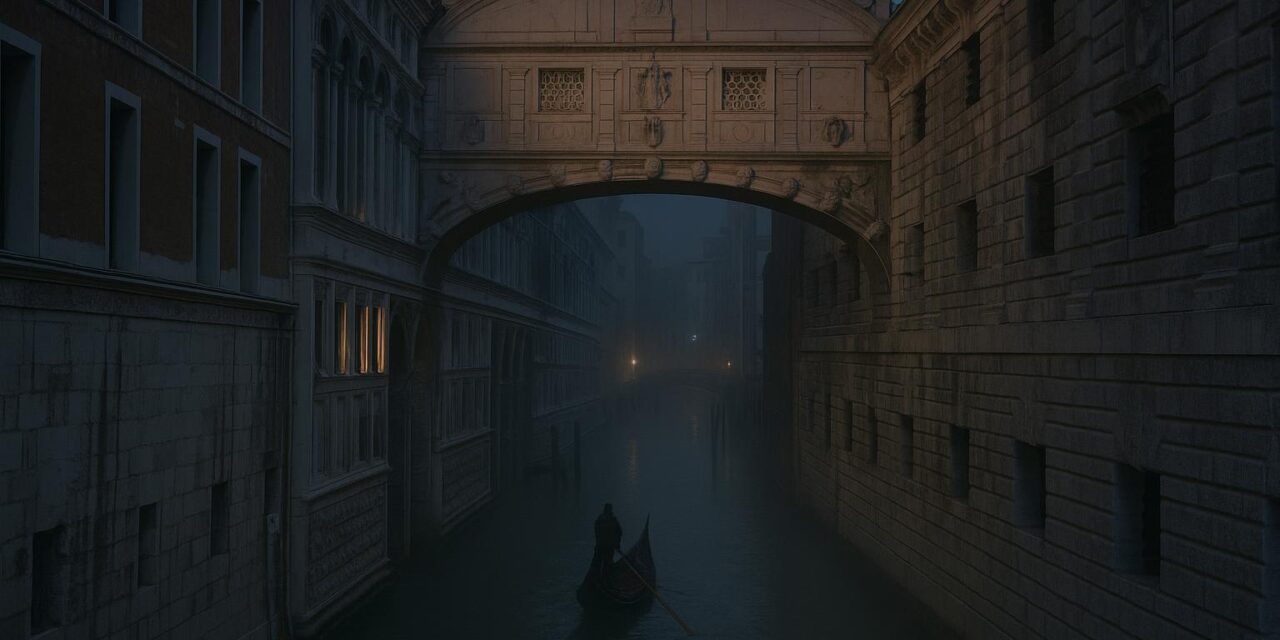
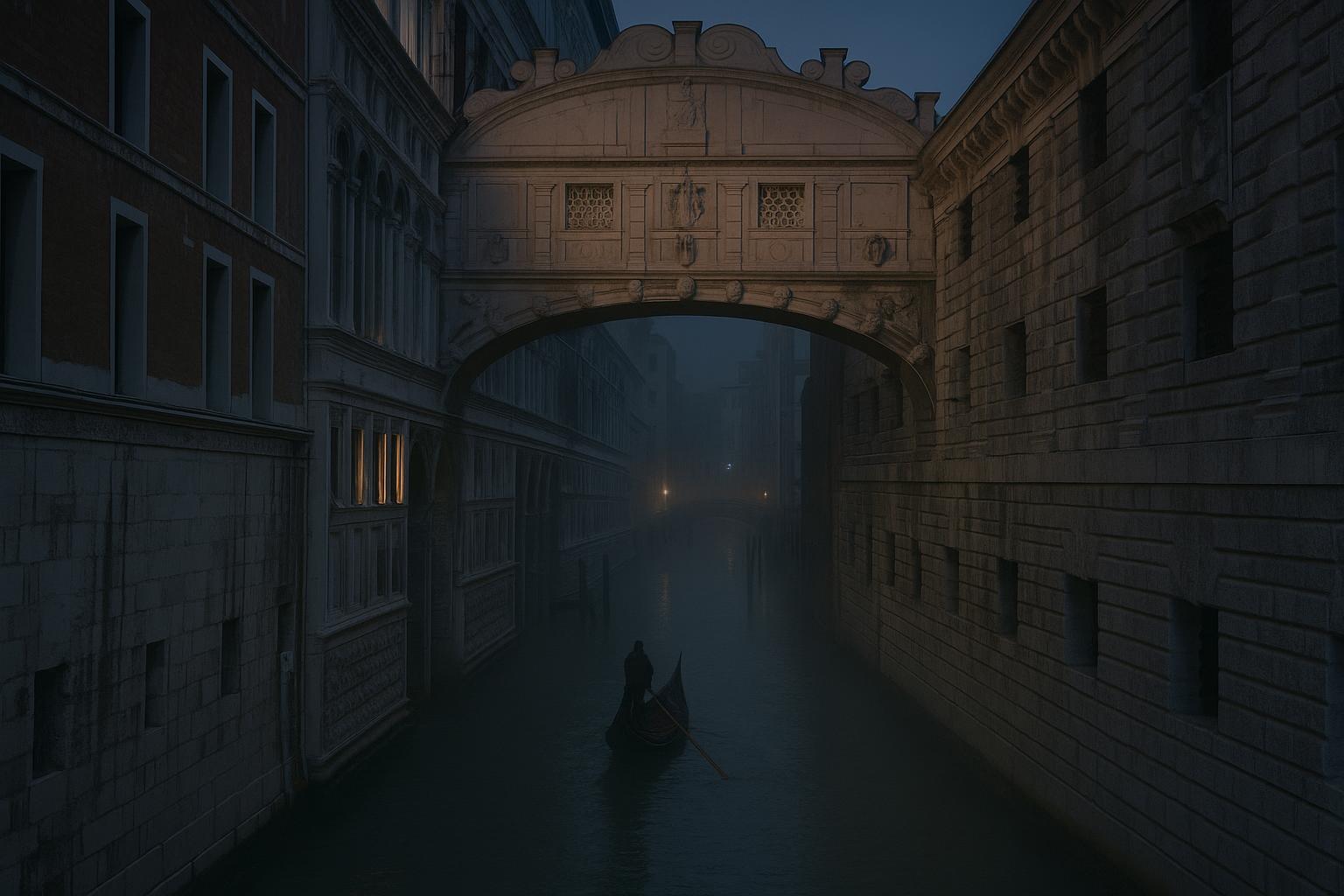
There is a bridge in Venice that everyone photographs and almost no one enters. The Bridge of Sighs is white marble, enclosed, crossing the Rio di Palazzo between the Doge’s Palace and the New Prison. Its stone-grilled windows offered condemned prisoners a last view of the lagoon before the cell door closed. The name came later, from people who understood what the crossing meant. It was not a passage between two buildings. It was a crossing between two states of being.
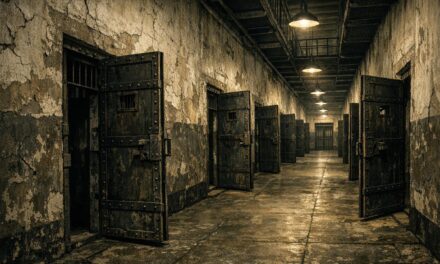
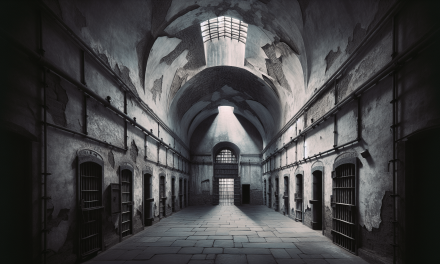
Below the gilded council chambers, the original prison cells remain accessible: stone walls, original dimensions, original dark. The lower cells sit at or below water level, stone saturated by centuries of Venetian canal water. The contrast between magnificence above and confinement below describes exactly how the Republic of Venice understood power. In the corridors and the cells and on the bridge itself, visitors report whispers distinct from ambient museum noise — sounds at the edge of comprehension that nearly resolve into words before falling silent — and cold that arrives without meteorological cause, in spaces that affect visitors with no prior knowledge of the building’s reputation.
The Doge’s Palace at Palazzo Ducale, San Marco 1, is open to visitors year-round. The full tour includes both the state rooms and the prison section. From the Ponte della Paglia outside, tourists photograph the bridge and move on. The traveler who enters it — who crosses as the condemned crossed — finds what the photograph cannot show: stone grilles, filtered canal light, cold that has no current explanation, and the question the bridge has been asking for centuries.
Story Source: palazzoducale.visitmuve.it
Address: Palazzo Ducale, San Marco 1, 30124 Venice, Italy
Accessibility Rating: Booking Required — Open to visitors but requires advance reservation, ticket purchase, or tour booking.
Google Map
What Others Have Experienced
The Bridge of Sighs, connecting the interrogation rooms of the Doge’s Palace to the New Prison, takes its name from the sighs prisoners were said to emit as they caught their last glimpse of Venice through its stone-grille windows before descending to their cells. Visitors crossing the bridge describe an immediate shift in atmosphere — from the palace’s ornate grandeur to something altogether more constricted and airless, a transition that happens within a few steps.
— from doge-palace-tickets.com
The Pozzi, or Wells prisons, occupied the ground floor of the palace and were partially flooded during high water — cold, dark cells carved from stone in which prisoners were sealed with no natural light or ventilation. One travel writer described the cold gray walls and the darkness within as leaving visitors with an eerie feeling that is not entirely explained by the mere fact of enclosure, noting that the space feels inhabited by more than its architecture.
— from Travel Letter
The Piombi, or Lead Roof cells in the palace attic, were named for the lead sheets above them that made them suffocating in summer and freezing in winter — and are famous as the prison Giacomo Casanova escaped in 1756 by drilling a hole through the ceiling over months. Visitors who access the Piombi through the Secret Itineraries tour describe the confined attic space as genuinely claustrophobic, and the knowledge of Casanova’s escape as making the imprisonment feel even more viscerally real.
— from doge-palace-tickets.com
A dedicated torture chamber existed within the palace specifically to inflict pain, with screams deliberately audible to other prisoners in adjacent cells to break the will of those awaiting interrogation. The Doge’s Palace Mysteries and Secrets tour brings visitors into the inquisitors’ interrogation rooms and the torture space itself, and multiple visitors describe the guided experience as significantly more unsettling than the main palace tour — precisely because the information provided is specific and documented rather than speculative.
— from Travel Letter
One TripAdvisor reviewer described the palace and its hidden prison sections as a place whose ghosts and stories could fill entire volumes, adding that standing inside the actual cells where generations of political prisoners lived and died left them feeling that the splendor of the public-facing rooms above made the cruelty below somehow even more pronounced. The contrast between the gold-gilded state chambers and the dark stone cells directly beneath them is described by multiple visitors as the most haunting thing about the Doge’s Palace.
— from TripAdvisor