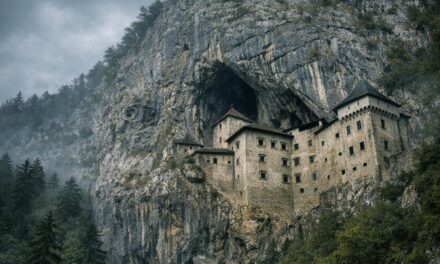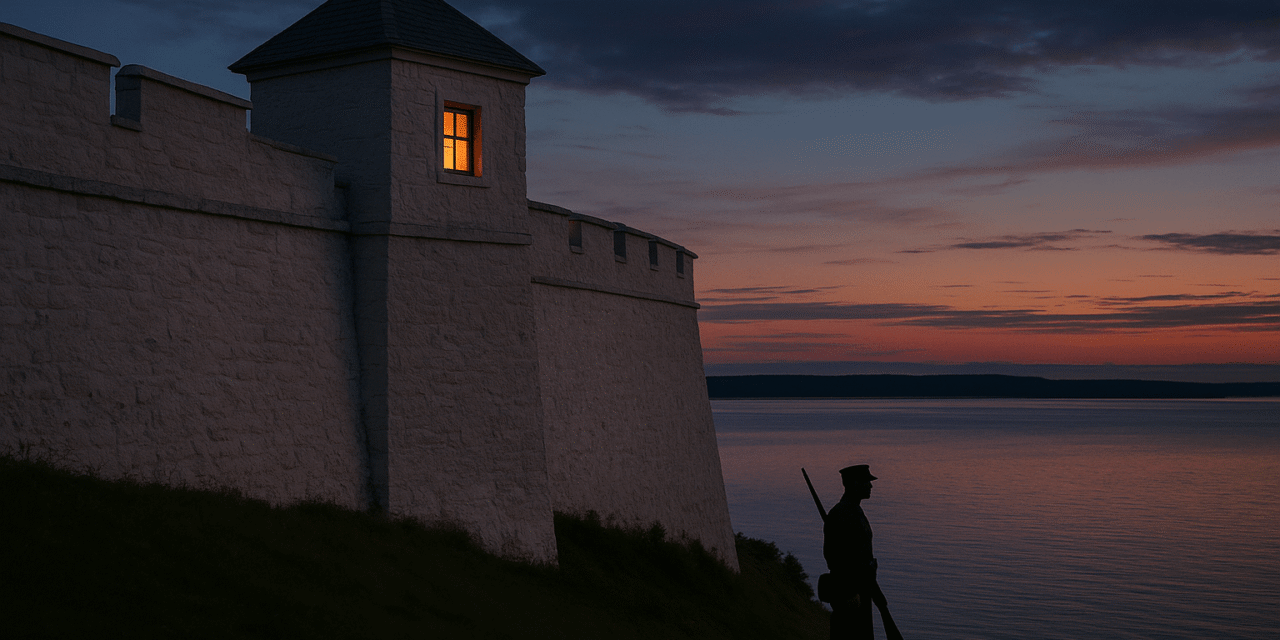
There are no cars on Mackinac Island. Visitors arrive by ferry, move by bicycle or horse-drawn carriage, and find a place that has decided to remain in an extended nineteenth century. Above the small Victorian town, on a limestone bluff 150 feet above the harbor, sits Fort Mackinac — Michigan’s oldest fort, its white walls clean against the sky, its cannons aimed at a threat that has not materialized in over two hundred years. The haunting here is not the haunting of a forgotten place. It is the haunting of a place remembered perhaps too carefully.
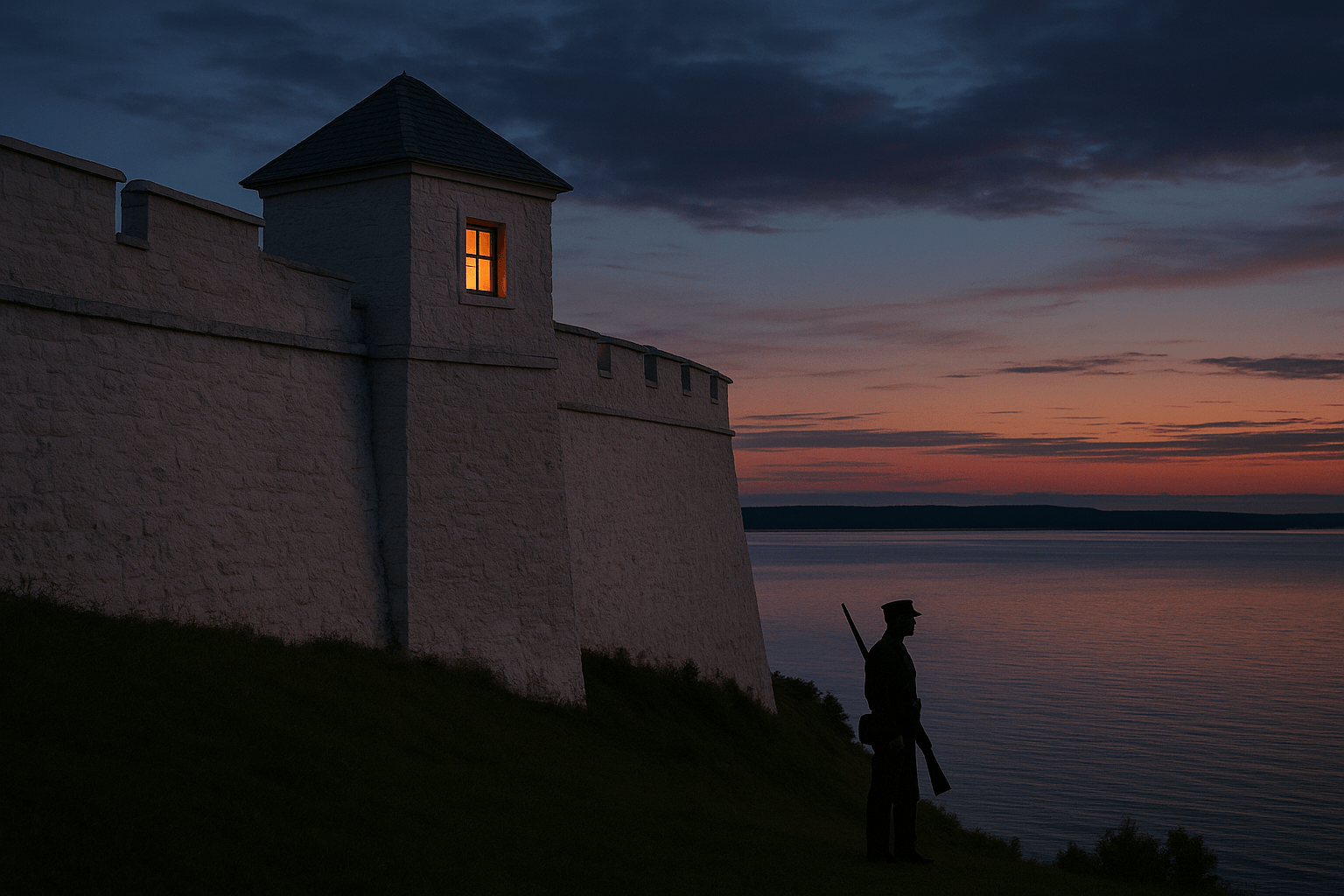
The British built Fort Mackinac in 1780 to command the Straits of Mackinac, the most strategically vital waterway in the interior of North America. They lost it under the Jay Treaty in 1796, recaptured it in 1812 before Americans even knew war had been declared, and lost it again under the Treaty of Ghent in 1815. The fort then served as a Civil War prison for Confederate officers before its decommission in 1895. Each change of hands left soldiers who had invested themselves in the place and been compelled to march away under terms that felt like defeat. The colonial soldiers, as the accounts consistently note, never truly left.
What they left behind comes in three forms: phantom footsteps — measured, purposeful, walking routes in empty barracks; spectral troops glimpsed at the parade ground’s edges at dusk; and ghostly cries drifting across the bluff in the dark. Today Fort Mackinac is operated by Mackinac State Historic Parks and draws visitors all summer. Most leave with photographs of the harbor. A smaller number leave with something less easy to explain.
Story Source: www.mackinacparks.com
Address: Fort Mackinac, Mackinac Island, MI 49757
Accessibility Rating: Booking Required — Open to visitors but requires advance reservation, ticket purchase, or tour booking.
Google Map
What Others Have Experienced
At the Fort Mackinac Post Cemetery, an unidentified woman has been seen weeping over the graves of children buried in the back corner of the grounds — believed to be the apparition of a nineteenth-century mother who watched her children die of illness and has never stopped grieving. The sound of horse hooves approaching on the road near the cemetery has also been reported independently by multiple witnesses, though no animal is ever found to account for it.
— from 99.1 WFMK
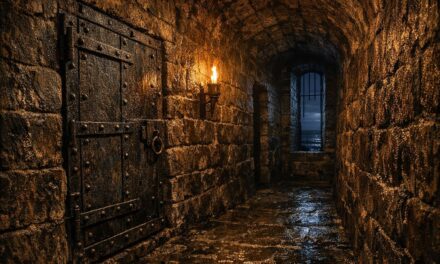
In the Guard House — the fort’s original jail where some captives died — cold spots appear suddenly on sweltering summer days without any breeze or ventilation source to explain them, noted by multiple visitors entering from the summer heat outside. Photographic anomalies have also been reported by visitors who later find unexpected images in their photographs that were not visible to them at the time the pictures were taken.
— from 99.1 WFMK
From Hills’ Quarters, where children of the Cowles family slowly died in the early 1800s, the cries and wailing of sick infants have been heard by visitors and staff who confirm the space is completely empty. The apparition of a woman believed to be Mrs. Cowles herself has been reported both inside the Quarters and at the post cemetery, where she is thought to still be mourning the children she lost and could not save.
— from 99.1 WFMK
The fort’s hospital carries an immediate atmosphere visitors describe as a combination of overwhelming sadness and the smell of death upon entering, independent of any prior knowledge about the building’s history. Some visitors who photographed the hospital space later discovered images of severed arms and legs in their pictures — an anomaly reported by multiple unconnected individuals and attributed to a particularly active poltergeist-like presence in the building.
— from 99.1 WFMK
Along the Rifle Range Trail between Fort Mackinac and Fort Holmes, visitors have experienced an unseen entity stepping on the backs of their shoes and pulling them loose, causing repeated stumbles on a flat and easy path. Others describe being followed by a shadow figure and seeing the full apparition of a man in a Revolutionary War-era uniform moving along the trail before vanishing without transition.
— from 99.1 WFMK