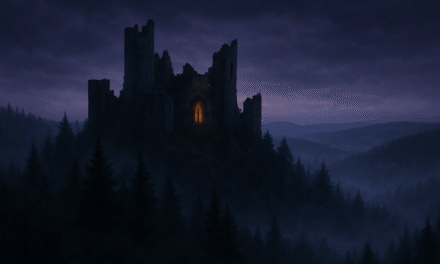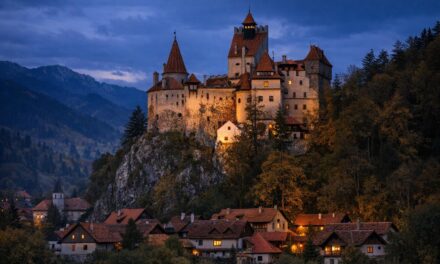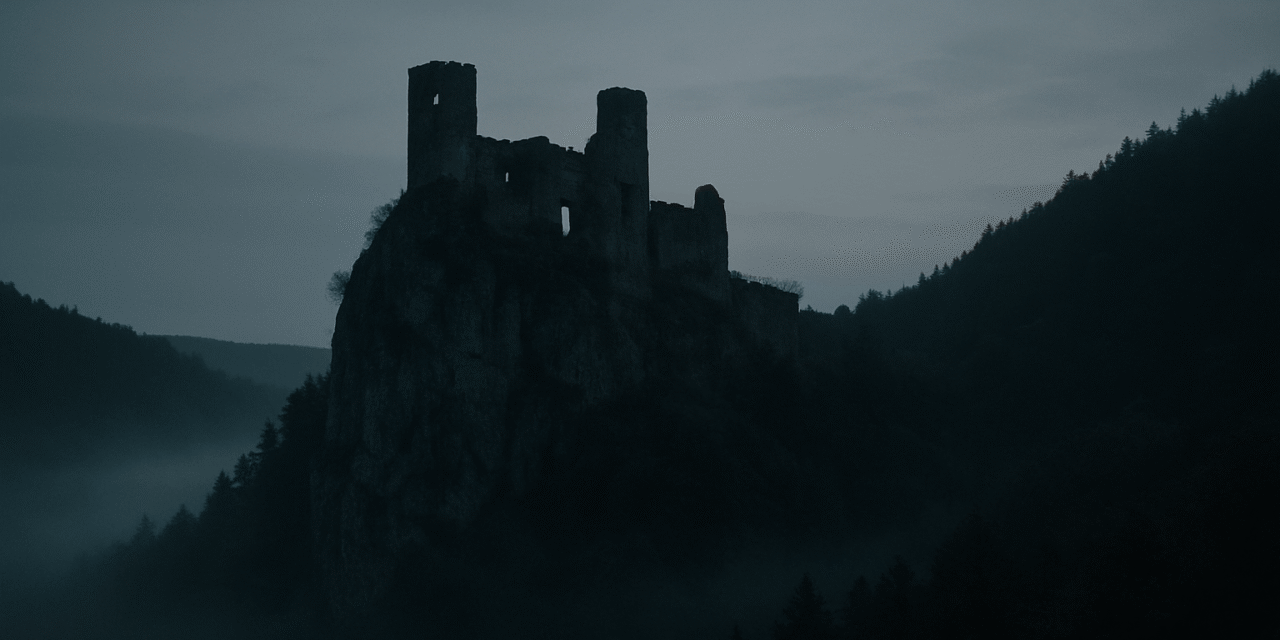
The ruins of Čachtice Castle cling to a limestone ridge in Slovakia’s Little Carpathian mountains, visible from the village below as a jagged silhouette against the open sky. The towers are roofless. The dungeons are collapsed and overgrown. And yet people come — hiking the wooded trail from the village of Čachtice, drawn by a story that has refused to die for more than four centuries.
Elizabeth Báthory was born in 1560 into one of the most powerful noble families in the Kingdom of Hungary. Čachtice came to her as a wedding gift upon her marriage to Ferenc Nádasdy in 1575. For years, her rank protected her while women and girls disappeared from the surrounding villages — common-born victims whose absence raised no alarm. When daughters of minor nobility began to vanish in late 1609, Palatine György Thurzó moved against her. He led a raid on the castle in December 1610. The trial that followed drew testimony from more than three hundred witnesses. Four servants were convicted and executed. Báthory herself, shielded by noble blood from criminal trial, was sealed into a room within her own castle and remained there for three and a half years until her death.
The castle declined after her death — damaged in the Rákóczi uprising of the early 18th century and never rebuilt. Visitors today describe not sudden alarm but something more deliberate: a sense of sustained, patient attention directed from within the stone. It is worth noting that the most theatrical element of Báthory’s legend, the bathing in blood to preserve youth, appears nowhere in the 1611 trial records. It entered her mythology more than a century after her death.
Story Source: TV episode titled “Elizabeth Bathory: Mirror, Mirror” — Lore (Amazon Prime Video, 2018)
Address: Cachtice Castle, Cachtice, Slovakia
Accessibility Rating: Open to All — Freely accessible to the public with no advance requirement. Includes hotels, restaurants, bars, and public historic sites where visitors may walk in without prior booking.
Google Map
What Others Have Experienced
A paranormal investigator who visited the castle ruins described stepping into crumbling stone corridors open to the sky and feeling a palpable shift in atmosphere as she descended below ground level. During a nighttime investigation she reported encountering shadow figures and disembodied voices that had no clear source within the ruins.
— from Amy’s Crypt
Visitors walking the exposed chambers described the wind moving through broken windows and roofless rooms in a way that created an unsettling sensation of not being alone. Some reported the feeling of being watched from the tower where Elizabeth Báthory was imprisoned and died, even when no one else was visible nearby.
— from The Abandoned World
Multiple visitors have reported sightings they describe as shadow figures and full-body apparitions — sometimes appearing as young girls crying — in the area surrounding the dungeon beneath the castle. The ghost of Báthory herself is among the most frequently reported, often described as a faceless female form near the ruins of the tower.
— from Amy’s Crypt
One travel blogger who made the hike to the summit described standing in the castle grounds at dusk as one of the most quietly unnerving experiences of their trip to Slovakia. The combination of the remote hilltop location, the views over the valley below, and the knowledge of what had allegedly occurred there made the ruins feel genuinely oppressive rather than merely atmospheric.
— from Venture the Planet
A visitor who explored the castle and its small museum noted that the on-site display of torture implements and historical exhibits made the abstract horror of the stories feel suddenly immediate. Standing in the actual rooms where Báthory spent her final years of confinement, they described a heaviness to the air that was difficult to shake long after leaving.
— from Faraway Worlds