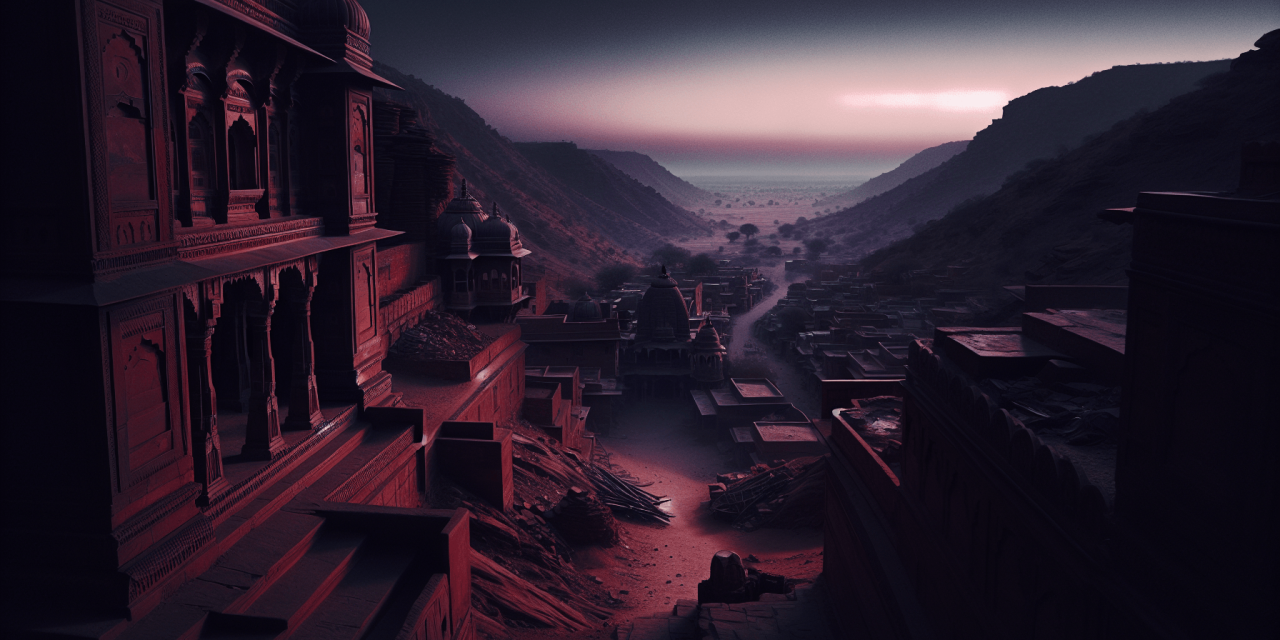
The Archaeological Survey of India posts the same notice at hundreds of monuments across India — hours, conservation rules, prohibitions against damage. At Bhangarh Fort in Rajasthan’s Aravalli hills, eighty kilometers from Jaipur, the board carries one additional line. No entry after sunset. No entry before sunrise. The stated reason is that the area is dangerous at night. The government does not explain further. It does not need to. Everyone in the district already knows.
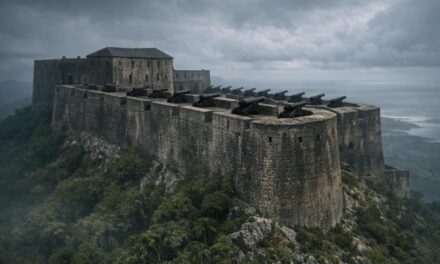
Bhangarh was established in 1573 by Bhagwant Das, a Mughal general under Akbar, and built out as a city by his son Man Singh I. At its height the walls enclosed temples, palaces, markets, and homes. Then, in a single catastrophic event, the city died. Two curses attach to the ruins. The first involves a meditating guru whose shadow was never to fall on the palace walls, and a later ruler who built them too high. The second is more operatic. A sorcerer named Singhia, practicing aghori tantra, became obsessed with Princess Ratnavati, renowned across Rajasthan for her beauty. He tried to enchant a bottle of perfume meant for her. She poured it onto a stone; the stone rolled after him and crushed him. Dying, he cursed the fort. A year later the armies of Ajabgarh invaded; the princess and nearly everyone inside the walls were killed.
No building in Bhangarh has been inhabited since. Locals say Ratnavati will be reborn, and until she returns the spirits of the slaughtered are bound to the ruins. Daylight visitors describe an oppressive weight in certain rooms, a sourceless anxiety that lifts only when they step back into the sun. A few have heard voices after the gates close. The police do check.
Story Source: Newspaper article titled “Bhangarh: the most haunted fort in India” (The Hindu, 2017)
Address: Bhangarh Fort, Rajgarh, Alwar District, Rajasthan, India
Accessibility Rating: Open to All — Freely accessible to the public with no advance requirement. Includes hotels, restaurants, bars, and public historic sites where visitors may walk in without prior booking.
Google Map
What Others Have Experienced
The approach to Bhangarh on the Jaipur-Alwar highway sets up the atmosphere before arrival — a long road through sparse Rajasthan scrubland with the ruined city gradually becoming visible, and the ASI warning board at the entrance gate banning all entry after sunset. Visitors describe reading that sign as shifting the experience from a historical excursion to something with a more unsettling edge.
— from Travel Triangle
The ruins cover several hundred acres of temples, markets, palaces and gateways, and visitors who walk the full site describe an atmosphere that builds the further one goes from the entrance. The inner sanctum area near the Sohna Devi temple is consistently identified as the most atmospheric section, with a stillness several visitors describe as difficult to attribute entirely to the isolation of the location.
— from MakeMyTrip
Local guides speak matter-of-factly about the prohibition on nighttime entry, treating it not as mythology but as a practical rule with real consequences. Visitors who ask directly about the ban are frequently told specific accounts of people who ignored it, presented without dramatic embellishment, which many find more unsettling than any performed ghost-story delivery.
— from Chal Banjare
The Archaeological Survey of India’s signboard prohibiting entry between sunset and sunrise is the only government-erected warning of its kind in India — a detail visitors consistently note as lending the site’s haunted reputation an unusual institutional weight. Whatever one believes about the paranormal, the state’s formal acknowledgment of the prohibition distinguishes Bhangarh from comparable sites.
— from Free Press Journal
The scale of the ruins tends to surprise visitors expecting a single ruined building — Bhangarh was a functioning city of considerable size, and walking through roofless palaces and crumbling market arcades in the Rajasthani heat, with no other settlement visible and a hard rule against staying after dark, creates a combination visitors describe as genuinely affecting.
— from Visit to Travel