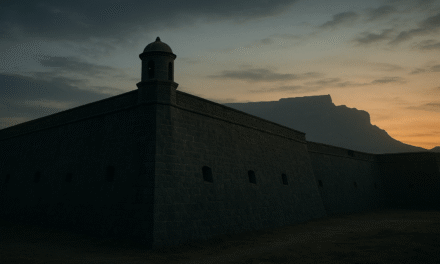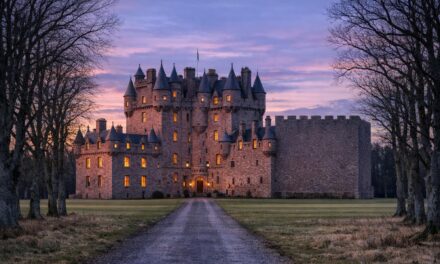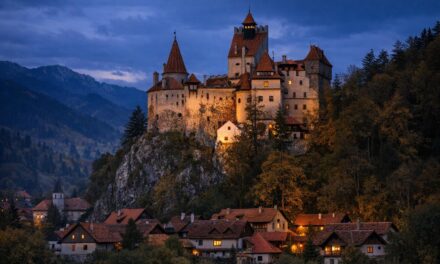
Chillingham Castle stands in the Northumberland countryside near Alnwick, its thick grey towers built for military purpose in the thirteenth century and used as such for centuries of Border Wars between England and Scotland. The parkland surrounding it is home to a herd of ancient white cattle that has never been domesticated — wild, inbred, unchanged since the Middle Ages. They are a fitting introduction to a place where very little has been put to rest.
The Room Where the Screaming Stopped: Chillingham Castle and England's Most Active Haunting

John Sage, known as Dragonis, served as Chillingham’s torturer during the Border Wars, responsible for the deaths of dozens to hundreds of Scottish prisoners in dungeons that remain largely intact and still hold their original instruments. His ghost is considered the most malevolent presence in the castle — not passive but actively hostile to the living. The Blue Boy haunted the Pink Room until renovation workers in the early twentieth century opened a wall cavity and found a child’s bones wrapped in blue cloth; after burial, the reports ceased. Lady Mary Berkeley, abandoned by her husband for her own sister, is heard in the corridors dragging the hem of her dress — footsteps and a rustling sound, no figure, then silence. The castle also holds a room associated with King Edward I, whose campaigns against Scotland were planned in part from Chillingham’s walls.

Chillingham Castle at Chillingham, Alnwick, Northumberland, NE66 5NJ is open for tours, ghost tours, and overnight stays following a decades-long restoration by Sir Humphrey Wakefield begun in the 1980s. For the adventure traveler, it offers what few haunted sites can: paranormal claims grounded in a history of documented violence that requires no embellishment.

Story Source: chillingham-castle.com

Address: Chillingham, Alnwick, Northumberland, NE66 5NJThe Room Where the Screaming Stopped: Chillingham Castle and England’s Most Active Haunting

Chillingham Castle stands in the Northumberland countryside near Alnwick, far enough north to feel the pull of the Scottish border, and the history written into its walls is the history of that border — centuries of warfare, imprisonment, torture, and the particular savagery that accumulates in places where two nations have been fighting over the same ground for generations. The castle is medieval in its core, thirteenth century in its origins, and it has been modified and added to across the intervening centuries without losing the essential quality of a place built for hard purposes in hard times.

The castle’s towers are visible from a distance, grey stone against the Northumberland sky, and the architecture is the architecture of genuine military purpose — walls thick enough to absorb cannon fire, towers positioned for surveillance, a layout designed around the assumption of siege rather than the comfort of occupation.

The approach to Chillingham from the road passes through parkland that has been home to a herd of ancient white cattle for as long as records document — a wild, inbred herd of Chillingham cattle that has lived in the park since at least the thirteenth century and has never been domesticated. The cattle are pale against the grass in all weathers, and they have the strange quality of things that should have been touched by human hands and weren’t. They are a fitting introduction to a castle whose most consistent characteristic is the sense of something that has not been resolved, something that has not been put to rest.

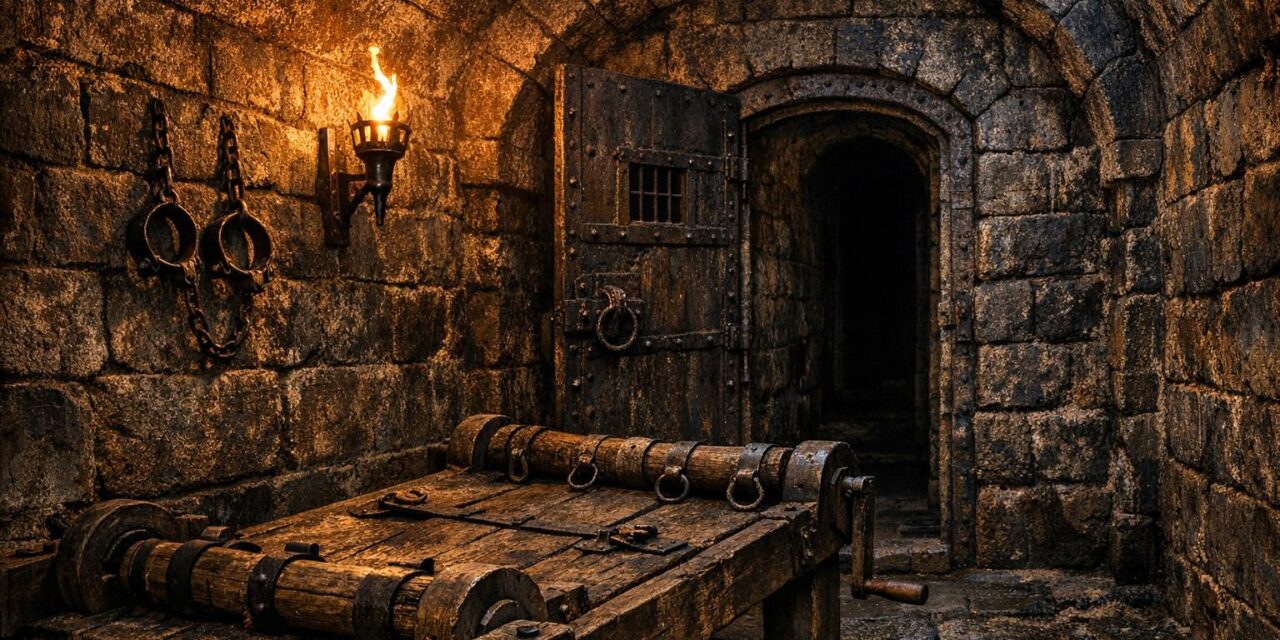
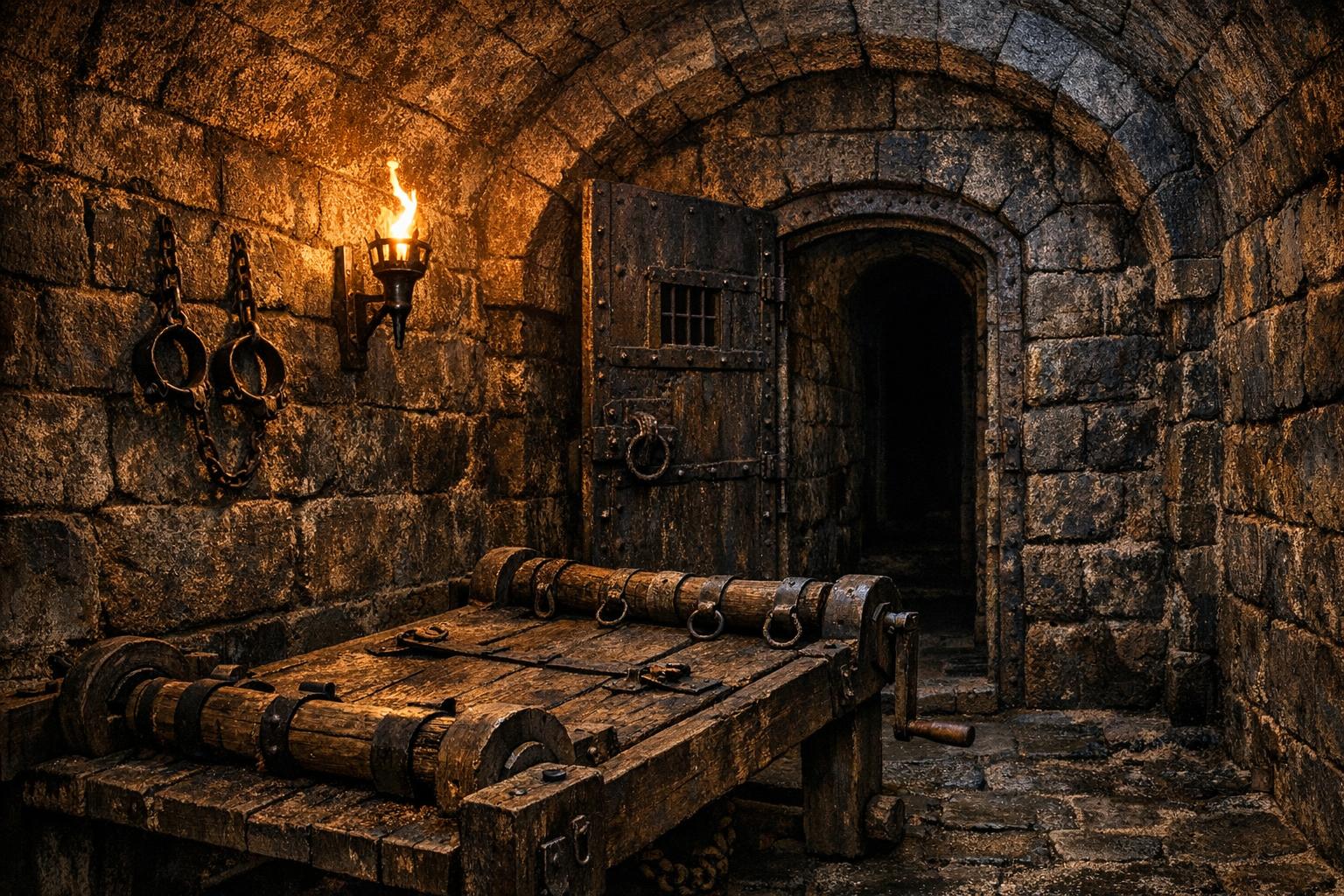
The history that makes Chillingham Castle what it is begins not with a ghost but with a man. John Sage — also known by the epithet Dragonis — served as the castle’s torturer during the Border Wars between England and Scotland, a period of sustained conflict that produced in Chillingham a concentration of imprisoned Scottish soldiers whose fate was administered primarily through Sage’s hands. His methods were those available in a thirteenth and fourteenth-century dungeon: the rack, the leg-stretching devices, the branding iron, the manacles, and the specific instruments designed to maximize duration of suffering rather than hasten death. Chillingham’s torture chamber is considered one of the most intact medieval torture chambers remaining in England, and the implements that fill it are not reproductions — they are the instruments of the work that was actually done there.

Sage’s killing over the period of the Border Wars is estimated, by historians who have examined the castle’s records, at dozens if not hundreds of prisoners. He did not limit himself to slow deaths: when the population of prisoners in the dungeons became unmanageable, mass executions were conducted in the castle grounds, the bodies disposed of in ways that the historical record does not document in detail. Sage is reported to have continued the work past any military necessity, past the point where the prisoners represented any tactical value, apparently because the work itself had become something he was suited for. After peace was eventually declared between England and Scotland, Sage was no longer useful. He was hanged — not for the torture and the killings, which were understood as the performance of his function, but for crimes committed against the local civilian population during the peace.

His ghost is considered the most malevolent presence in the castle. Reports from visitors and investigators describe an oppressive, hostile quality associated with the torture chamber and with certain other rooms where Sage was known to have worked — not the passive sadness associated with victim ghosts, but something closer to an active antagonism, a presence that is oriented toward the living rather than trapped in its own history. Whether this is the lingering imprint of a man whose entire working life was organized around the suffering of others, or something else entirely, is a question that Chillingham does not answer.

The castle’s most famous individual haunting centers on the Pink Room and a phenomenon known as the Blue Boy or, in some accounts, the Radiant Boy. In the years before a renovation in the early twentieth century, occupants of the Pink Room reported being awakened in the night by the sound of a child crying, and by the appearance of a luminescent blue light that took on the shape of a young boy. The accounts were consistent across multiple occupants over time. During the renovation, workers opened a cavity in the wall and found inside it the bones of a child, alongside remnants of blue fabric. The remains were given a burial, and the reports of the Blue Boy largely ceased.

The discovery of the bones in the wall raises questions that were not asked in any systematic way at the time: how old were the remains, how did they come to be inside the wall, how long had they been there. A child sealed in a wall — whether during construction, as a foundation sacrifice, or by some other means — is not outside the range of historical practice in medieval building, though it is not a common outcome. The cessation of the haunting after the burial is the detail that investigators return to most often.

Lady Mary Berkeley is another of Chillingham’s documented presences. Her husband, Lord Grey, abandoned her for her own sister, and she is said to have spent the rest of her life at Chillingham in a state of profound grief, wandering the corridors of the castle dragging the rustling hem of her dress. The sound of her dress is what people report most often now: footsteps accompanied by a dragging sound in the corridor outside what was her former apartments, heard without a visible figure, without any other indication of a presence, the sound alone and then silence.

The castle contains a room associated with King Edward I, who stayed at Chillingham on multiple occasions during his campaigns in Scotland. The room has its own unsettled quality that visitors note independently of being told its history. Whether the unease is a response to what the room once held or a response to the knowledge of what the man who slept there was in the process of doing to Scotland, it persists in visitor accounts.

Chillingham Castle was in a state of significant dereliction through much of the twentieth century before Sir Humphrey Wakefield undertook its restoration in the 1980s. The work took decades and continues in some areas. The castle is now open to visitors for tours, ghost tours, and overnight stays — one of the few genuinely ancient properties in England that offers access to its full estate, including the torture chamber and the rooms associated with the major hauntings.

For the adventure traveler, Chillingham represents a particular kind of historical site: a place where the violence is not metaphorical and the hauntings are not atmospheric decoration applied to an otherwise peaceful landscape. The castle was built for conflict and used for conflict, and the suffering that occurred within its walls was extensive, documented, and conducted over centuries. Unlike many haunted properties where the paranormal history has been grafted onto a building of modest actual darkness, Chillingham’s claim to be England’s most actively haunted castle is grounded in a history that requires no embellishment. Whatever remains of that history in the stone — in the dungeon, in the Pink Room, in the corridor outside Lady Mary’s apartments — remains because it has nowhere else to go.

The Northumberland countryside beyond the castle walls is wide and open, the border country that has been quiet for four hundred years. Inside the walls of Chillingham, the quiet is of a different quality. It is the quiet of a place that has been full of sound, of every kind of sound, for a very long time — and that has not entirely stopped making it.

Accessibility Rating: Booking Required — Open to visitors but requires advance reservation, ticket purchase, or tour booking.

Google Map

What Others Have Experienced

For decades, guests in the Pink Room reported hearing a child’s voice crying from within the walls, an unexplained sound that investigators believed was connected to the skeleton of a small boy discovered by construction workers in the 1920s, walled up in a passage with the remnants of what appeared to be blue clothing. After the bones and a piece of blue fabric were given a proper burial, the crying reportedly stopped, and the phenomenon has not been documented since.

— from History Hit

Lady Mary Berkeley, whose husband abandoned her for her own sister in the seventeenth century and who spent the remainder of her life at Chillingham in misery, is the most frequently encountered apparition in the Great Hall, accompanied by a strong smell of roses and a wafting chill that precedes her appearance. Staff who have worked at the castle for extended periods describe her presence as something they have learned to recognize — the scent arriving first, followed by a drop in temperature, followed by the sense of a figure moving through the room.

— from Haunted Britain

The castle’s dungeon and torture chamber are described by visitors as the most difficult spaces in the building to occupy — a combination of documented history (an estimated 7,500 Scottish prisoners were held and tortured there across the castle’s operational period) and reported paranormal phenomena including disembodied screams, sudden temperature drops, and an oppressive physical sensation that multiple visitors describe as pressure on the chest. The dungeon is included on overnight ghost hunt programs specifically because of the volume and consistency of activity reported there.

— from Chillingham Castle

Chillingham Castle’s resident ghost hunter Richard Craig has documented more than 50 distinct spirits on the premises across years of investigation, an unusually high number for a single property and one that paranormal researchers attribute to the castle’s uninterrupted eight centuries of occupation and the extreme violence that occurred within its walls. Craig describes the castle as one of the few locations in Britain where activity is both reliably consistent and genuinely unpredictable in its form.

— from Paranormal Case Files

Visitors who have done the ghost tour at Chillingham describe it as a categorically different experience from most haunted attraction tours, because the history behind each location in the castle is specific, documented, and unambiguous. One travel writer described standing in the dungeon as producing a quality of horror that was not theatrical but historical — the room communicating its past through something other than decoration or storytelling, in a way that proved very difficult to shake off in the days that followed.

— from Epic England Travel