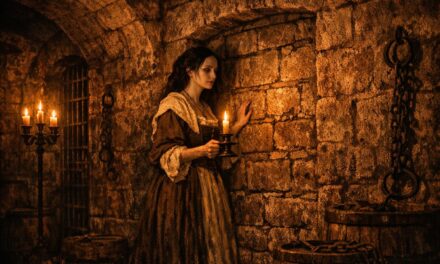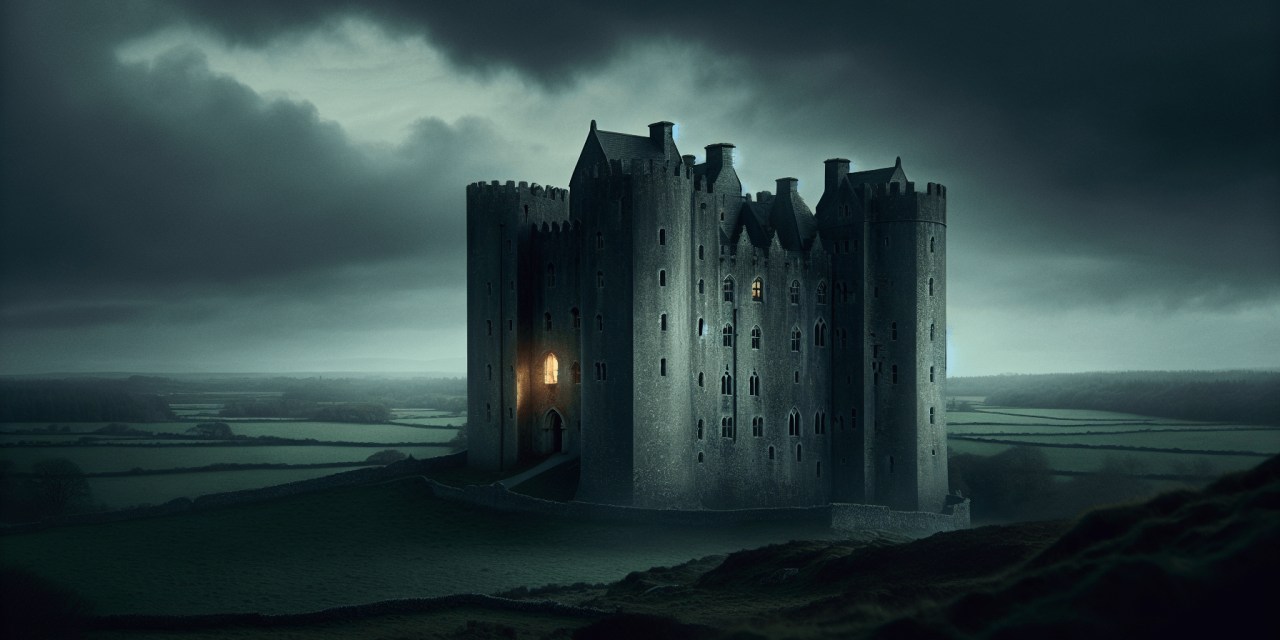
The R421 winds through County Offaly — pale green fields, cattle in the distance, Leap Castle rising in old gray stone. Seven centuries old, partially restored. Those who step inside describe an oppressive weight in the chapel that is not atmosphere. Doors slam in empty rooms. A shapeless entity with a stench of decay moves through corridors the Ryan family has been rebuilding since 1991.
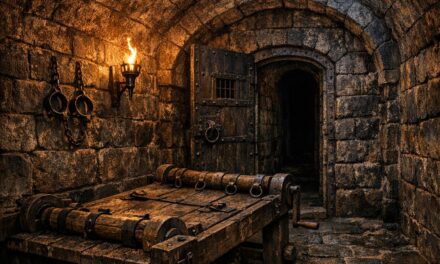
The ground here has been occupied since at least 500 BCE. The castle was raised by O’Bannon chieftains, later taken by the more powerful O’Carroll clan. In 1532, after Mulrooney O’Carroll died, the family fractured. One contending brother was a Catholic priest; while he held mass, his rival walked into the chapel, drew his sword, and ran it through him at the altar. That room has been called the Bloody Chapel ever since. Early in the twentieth century, workers tearing into a wall beside it found an oubliette — a spiked dungeon whose French name means “to forget.” It held human skeletal remains in quantities that required three cartloads to remove. In 1909, novelist Mildred Darby, who conducted séances in the castle, published in Occult Review an account of the Elemental: a human-sized presence with a face of decomposed features and the stench of something dead.
Burned by raiders during the 1922 Irish Civil War and left gutted for half a century, Leap Castle was bought in 1974 by Australian historian Peter Bartlett, then in 1991 by Irish musician Seán Ryan and his wife Anne, who live there still. Tours run about ninety minutes from Dublin, booked through leapcastle.net. Ghost Hunters, Ghost Adventures, and Most Haunted have all filmed within its walls. Visitors report the Red Lady, the ghosts of two children, doors locking without cause, and the persistent sense of being watched. The Elemental has never been reported as gone.
Story Source: leapcastle.net
Address: Leap Castle, Roscrea, County Offaly, Ireland
Accessibility Rating: Booking Required — Open to visitors but requires advance reservation, ticket purchase, or tour booking.
Google Map
What Others Have Experienced
Visitors who made the appointment consistently describe the oubliette — the hidden pit behind the chapel wall where excavation in the early 1900s uncovered cartloads of human bones — as the part of the tour producing the strongest reaction. The knowledge that it was designed to be invisible and functioned that way for centuries stays with visitors long after they leave.
— from TripAdvisor
Visitors report noticing something in the castle they describe as a pressure, a weight, or a presence distinct from ordinary unease in an old building. The Elemental — described by the current owner as the most malevolent of the castle’s entities, predating the structure itself — appears in visitor accounts without apparent coaching from the tour.
— from Slieve Bloom
The Bloody Chapel — where an O’Carroll killed a priest mid-Mass in 1532 — survived the 1922 fire in recognizable form, and visitors describe standing in it as one of the most atmospheric moments of any Irish heritage visit. The charred stone, the altar position still visible, and the weight of the documented event combine in a way that needs no embellishment.
— from Mysterious Adventures Tours
The fact that a family actually lives in this actively haunted, still partially ruined castle gives the visit a dimension no professional guide could replicate. Seán Ryan’s combination of working musician, castle historian, and reluctant paranormal authority creates an experience visitors consistently describe as more intimate and affecting than any formally managed historic property.
— from Austin Ghost Tours