The ground at Verdun does not look like other ground. The old battlefield rolls in low mounds and shallow craters that grass has softened but not erased. Trees have returned but grow wrong — present where they should not be, absent where they should — because the soil is not ordinary soil. Artillery bombardment during the First World War turned it over and over, day after day, until the landscape itself became a casualty of the battle. It has never fully recovered.
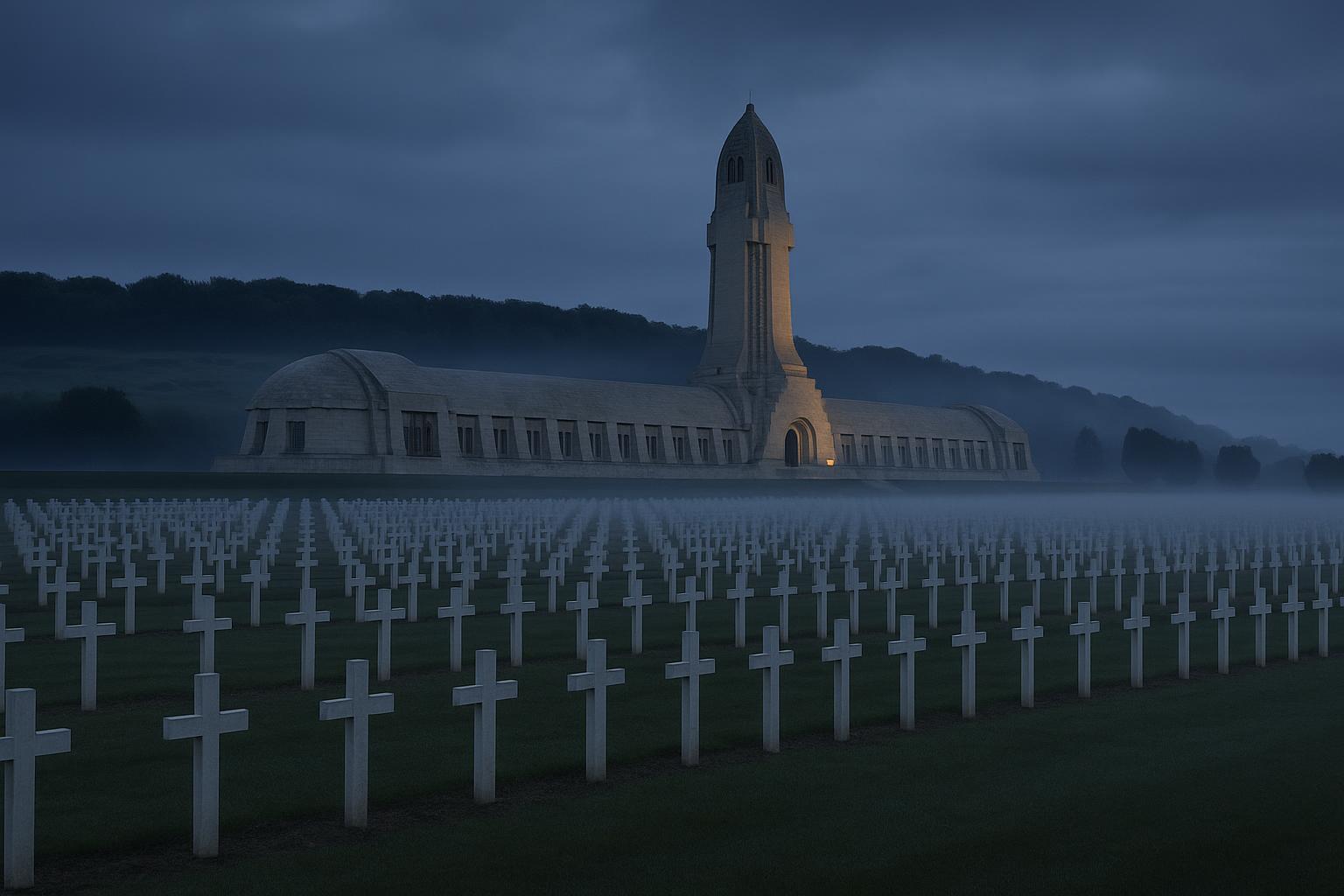
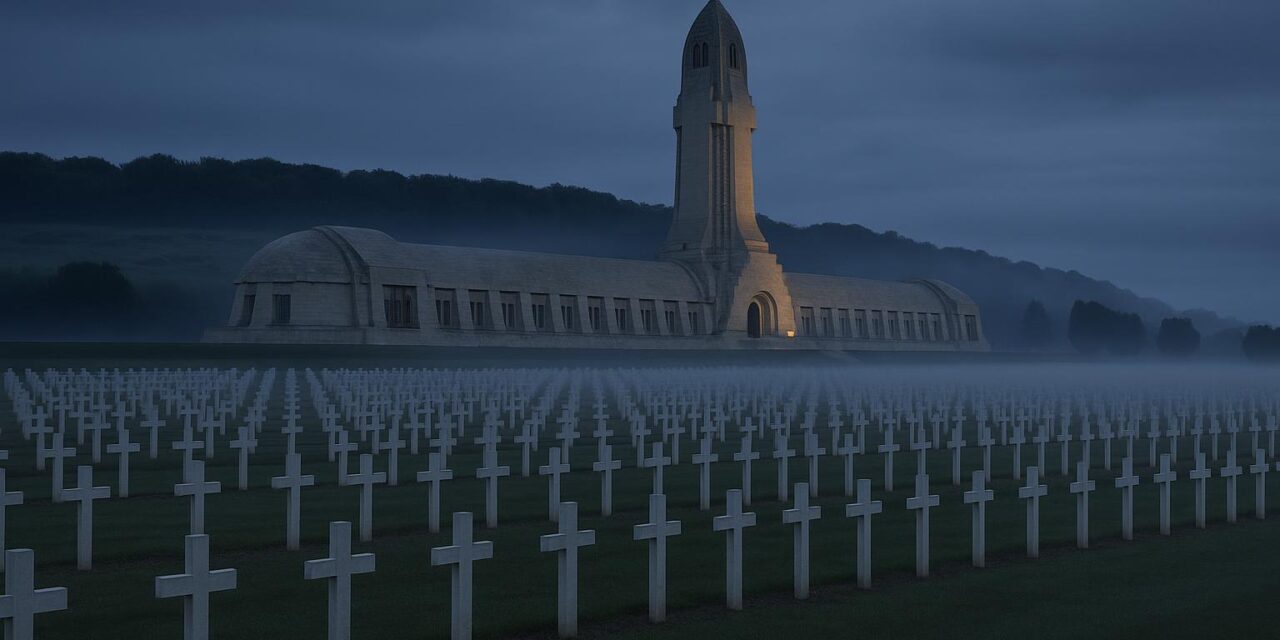
The Douaumont Ossuary holds the bones of 130,000 unidentified WWI soldiers — French and German — visible through small windows at ground level. The named dead are in the military cemetery outside; the ossuary holds everyone else. Visitors walking the old front line report cold with no meteorological explanation, sounds that are not the wind — whispers nearly resolving into words — and shadows crossing open ground where nothing is casting them. The accounts are consistent across decades of visitors — many of them arriving with no knowledge of the battlefield’s reputation — which is what makes them difficult to dismiss.
The Douaumont Ossuary is open to visitors today. The Memorial of Verdun provides context, but the battlefield is the site: actual craters, actual displaced forest, soil that still yields unexploded ordnance a century later. The red zone cannot support ordinary habitation. The cold, the whispers, the shadows — whatever their explanation — occur in a landscape that is genuinely, chemically, historically not finished with what happened here.
Story Source: memorial-verdun.fr
Address: Douaumont, 55100 France
Accessibility Rating: Open to All — Freely accessible to the public with no advance requirement. Includes hotels, restaurants, bars, and public historic sites where visitors may walk in without prior booking.
Google Map
What Others Have Experienced
The Douaumont Ossuary holds the unidentified remains of 130,000 soldiers from both sides of the Battle of Verdun — and the bones are still being added to as they are discovered in the surrounding fields to this day. One dark tourism researcher described the site as possibly the single most significant World War One location anywhere, noting that the sheer size of the complex is striking and the solemnity that hangs over the place is immense from the moment you arrive.
— from Dark Tourism
Along the rear of the ossuary building, ground-level windows allow visitors to look directly into the bone chambers below. Some views show unordered heaps of skulls and femurs; others have skulls grouped together or femurs stacked with evident care. The researcher who described peering through these windows called it by far the grimmest aspect of the visit — the sheer mass of skeletal remains hammering home the futility of the industrialized mass slaughter that the Battle of Verdun represented.
— from Dark Tourism
Inside the cloister above the bone chambers, stained-glass windows drench the interior in orange light, eternal flames burn at each end, and every surface is covered with plaques commemorating individual known soldiers who fell at Verdun. The memorial chapel branching off the main space is described in a Romanesque-Byzantine style that feels apart from ordinary time, and the overall atmosphere is described as profoundly sombre yet paradoxically tranquil — as though the sheer scale of acknowledged grief has achieved something like peace.
— from Dark Tourism
The central tower, donated by the United States, sends a beacon of red and white light over the former battlefields at night — described as a lighthouse for the dead. From the tower’s top during the day, visitors look out over a sea of more than 16,000 white stone crosses below, with red roses planted before every single one, a sight that multiple accounts describe as requiring several minutes of stillness before visitors can speak again.
— from Dark Tourism
The Verdun memorial and ossuary consistently rank as emotionally overwhelming experiences — described as awe-inspiring in scale and deeply moving in effect. One visitor wrote that the site exudes a tranquility and calm despite its content, and that they left the ossuary with a feeling not of horror but of a weight they had not anticipated, a sense that they had stood in the presence of something that could not be fully comprehended from the outside.
— from TripAdvisor