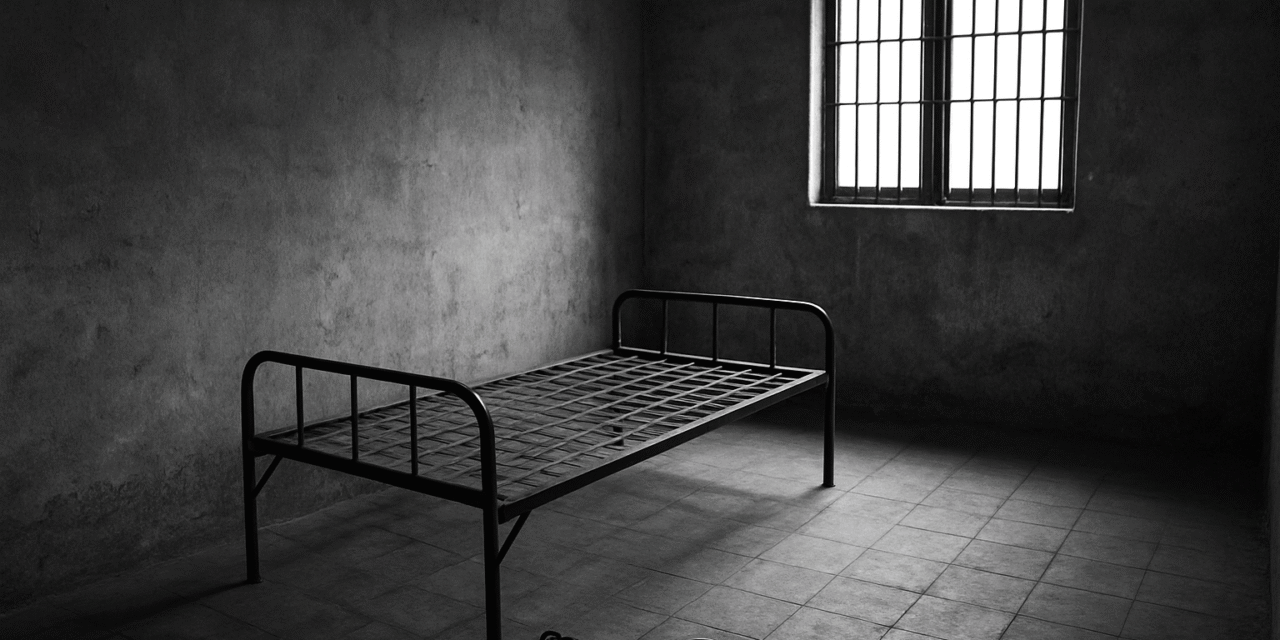
The building that would become Tuol Sleng — “Hill of the Poisonous Trees” — was a quiet secondary school in Phnom Penh when the Khmer Rouge swept into the city in April 1975. Within weeks, the school had been converted into Security Prison 21, or S-21, the regime’s primary interrogation and extermination facility. The classrooms became cells and torture chambers. The grounds were strung with barbed wire. Between 1975 and 1979, somewhere between 17,000 and 20,000 men, women, and children were brought through its gates. Fewer than a dozen survived.
The photographs are what stay with you. Khmer Rouge guards photographed every prisoner upon arrival — passport-sized black-and-white images that now cover the museum walls in long, systematic rows. Some of the subjects stare directly into the camera, expression unreadable. Others look away. A few are visibly crying. The photographs were never intended as a memorial; they were bureaucratic records of a killing operation. Their survival was accidental — when Vietnamese forces liberated Phnom Penh in January 1979, they found the prison largely intact, administrative files undisturbed, and the bodies of the most recently executed still in the cells.
Today Tuol Sleng Genocide Museum receives more than a million visitors a year, and accounts documented over the decades include a consistent undercurrent of unexplained experience: a feeling of presence in certain cells, voices heard in empty corridors, photographs falling from walls without apparent cause, and a persistent unsettled quality to the air in the building that housed the most severe interrogations. Whatever name you give it — residual trauma, collective memory, something else entirely — Tuol Sleng has never fully become the past.
Story Source: Documentary titled “S-21: The Khmer Rouge Killing Machine” (Rithy Panh, 2003)
Address: Tuol Sleng Genocide Museum, Street 113, Phnom Penh, Cambodia
Accessibility Rating: Open to All — Freely accessible to the public with no advance requirement. Includes hotels, restaurants, bars, and public historic sites where visitors may walk in without prior booking.
Google Map
What Others Have Experienced
A visitor who gave themselves the full two and a half hours described the audio guide as essential, noting it paced the experience and prevented the kind of numbed rushing that can happen when the accumulated horror becomes too much to absorb room by room. Meeting the surviving former prisoners was described as the most heart-wrenching part of the day.
— from Nomads Travel Guide
A travel writer described walking into Tuol Sleng with their stomach already tight, knowing what the place had been — yet finding that the room-by-room reality was entirely different from anything they had imagined. Standing in those spaces and looking into the photographed faces of people who disappeared forced a reckoning not only with Cambodian history but with how easily such systems can grow from fear and ideology.
— from The Traveler
One visitor left with a splitting headache after crying through much of their time in the courtyard, yet came away convinced that visiting such places is essential precisely because of how profoundly they illuminate the culture that emerged from the trauma. What struck them most afterward was the contrast — everywhere in Phnom Penh, people were smiling, offering warmth to strangers, despite having had their history and families torn apart less than two generations ago.
— from Polyglot Petra
One reviewer noted that some of the prisoners photographed in the intake archives appear to have slight smiles on their faces — a detail that stopped them cold in the corridor and left them with goosebumps they couldn’t explain. The shackles still visible in the cells and what appeared to be old stains on the floor tiles made the building’s former function feel immediate in a way no exhibit label could.
— from TripAdvisor
A visitor who described themselves as a skeptic about emotional travel experiences said that walking through the gate at Tuol Sleng, the weight of the place settled over them immediately — something in the preserved buildings and unrestored details that made the events feel hours rather than decades away. They noted that the site’s deliberate lack of polish is precisely what makes it so devastating.
— from TripAdvisor