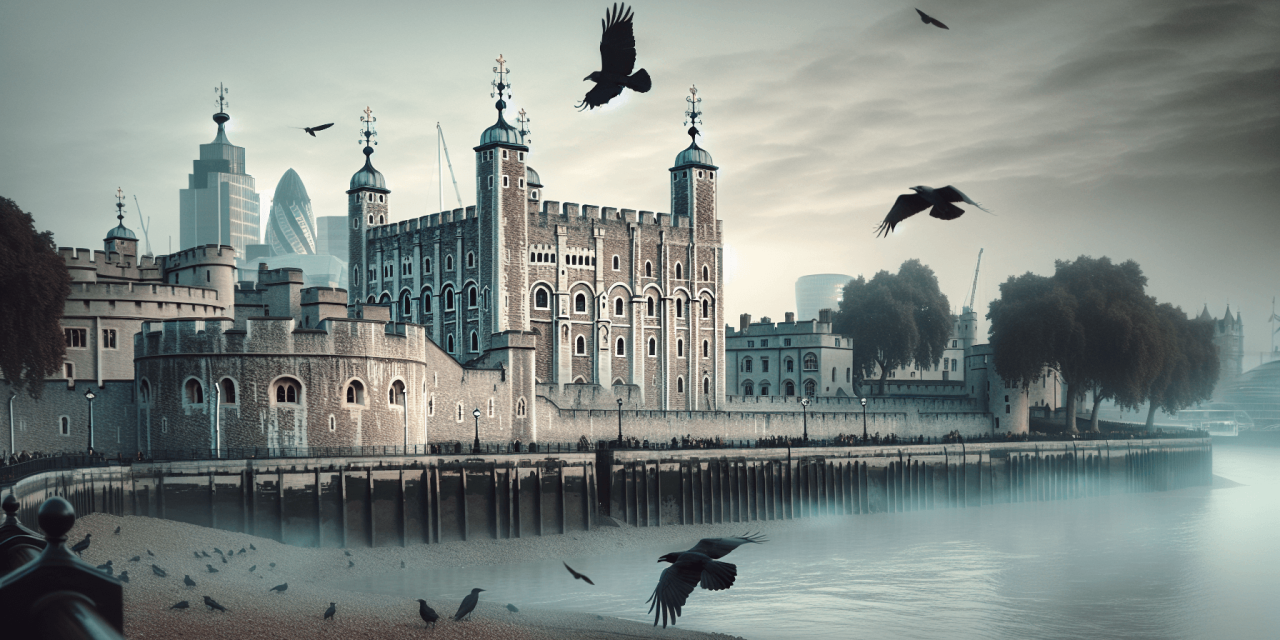
The Thames curves south past the ancient walls of the Tower of London, and six ravens — legally required to be in residence by Royal Decree — make their morning circuits around Tower Green. The Tower has stood on this site since William the Conqueror raised its central keep around 1078, and in the nearly thousand years since, it has served as royal palace, treasury, armory, mint, and prison. Its walls have absorbed more human suffering than most cities accumulate across their entire existence.
The most documented apparition is Anne Boleyn, executed and buried beneath the floor of the Chapel Royal of St Peter ad Vincula. Witnesses over centuries have described a headless female figure, identified by her dress and bearing, leading a procession toward the chapel. Restorations in the 1870s uncovered human remains under the altar identified as hers. The Tower’s other persistent presence is harder to consider: in 1483, twelve-year-old Edward V and his nine-year-old brother Richard, Duke of York, were placed in the Tower by their uncle Richard of Gloucester, ostensibly to await a coronation. They were seen with decreasing frequency, then not at all. In 1674, workers repairing the White Tower unearthed two small skeletons near a staircase. The most widely accepted conclusion — that they were murdered on Richard’s orders after he took the throne as Richard III — has never been conclusively proven.
Today the Tower is a UNESCO World Heritage Site welcoming more than two million visitors a year. Yeoman Warder tours run throughout the day, sharing the history — including the ghost stories — with the authority of people who have drawn their own conclusions. The Chapel Royal of St Peter ad Vincula, where Anne Boleyn and Catherine Howard are buried, can be visited. The Crown Jewels are here. The building rewards a slower pace.
Story Source: www.hrp.org.uk
Address: Tower of London, Tower Hill, London EC3N 4AB, England
Accessibility Rating: Open to All — Freely accessible to the public with no advance requirement. Includes hotels, restaurants, bars, and public historic sites where visitors may walk in without prior booking.
Google Map
What Others Have Experienced
The Tower’s combination of functioning heritage site and documented execution ground creates a visit unlike any standard castle — the same building displaying the Crown Jewels is where Anne Boleyn was beheaded, the Princes in the Tower vanished, and Yeoman Warders have been stationed for over 500 years. Visitors describe the layering of these histories into one physical space as the defining quality of the experience.
— from Connolly Cove
Anne Boleyn remains the Tower’s most frequently sighted apparition — reported near the site of her execution on Tower Green, leading a procession inside the Chapel of St Peter ad Vincula, and walking the corridors headless. Multiple guards and visitors have documented sightings across centuries, and Yeoman Warders discuss the ghost traditions matter-of-factly as part of the Tower’s living institutional culture.
— from Haunted Rooms
After-hours twilight tours, which access areas closed to daytime visitors and provide a guide focused solely on the darker history, are described as a substantially different experience from the standard admission visit. The building after the tourists leave — quiet, dimly lit, with only the Warders present — reveals a scale and heaviness that daytime crowds tend to obscure.
— from Connolly Cove
The White Tower’s interior, particularly the rooms where prisoners were held before execution, generates reports of unexpected cold spots and an oppressive atmosphere that visitors describe as distinct from the architectural grandeur visible from outside. The knowledge that many who entered these rooms did not leave alive gives the medieval stone a quality that guides rarely need to articulate.
— from London Walking Tours
The Tower’s reputation as the most haunted building in England is supported not only by ghost stories but by over 400 years of documented state executions, imprisonments, and torture with the records intact. Visitors who engage with the Tower as a historical document rather than a tourist attraction consistently describe it as one of the most disturbing places in Britain, regardless of any paranormal experience.
— from TripAdvisor