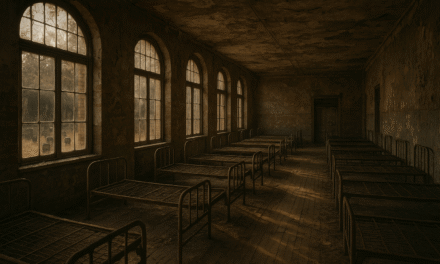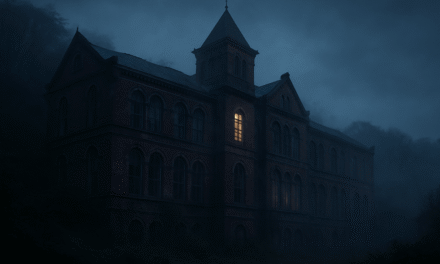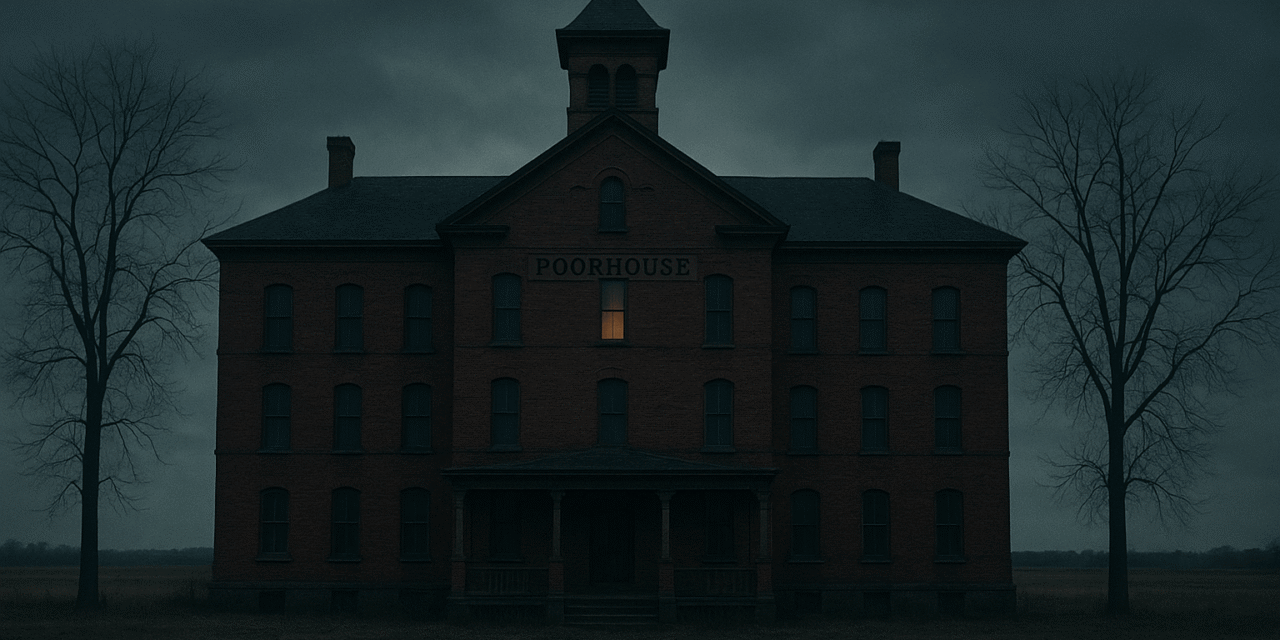
The county poorhouse that opened on January 1, 1827 in East Bethany, New York was not built for the sick or the criminal — it was built for the inconvenient. The destitute, the disabled, the mentally ill, orphaned children, elderly widows: anyone Genesee County considered a burden was placed here and largely forgotten. By the time the building closed, more than 1,700 people had died inside it.
Among the residents was a man referred to as Roy — born with gigantism, tall enough that his family considered him a source of shame. When Roy was twelve, they drove him to the poorhouse and left him. He spent the next fifty years inside that building, dying there at sixty-two. By all accounts he was gentle, fond of music, remembered warmly by staff — the way people remember someone who has been part of a place longer than anyone else can recall.
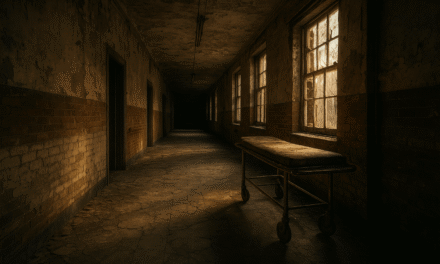
Rolling Hills Asylum now operates as a paranormal destination, and the reports are specific. Visitors and investigators consistently describe the same thing: a tall, slow-moving shadow in the hallways — taller than it should be, moving with a deliberate heaviness. It appears in photographs as an elongated silhouette. The corridor known as the Shadow Hallway, which once housed the facility’s most difficult residents, generates the highest concentration of accounts: EMF readings consistently high, temperature drops sudden and localized, and a thermal camera that once captured what appeared to be two human-shaped heat signatures moving independently through an empty room.
Story Source: www.rollinghillsasylum.com
Address: Rolling Hills Asylum, 11001 Bethany Center Road, East Bethany, NY 14054
Accessibility Rating: Booking Required — Open to visitors but requires advance reservation, ticket purchase, or tour booking.
Google Map
What Others Have Experienced
The entity most often described by visitors is a towering shadow figure in the East Wing hallways — believed to be Roy Crouse, a gentle-natured man who stood nearly seven feet tall and spent fifty years at the facility after being committed as a child by a father who considered him an embarrassment. Multiple guests on separate visits have described seeing a very large dark form moving through the upper corridors, particularly in what staff now call the Shadow Hallway.
— from NY Ghosts
Visitors frequently report distinct and unexplained aromas drifting through specific rooms — perfume in one corridor, aftershave in another, an unidentifiable odor in a third — with no apparent source. Others describe hearing clear footsteps and faint voices in sections of the building confirmed to be empty, consistent enough across separate visitor groups that staff have associated specific sounds with particular parts of the 60,000 square foot complex.
— from Haunted History Trail of New York State
Paranormal investigators who have conducted sessions at Rolling Hills describe it as one of the most productive locations they have worked, citing Class A EVPs — voices clear enough to be understood without interpretation — alongside shadow person sightings and poltergeist-type activity. The sheer scale of the building means that each visit feels different depending on which rooms are explored.
— from New York Haunted Houses
A first-time visitor described the introductory historical video and staff briefing as genuinely affecting before any investigation began — the documented tally of more than 1,700 deaths within the building over its history as a poorhouse and asylum establishing a weight the physical space then reinforces. They said Hattie’s Room in particular had an almost audibly different quality from the surrounding hallways.
— from Adventures in New York
A group that attended a ghost hunt marking the birthday of Roy Crouse described a spirit box session in his former room that produced responses they felt were directly relevant to the questions being asked. Several members said the event was unlike a typical ghost tour because the staff’s evident familiarity with the building’s individual spirits — each with their own documented history — made the experience feel grounded rather than theatrical.
— from Rolling Hills Asylum