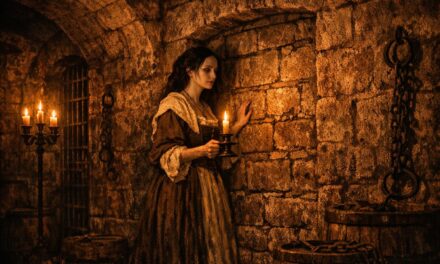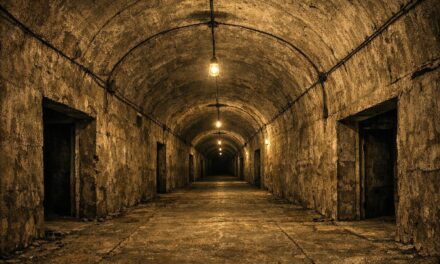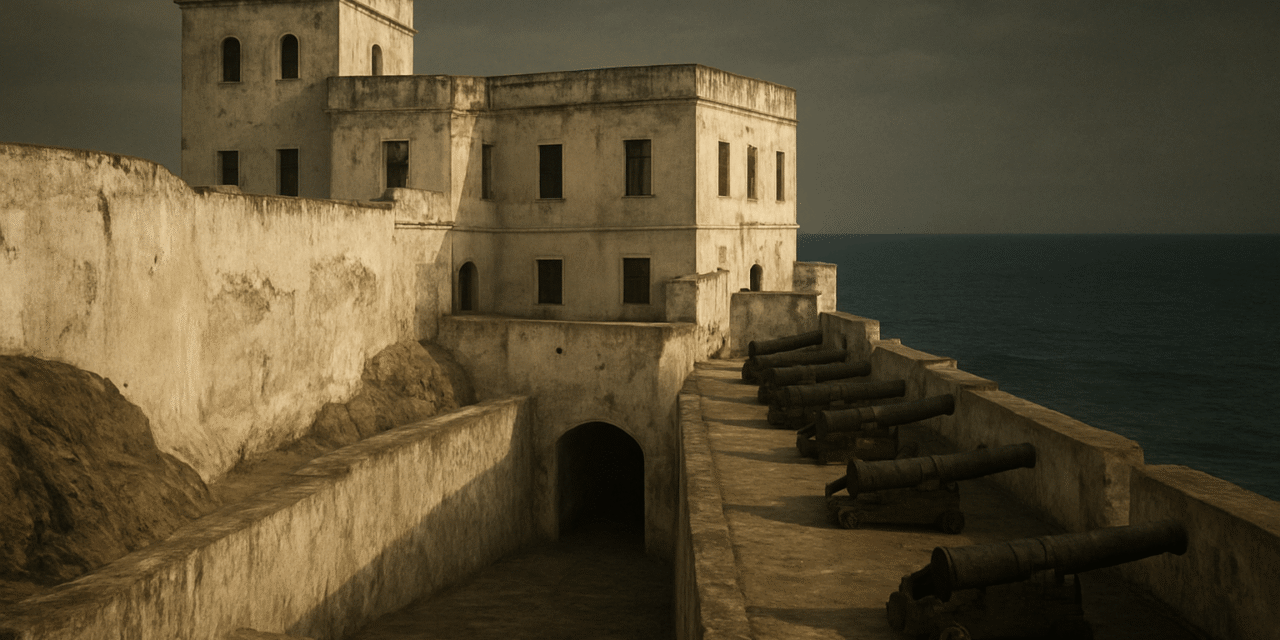
The dungeons of Cape Coast Castle sit below sea level, cut into the rock of a Ghanaian promontory where the Gulf of Guinea presses against the walls. When the surf is heavy, you can hear the ocean from inside. As many as a thousand enslaved people were packed into these rooms at a time, chained on a floor that has not been touched since the last captives were marched out through the Door of No Return. The air carries the quality of a space that has absorbed generations of suffering without release.
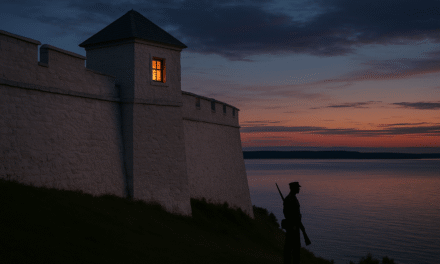
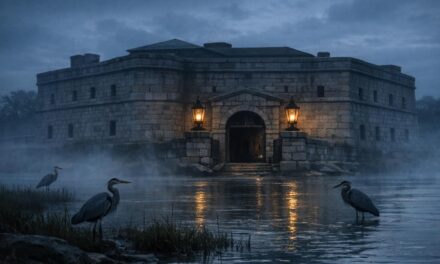
The castle stands in Cape Coast, Ghana, roughly a hundred kilometers west of Accra — white-walled, imposing above the water, and fought over by the Swedes, Danes, Dutch, and British in succession, each recognizing its value as a staging point for the Atlantic slave trade. Between the seventeenth and early nineteenth centuries, millions of Africans passed through this headland, loaded onto ships through a passage deliberately narrowed so that only one person could exit at a time, eliminating any possibility of a final, collective resistance.
Ghana’s government and the United Nations restored the castle in the early 1990s, and it has been a UNESCO World Heritage Site since 1979. Visitors today walk the ramparts, tour the dungeons, and emerge blinking into a courtyard that sits directly above those lightless rooms. The officers’ quarters nearby once had pleasant views over the sea. Most people who tour the dungeons describe the same experience: a heaviness that does not lift, a presence that requires no ghost stories to explain.
Story Source: Documentary titled “Marley” (Shangri-La Entertainment, 2012)
Address: Cape Coast Castle, Victoria Rd, Cape Coast, Ghana
Accessibility Rating: Guided Tours Only — Access permitted only as part of an organized tour. Independent exploration not allowed.
Google Map
What Others Have Experienced
The dungeon floor has never been disturbed — it remains exactly as it was when enslaved people were forced to wait there for months at a time, chained together in a room where two narrow window slits provided the only air. A traveler described standing in that damp, dark space hearing the ocean through those same windows, and wrote that the hopelessness the captives must have felt in those conditions becomes something you can almost sense rather than simply understand from a distance.
— from AllStays
Walking through the underground chambers where enslaved Africans were held before being shipped to the Americas, a travel writer described a profound haunting impression — the darkness, the airlessness, and the weight of what happened in those rooms gave the site a presence that no amount of reading about it can adequately prepare a visitor to experience.
— from TripAdvisor
The dark, damp dungeons and the Door of No Return left a couple describing the castle as utterly unlike anything they had previously encountered — standing in the passage through which captives were marched one by one onto waiting ships, the history stopped being something they knew and became something they felt.
— from TripAdvisor
The tour is conducted with care and without rushing, but the stories told inside those walls press down on visitors in a way that is difficult to shake. One traveler wrote that she needed quiet time afterward — not for the castle itself, but for what she had understood inside it that she had not fully understood before.
— from TripAdvisor
A visitor said the experience brought the real human cost of slavery to life in a way that was genuinely distressing — standing in the dungeons where captives were held, listening to the guide describe what those conditions actually meant for the people who endured them, felt like witnessing something that demanded to be remembered.
— from TripAdvisor