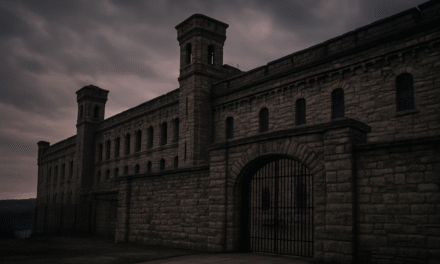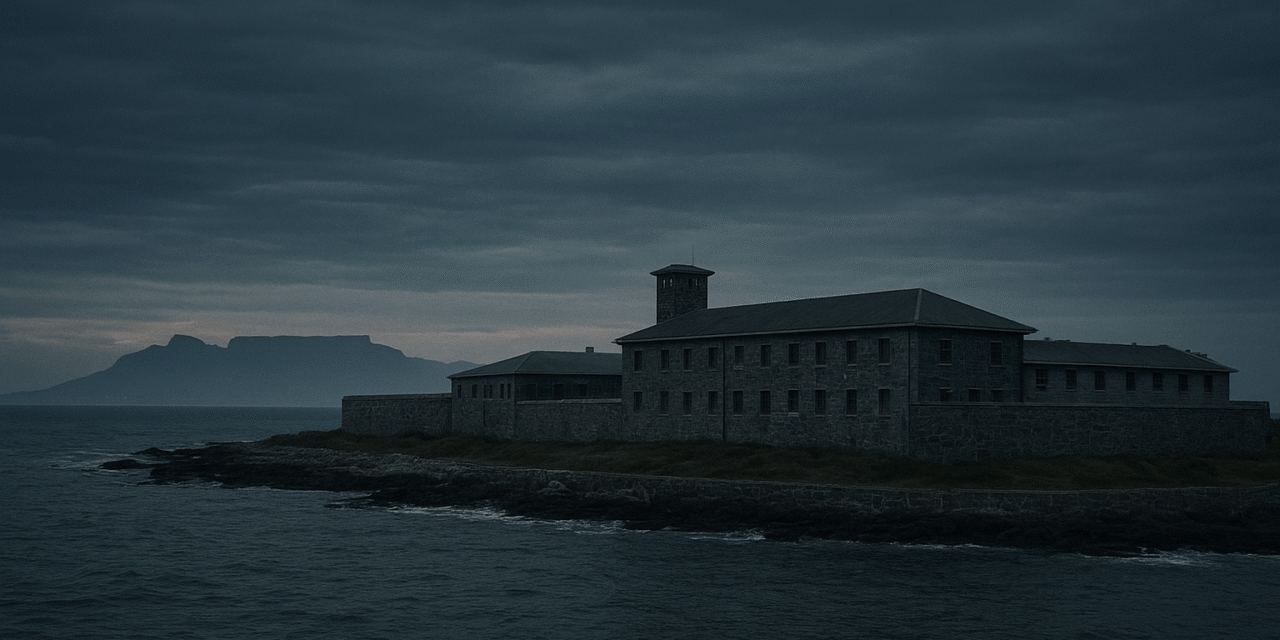
Seven kilometers off the coast of Cape Town, in the cold water of Table Bay, Robben Island served as a place of forced separation for centuries — first as a leper colony, then as one of the most significant prisons of the apartheid state. The island was chosen because the water made escape impossible and isolation was the point. From the island, the Cape Town skyline and its defining mountain are visible on the horizon: the city the prisoners came from, unreachable, present as a daily reminder of what total confinement means. The island holds South Africa’s darkest secrets, deposited across centuries of use and never entirely retrieved.
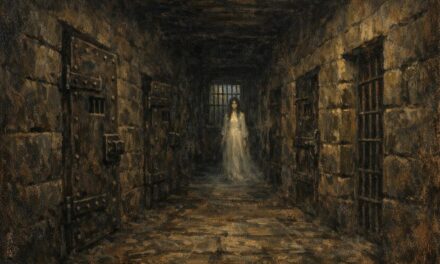
The apartheid prison received men convicted of opposition to a system the world has since recognized as a crime. Their years on the island — in cells, in exercise yards, on the wrong side of a ferry crossing they could not initiate — accumulated in the stone and corridors of the buildings that held them. The restless spirits reported by visitors since the island opened as a museum concentrate in those same cells and corridors: sounds in empty spaces, presences in unoccupied rooms, the sensation of attention where no living person stands. The last roll call — the daily counting of confined men — is the sound that has not finished echoing.
Robben Island is a UNESCO World Heritage Site reached by ferry from the Cape Town waterfront. The crossing takes thirty minutes, the same route that once carried prisoners in one direction only. The museum preserves the cells and the history. The island preserves everything else.
Story Source: www.capetown.travel
Address: Robben Island, Cape Town, South Africa
Accessibility Rating: Guided Tours Only — Access permitted only as part of an organized tour. Independent exploration not allowed.
Google Map
What Others Have Experienced
Tours at Robben Island are led by former political prisoners, creating an experience that visitors consistently describe as unlike any guided tour they have encountered elsewhere. When a guide stands in the isolation section and recounts the nights prisoners were beaten or the moment they received news of a family member’s death, visitors are watching a man navigate his own living trauma on their behalf. Multiple accounts describe leaving the prison in complete silence, unable to speak or adequately process what they had just witnessed.
— from The Dark Atlas
From the island’s shore, Table Mountain and the Cape Town skyline are clearly visible across roughly seven kilometers of icy water — close enough to distinguish but permanently unreachable. Visitors who stand at that vantage point often describe a vertiginous understanding of the deliberate psychological cruelty built into the island’s geography: the mainland was always visible as a constant reminder of the life the prisoners were denied.
— from The Dark Atlas
At the limestone quarry where prisoners were forced to labor for years, the relentless glare off the white stone caused permanent retinal damage — which is why Nelson Mandela could not tolerate camera flashes in his later years. Visitors standing at the quarry entrance are directed to a rock pile left by returning prisoners in 1995 as a silent monument to their labor; multiple accounts describe finding the pile unexpectedly overwhelming and being unable to look at it without becoming emotional.
— from The Dark Atlas
The Leper Graveyard — a desolate patch of ground where thousands were buried without names — is described by visitors as one of the most unsettling sections of the tour. The specific quality of silence in a graveyard whose occupants were forbidden from receiving visitors while they were alive is something multiple accounts struggle to adequately describe. Several visitors note that the deliberate erasure of identity, reflected in the absence of names on the graves, makes the site feel more disturbing than any conventionally marked burial ground they have encountered.
— from The Dark Atlas
Walking through the prison corridors gives visitors an overwhelmingly eerie feeling — soulless hallways, iron bars covered in rust from decades of prisoner contact, and four walls measuring seven by seven feet that imprisoned Nelson Mandela for eighteen years. One visitor described the same creeping sensation they had experienced at other historical prisons, but compounded here by the knowledge that this suffering is living memory, not ancient history, and that some of the men who endured it are still alive and walking those same hallways as guides.
— from Pause the Moment