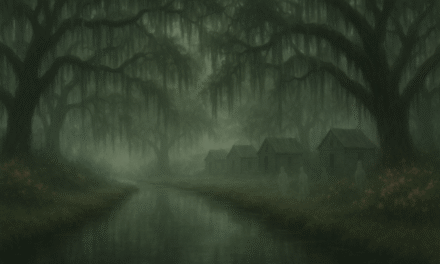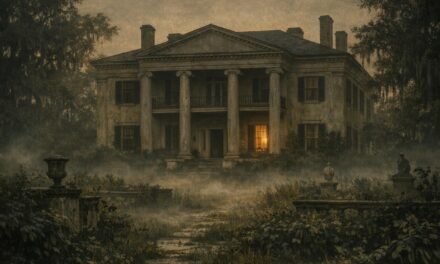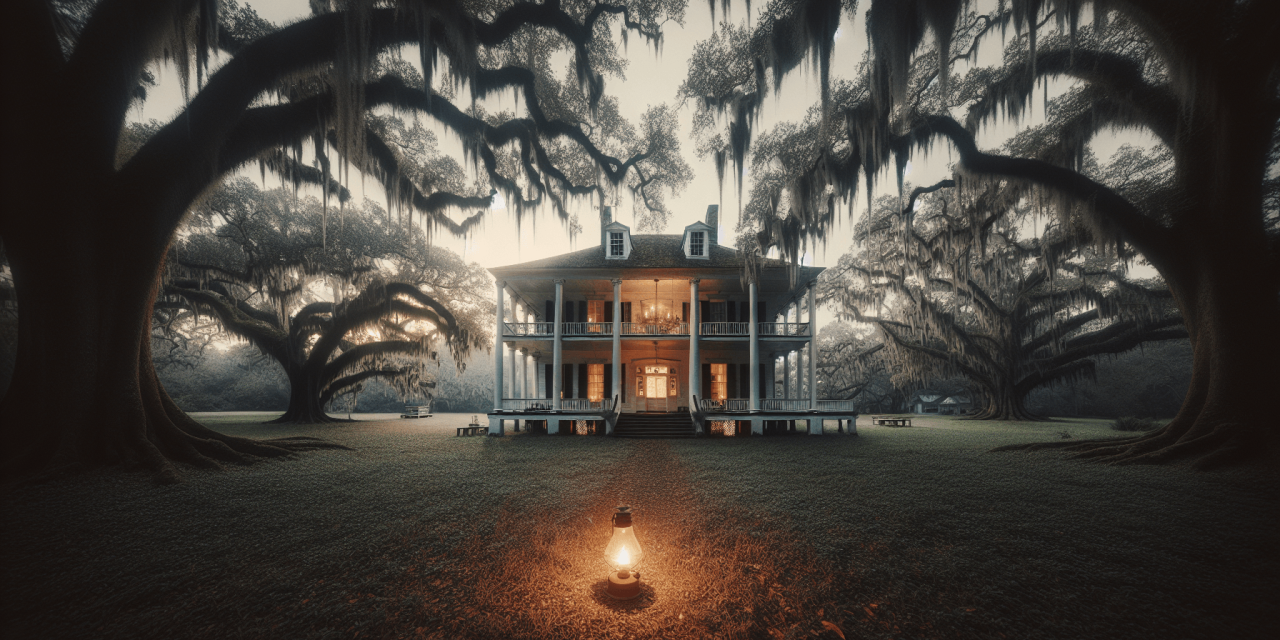
The Myrtles Plantation rises above Bayou Sara in St. Francisville, Louisiana — a white-columned antebellum house where Spanish moss hangs low and the 125-foot front porch never quite looks empty. General David Bradford built it in 1796, a Pennsylvania lawyer who had fled the state after organizing the Whiskey Rebellion, a violent tax protest that nearly earned him a treason charge. He received a pardon from John Adams in 1799, settled permanently in Louisiana, and built the home that would carry two centuries of unresolved history.
The plantation’s most famous ghost is Chloe — an enslaved woman said to have been caught eavesdropping on her enslavers, her ear severed as punishment. Legend holds she baked a birthday cake laced with oleander leaves, accidentally killing the plantation mistress and her two children, then was hanged by fellow enslaved people who feared retaliation. Historians found no evidence Chloe ever existed; plantation records document no such poisoning, no person by that name. Real death is confirmed: yellow fever claimed Sara Mathilda Woodruff and two of her three children in 1823 and 1824. What visitors still report — handprints inside the foyer mirror that no cleaning removes, children’s laughter in empty rooms at night, a woman who walks the property line and vanishes — has never been explained.
Today the Myrtles operates as a bed and breakfast and one of Louisiana’s most visited historic sites. A label attached by the National Enquirer in the 1980s — “America’s Most Haunted House” — has never been shaken loose. The property offers ghost tours and overnight stays, and former staff have described doors that lock themselves and lights that refuse to hold in certain rooms. The grounds don’t need embellishment. The history — enslavement, disease, violence, and loss accumulated over two centuries — makes itself felt without any help.
Story Source: Documentary titled “Files of the Unexplained” (Netflix, 2024)
Address: 7747 US-61, St. Francisville, LA 70775
Accessibility Rating: Booking Required — Open to visitors but requires advance reservation, ticket purchase, or tour booking.
Google Map
What Others Have Experienced
The plantation’s combination of B&B, restaurant, and guided tours creates a layered experience visitors describe as unusual for a haunted site — you can stay overnight in rooms where documented deaths occurred, dine in a setting directly connected to the violence of the antebellum period, and take the mystery tour through the same house after dark. Those who engaged with all three describe the cumulative effect as unlike any single-format haunted attraction.
— from Northshore Parent
The infamous mirror in the main hallway — said to permanently retain the impressions of Chloe, a formerly enslaved woman killed by the family — is described by virtually every visitor as the single most affecting object in the house. Accounts of staff repeatedly cleaning the mirror and the impressions returning are referenced across visitor reviews, and most describe spending an unusual amount of time simply staring at it.
— from TripAdvisor
The Mystery Tour, run after dark by candlelight, consistently earns the highest individual ratings of any activity at the plantation. Guides are described as historically well-informed rather than merely theatrical, and the density of documented murders, enslaved people’s lives and deaths, and accumulated folklore creates material that distinguishes the Myrtles from simpler ghost-story tours.
— from TripAdvisor
Overnight guests report a range of experiences they describe as difficult to explain away — unexplained sounds in the corridors at 2-3am, figures visible briefly through windows from the outside when no guests were in those rooms, and a persistent sweet floral smell in the main hall. Staff treat these accounts as ordinary enough to mention without prompting, which visitors consistently find more unsettling than dramatic claims would be.
— from Haunt Scout
Visitors who approach the Myrtles expecting a commercial haunted-house experience describe being surprised by the historical depth. The house’s connection to at least ten documented deaths on the property — including murders that are part of the historical record rather than legend — gives the tour a weight that purely theatrical venues lack, and the guides present those events in documented detail.
— from Viator