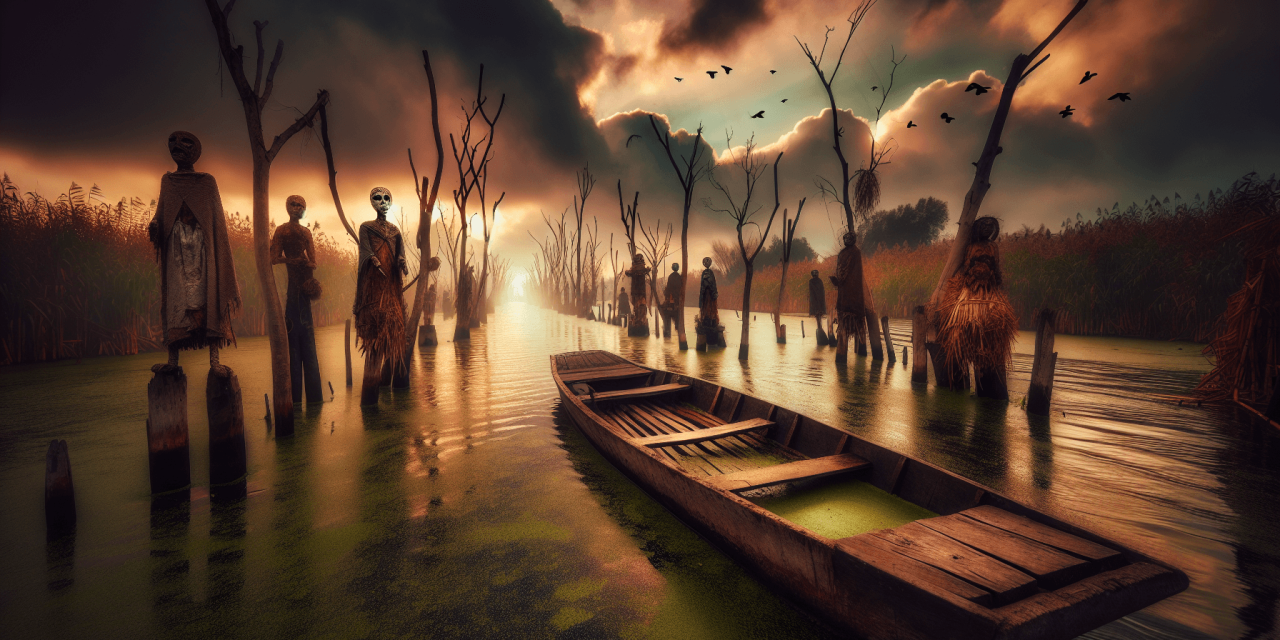
The trajinera leaves Embarcadero Cuemanco around noon, punted south into the stretch of canal where the trees grow thicker and the noise of the city fades. Some boatmen decline the route without explanation; others take the fare and do not linger. Thirty to forty-five minutes in, on a chinampa rising from the Laguna de Tequila, the trees begin to show their decorations—hundreds of dolls hung from branches and fences, their limbs twisted, paint peeled away, eyes long gone.
Don Julián Santana Barrera came alone to this chinampa in the mid-twentieth century. A girl drowned in the canal beside him; he witnessed it and could not save her. The day after, a doll floated past the island. He pulled it from the water and hung it from a tree as an offering, and for the next fifty years he kept on—trading vegetables for dolls, salvaging them from Mexico City’s trash, fishing them when they drifted by. In 2001 his nephew Anastasio, who had left briefly during a day’s fishing, returned to find Barrera, eighty years old, face-down in the same canal.
In 2022 Guinness World Records recognized the island as the world’s largest collection of haunted dolls. The hut where Barrera slept is a small museum now; his favorite, Agustina, remains on display beside the first doll he ever hung. Visitors describe a distributed attention coming down from the canopy, not from any single face. The dolls are said to turn their heads, to open their eyes, to move. The caretakers neither confirm nor deny.
Story Source: TV journalism episode titled “Terror on Doll Island” (Expedition X, Discovery Channel, 2020)
Address: Parque Ecologico de Xochimilco, Mexico City, CDMX, Mexico
Accessibility Rating: Open to All — Freely accessible to the public with no advance requirement. Includes hotels, restaurants, bars, and public historic sites where visitors may walk in without prior booking.
Google Map
What Others Have Experienced
The journey to the island is itself a significant part of the experience — a long trajinera ride through the Xochimilco canal network, with the dolls beginning to appear in the trees well before the island becomes fully visible. The gradual accumulation of decaying, staring faces in the branches above the still water gives visitors time to process what they’re seeing before arrival, which accounts suggest only makes landing more unsettling.
— from Power Traveller
The condition of the dolls — bleached, cracked, missing limbs, faces distorted by decades of weather — gives the island a quality distinct from any deliberately designed haunted attraction. The fact that Don Julián Santana spent 50 years collecting and hanging them in genuine belief is evident in the density of the collection, and visitors describe sensing the sincerity behind the obsession as contributing more to the atmosphere than the dolls themselves.
— from TripAdvisor
Several visitors note a distinctive silence around the island itself — the canal traffic noise of Xochimilco dropping away as the boat approaches, replaced by the sound of wind moving through hundreds of hanging plastic and fabric figures. The sounds the dolls make combined with the expressions on their damaged faces creates something multiple visitors describe as the most authentically unsettling experience of any Mexico City attraction.
— from The Clipboard of Fun
A practical warning recurring in visitor accounts is about imposter doll islands — boat operators sometimes take tourists to smaller, less authentic collections elsewhere in the canal network. Those who reached the original describe the difference in scale and atmosphere as significant, and strongly advise confirming the specific destination before departing from any embarcadero.
— from Mexico City Tours
Visitors who learn before arriving that Don Julián was eventually found drowned in the same spot where he said the girl’s spirit had haunted him describe the island differently from those who arrive without context. Knowing he spent half a century honoring a spirit that ultimately may have claimed him gives the site a biographical weight that purely visual atmosphere cannot supply.
— from Top-Rated.Online