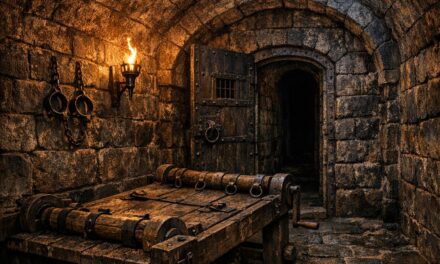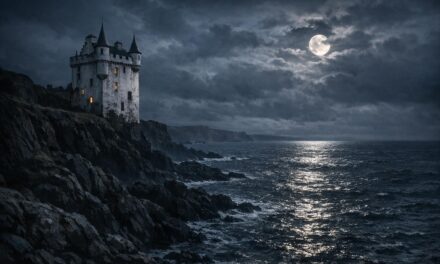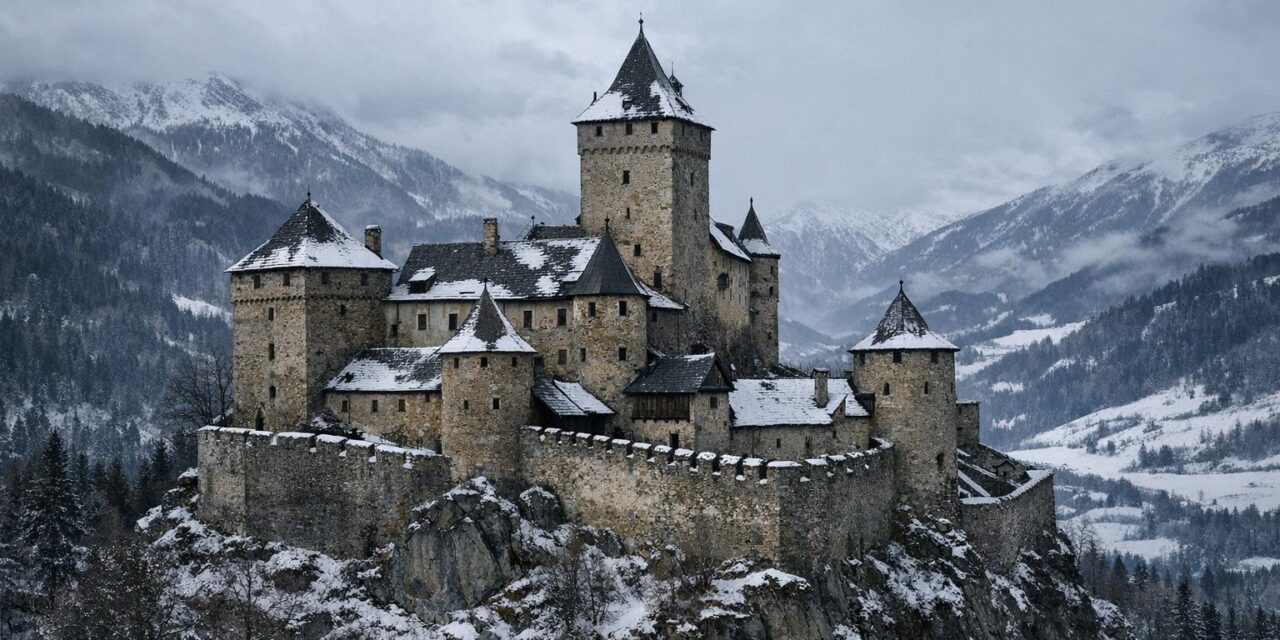
In the high Lungau valley of southern Austria, a medieval castle above the village of Unternberg holds a record its stone walls cannot shed. From 1675 to 1690, Moosham Castle served as the judicial seat for the Zauberer-Jackl trials — werewolf and witchcraft persecutions conducted under the Prince-Archbishops of Salzburg that resulted in at least 139 executions. Most of the condemned were young male vagrants accused of transforming into animals and attending sabbaths led by the devil. They were tortured, made to confess, made to name accomplices, and beheaded. No graves have been located. No sympathetic record preserved their names.
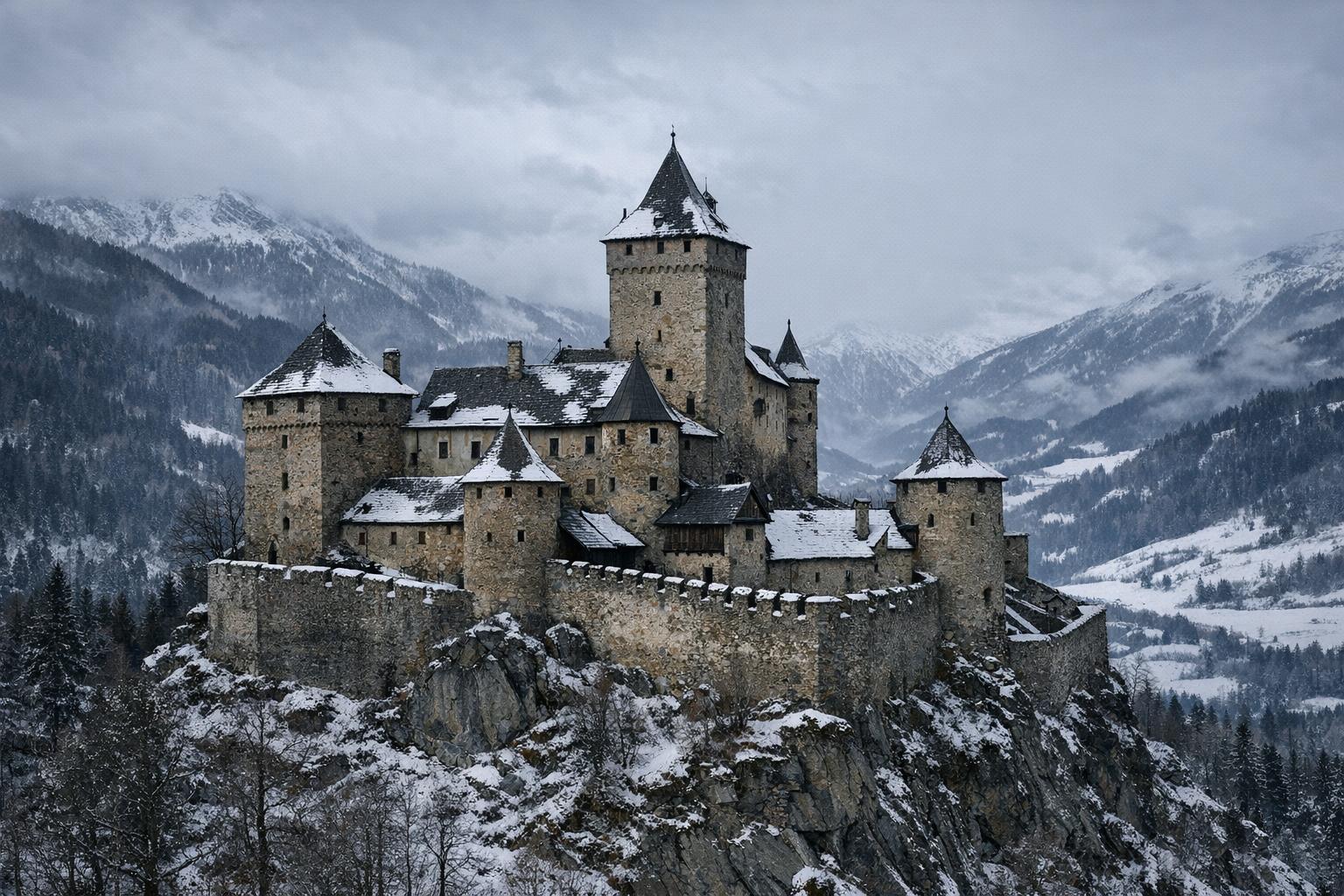
The castle was purchased in 1886 by Count Johann Nepomuk Wilczek, who restored it as a historical project. The Wilczek family maintains it today. But restoration did not quiet Moosham’s reputation. In the nineteenth century, unexplained animal deaths near the castle — cattle and deer with wounds no known predator could account for — reignited werewolf associations the landscape had never released. Visitors to the examining rooms and upper corridors report cold presences and sounds of crying or screaming that guides acknowledge without theatrical amplification. The sounds, they note, could be the wind forced through gaps in the mountain stonework.
The tours at Moosham are historical in tone, not theatrical. The Zauberer-Jackl trials are presented as documented atrocity, not supernatural spectacle. But the rooms where the accused were interrogated carry something the plainness of the stone cannot account for — a weight visitors describe consistently and that does not diminish with the historical framing. The castle is the only structure that witnessed those fifteen years of killing. The Lungau keeps its secrets poorly.
Story Source: www.schlossmoosham.at
Address: Moosham 13, 5585 Unternberg, Austria
Accessibility Rating: Guided Tours Only — Access permitted only as part of an organized tour. Independent exploration not allowed.
Google Map
What Others Have Experienced
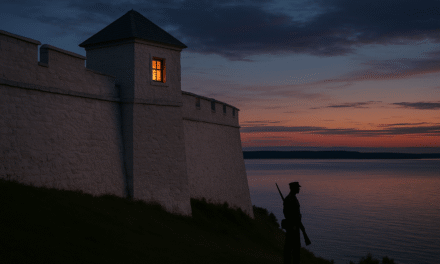
Moosham stands in an isolated Alpine valley with no visible development nearby, and arriving at the grey stone structure surrounded by forested slopes creates a sense of genuine remoteness before the history is even addressed. The guided tour is conducted by the owning family, giving the visit a personal quality rare at historic sites — the accounts of witch trials and werewolf persecutions are delivered by descendants of the family that has occupied the castle since its restoration in the late 19th century.
— from Dark Tourists
The tour includes the original executioner’s sword from the Salzburg witch trials and a replica torture chamber — objects that visitors describe as considerably more affecting in their original context than comparable artifacts in conventional museums. The account of 139 executions including 39 children is reportedly delivered without dramatization, which many visitors find only increases its impact.
— from TripAdvisor
The castle’s paranormal reputation is consistent across unrelated visitor accounts. Staff and visitors report being touched unexpectedly, banging and footsteps from empty rooms, closed doors found standing open, and persistent peripheral shadow movement. Those who work in the castle long-term describe these occurrences as routine rather than remarkable, which visitors tend to find more unsettling than any deliberate haunted-attraction theatrics.
— from Connect Paranormal Blog
Count Wilczek’s Arctic expedition exhibit — artifacts from the 1872 Austro-Hungarian North Pole Expedition — sits in the same building as the instruments of the witch trials. Visitors note the disorienting effect of this juxtaposition: refined 19th-century scholarship and the physical tools of mass persecution displayed in adjacent rooms, the tonal contrast adding to the castle’s already unsettled atmosphere.
— from Dark Tourists
The werewolf trials of the early 1800s — in which residents were executed after dead livestock were found on the grounds — are presented on the tour as a study in how isolated mountain communities could turn fatal logic inward. Visitors note the castle’s densely forested valley makes the panic feel, if not rational, at least geographically comprehensible in a way it wouldn’t from a city.
— from Mysterious Trip