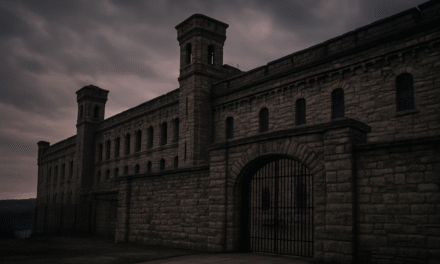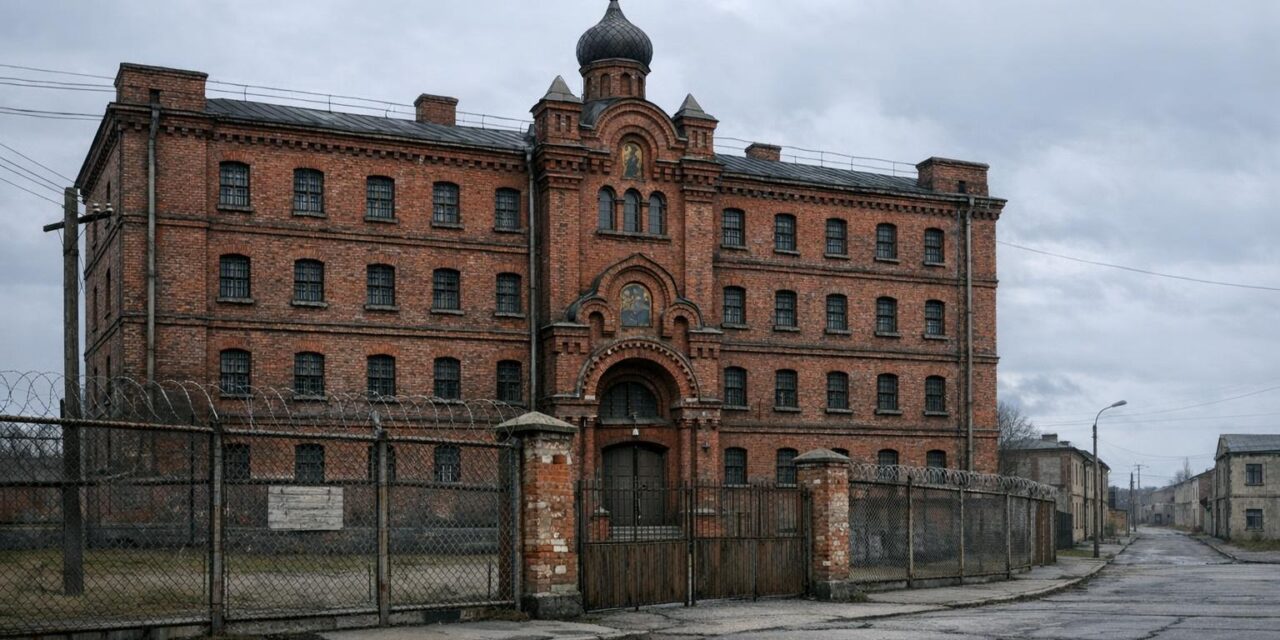
The district of Karosta sits at the northern edge of Liepāja on Latvia’s Baltic coast — red-brick buildings in a Russian-Byzantine style, wide ordered streets, the formal geometry of a military base built under Tsarist Russia in the 1890s. At the far edge stands the Karosta Prison: three stories of dark brick, small barred windows, architecture that communicates institutional purpose without elaboration. Built in 1900, it held prisoners under Tsarist, Nazi, and Soviet authority across the following century. Each regime applied its own methods. The building absorbed all of it.
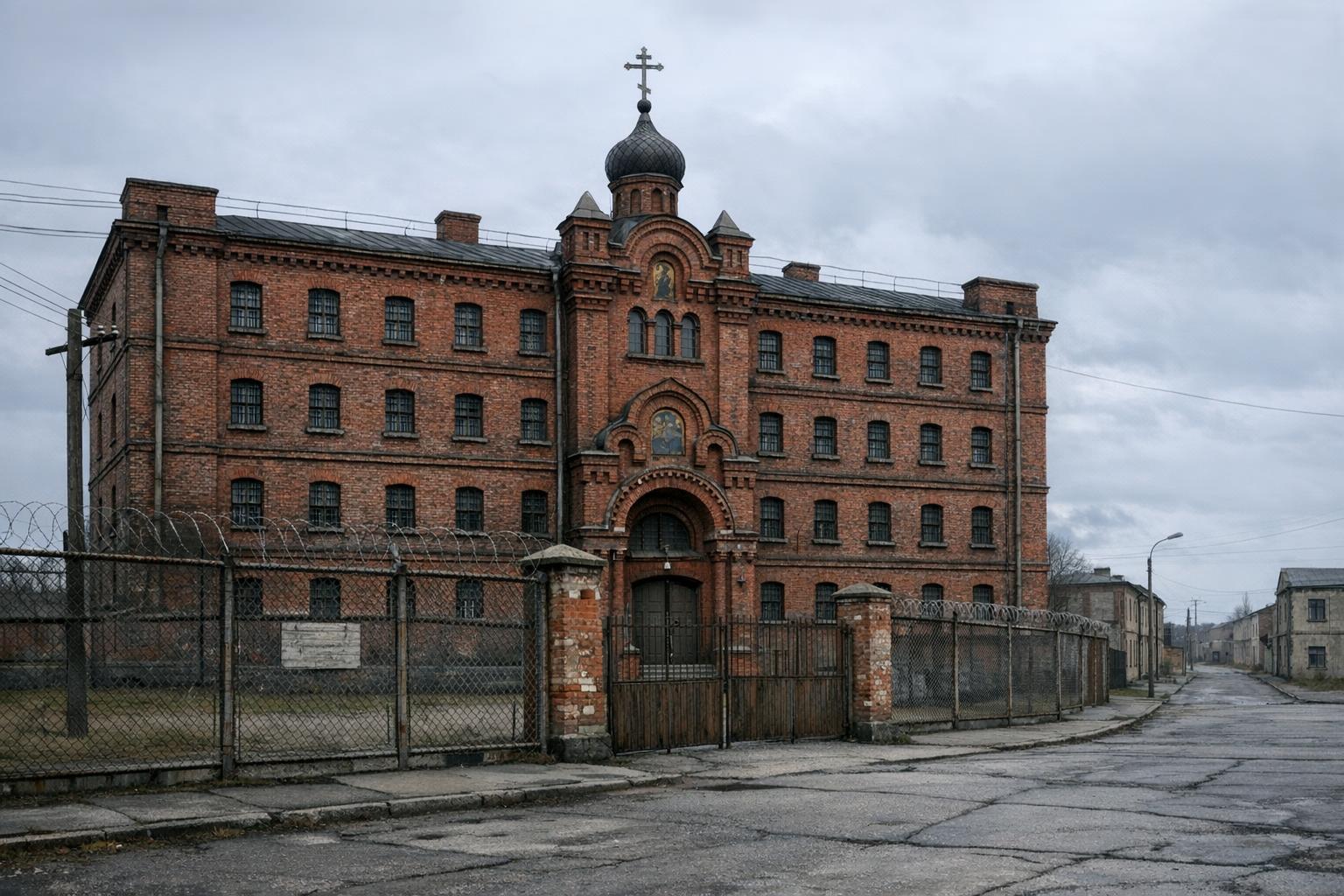
Under Soviet rule the prison held military personnel convicted by tribunals — deserters, those guilty of insubordination, men whose cases were processed with the speed of a system that treated people as administrative problems. The cells were barely large enough for a cot. The interrogation rooms were in the basement. Latvia restored independence in 1991; the last Soviet forces withdrew from Karosta in 1994; the prison closed in 1997. What visitors began reporting almost immediately were not dramatic hauntings but subtler disturbances — cold spots with no source, figures in peripheral vision in empty corridors, sounds from vacant rooms.
The prison now operates as one of the Baltic states’ most unusual travel destinations. The overnight “Behind Bars” experience puts guests in original cells and processes them through actors playing Soviet guards, a program that takes most visitors by surprise in its commitment to authenticity. The building is honest about what it is: the cells are real, the interrogation rooms are real, and the suffering documented here is separated from the present not by centuries but by decades. That proximity is precisely what makes it compelling.
Story Source: www.karosta.lv
Address: Invalidu iela 4, Liepaja, LV-3402, Latvia
Accessibility Rating: Guided Tours Only — Access permitted only as part of an organized tour. Independent exploration not allowed.
Google Map
What Others Have Experienced
A dark tourism specialist who visited on an off-season private tour described the prison’s museum experience as powerfully atmospheric without theatrical enhancements — dark corridors, graffiti-covered cells bearing real prisoners’ messages, and rooms crammed with Soviet relics including uniforms, gas masks, and a Lenin bust. He noted the physical spaces carry sufficient weight on their own, separate from the immersive prisoner experience packages the site is best known for.
— from Dark Tourism
The immersive group packages — where actor-guards subject visitors to mock interrogations and Soviet-style punishments including floor-scrubbing and confinement — divide reviewers sharply. Some find it a meaningful way to internalize the history; others consider it unsettling entertainment. Virtually all agree the experience leaves a lasting impression unlike anything else available at a European historical site.
— from TripAdvisor
The prison’s paranormal reputation is substantial — Ghost Hunters International named it one of the most haunted places in the world, and visitors and staff report cold spots, unexplained sounds in the cells, and sightings of a woman in white moving through the corridors. The building’s overlapping layers of Tsarist, Nazi, and Soviet trauma occupying the same physical spaces makes the accounts easy to understand if not to explain.
— from Discover Latvia
Those who booked the overnight cell stay describe spending a night in genuine Soviet-era conditions — iron cots, near-total darkness, the smell of old stone — as affecting in a way no replica environment could replicate. The silence of the building after midnight, broken only by the sounds of the structure settling, is consistently cited as the most unsettling aspect of the experience.
— from Karosta.lv
Travellers who made the journey from Riga described the prison as one of the few dark tourism experiences where the setting fully matches its history. The three overlapping layers of occupation — Tsarist naval base, Nazi execution site, Soviet KGB facility — are all physically present in the same building, and the guided tour addresses each without softening any of them.
— from Riga Guide