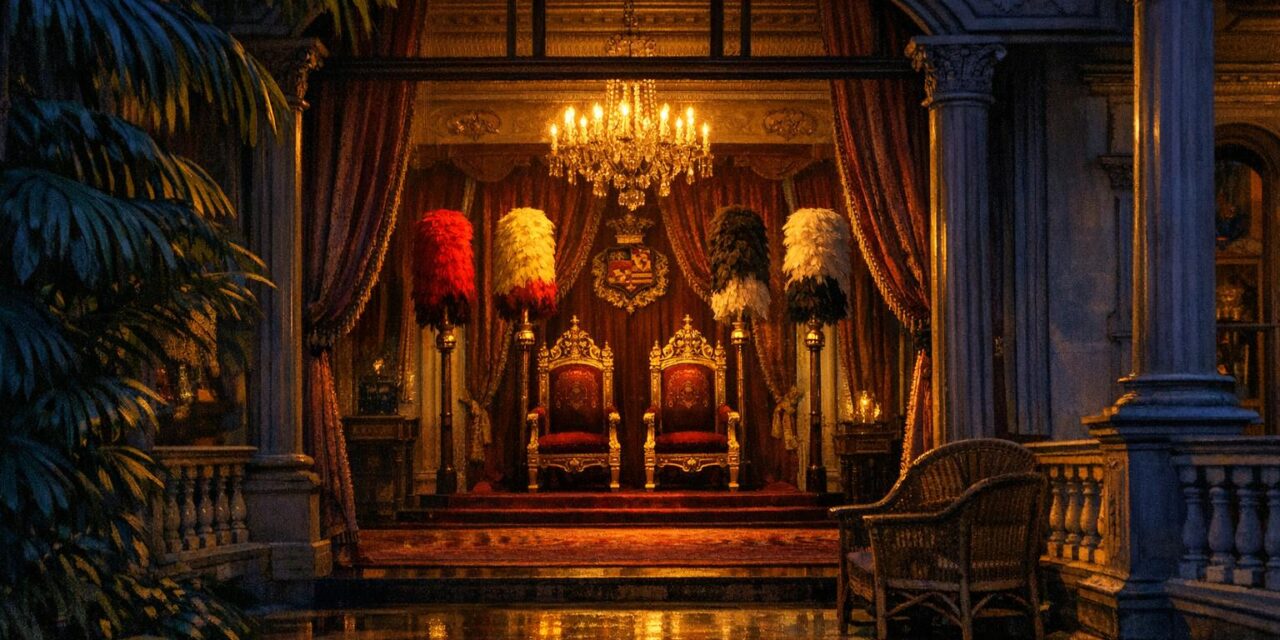
Iolani Palace in Honolulu was completed in 1882 as the official residence of the Hawaiian monarchy, intended to announce the Kingdom of Hawaii’s sovereign standing to the world. It had electricity before the White House and hosted the full apparatus of a royal court: throne room, state dining room, formal reception chambers. In 1893, Queen Liliuokalani was overthrown in a coup backed by American business interests and naval force. In 1895, after a failed royalist counter-revolution, she was held prisoner in an upstairs room of her own palace for eight months. Hawaii was annexed by the United States in 1898. The kingdom was never restored.
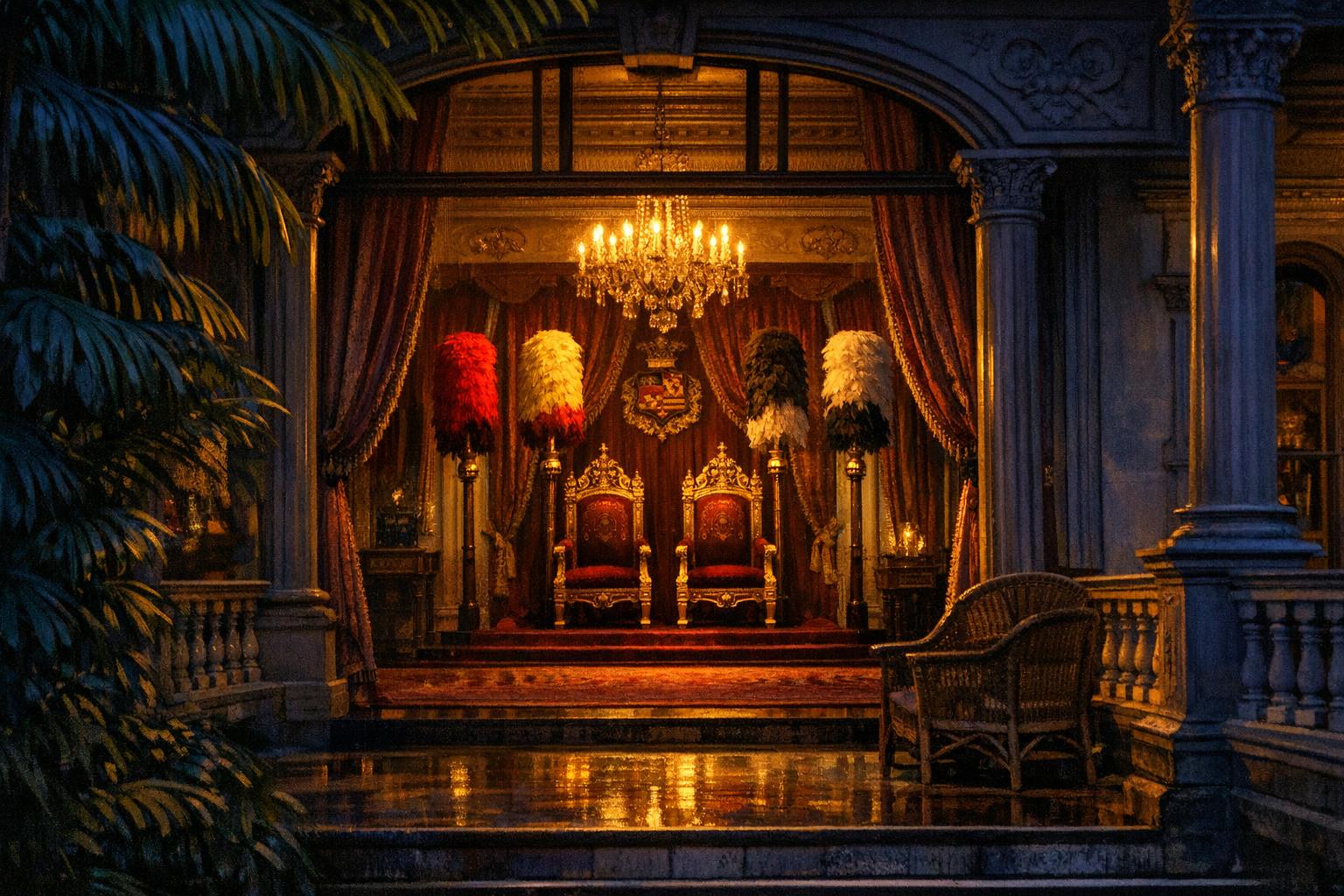
The haunting is inseparable from that history. Staff and visitors most often report the queen’s presence in and around the upstairs room where she was imprisoned — a sense of being watched, and the occasional sound of music in a building where none is playing. Liliuokalani was a gifted composer, and the connection between her and melody is intimate enough that reports of inexplicable sound carry particular weight. Throughout the rest of the palace — the throne room, formal corridors, the restored state rooms — a persistent sense of occupancy is reported by those who have worked and visited the building over many years.
The palace was restored as a museum after decades as a government office building, and visitors today encounter rooms returned to something close to their original appearance. What makes this haunting unusual is its political dimension: the presence reported here is less the residue of personal tragedy than the persistence of an extinguished sovereignty, felt most strongly in the building that was designed to express it.
Story Source: iolanipalace.org
Address: 364 S King St, Honolulu, HI 96813
Accessibility Rating: Booking Required — Open to visitors but requires advance reservation, ticket purchase, or tour booking.
Google Map
What Others Have Experienced
Queen Lili’uokalani, who was imprisoned in her own bedroom for nine months following the 1893 overthrow of the Hawaiian monarchy, is reported by security guards to appear on the palace grounds at approximately 5:30 every morning, moving in her characteristic rich black dress. Her apparition is also seen at the window of her former bedroom, and the guards have confirmed the sightings occur with enough consistency to be treated as a documented pattern rather than isolated reports.
— from Honolulu Magazine
The grand piano in the palace’s Blue Room has been heard playing on its own when no one is present in the building — a phenomenon reported by multiple guards and documented in accounts spanning several decades. Some guards have described entering the Blue Room to find the piano producing music with the keys visibly depressing, the bench empty, and no one else in the room.
— from Mysteries of Hawaii
Visitors to the palace have reported unexplained footsteps in empty corridors, doors opening and closing without anyone near them, and the sensation of being watched or touched while alone in rooms. These accounts come from both tourists and staff across different periods of the palace’s operation as a museum, creating a consistent record that museum historians acknowledge while being careful to note its anecdotal nature.
— from Mysteries of Hawaii
Visitors with documented connections to the royal Hawaiian bloodline have reported hearing traditional Hawaiian chanting or music when they enter the royal bedroom on the upper floor — a phenomenon that does not appear to occur for other visitors and which the palace’s staff describe as one of its most frequently noted anomalies.
— from Haunted Diary
Iolani Palace is the only royal palace on US soil, and its history of dispossession — a sovereign queen imprisoned in her own bedroom by a foreign military — gives the building a weight that visitors describe as palpable on entering. Many who tour the palace describe standing in the royal bedroom and feeling a quality of presence that they attribute not to a generic ghost story but to the specific and documented trauma of what happened in that room.
— from US Ghost Adventures