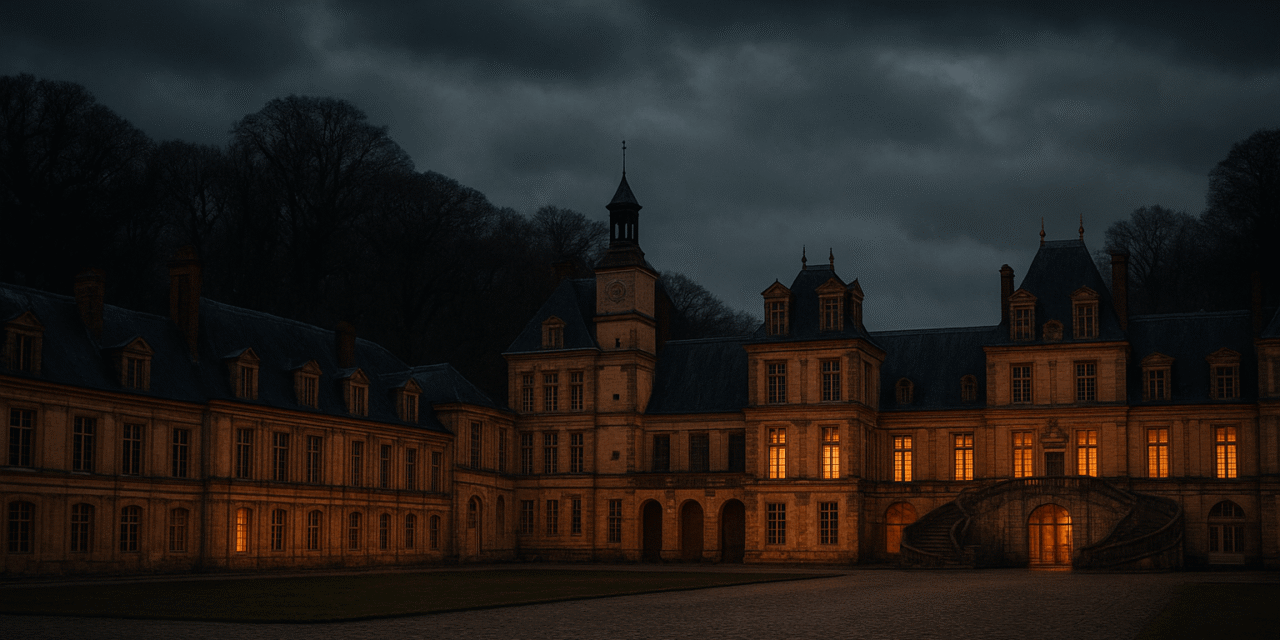
Chateau de Fontainebleau has stood at the edge of its ancient forest fifty-five kilometers south of Paris since the twelfth century, serving more than thirty French kings and emperors. Francis I transformed it from a hunting lodge to a Renaissance palace in the sixteenth century, importing Italian craftsmen who set a new standard for French court culture. Napoleon I called it the true home of the kings of France and signed his first abdication there in 1814. The Cour des Adieux takes its name from his farewell to the Guard on the exterior staircase. Staff who have worked that courtyard report it asks something of visitors that other palace spaces do not.
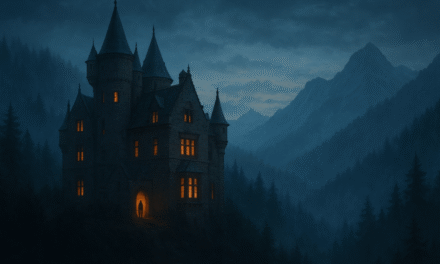
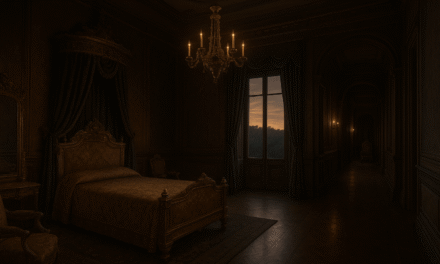
Two ghosts define the place. The Black Hunter, le Grand Veneur, is the older: a horseman with hounds riding through the forest before dawn or before disasters, reported by French court members across several centuries with a consistency that lifts it above ordinary rumor. The White Lady moves through the interior corridors, linked to Anne of Austria and Catherine de Medicis, always described as mournful rather than threatening. The Gallery of Francis I and the state apartments carry their own reputations among staff who work the building after closing.
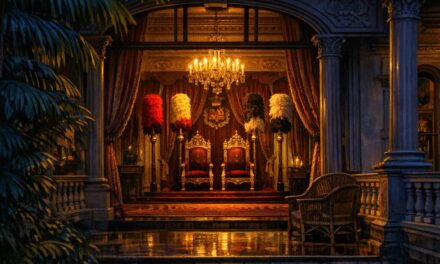
The chateau is a UNESCO World Heritage Site and receives far fewer visitors than Versailles, which means the staterooms have breathing room and the Cour des Adieux can be taken at a human pace. The forest surrounding it is open to walkers. You cannot understand what the Grand Veneur represents without entering it, or what the chateau holds without standing in the rooms where centuries deposited their weight.
Story Source: www.thelocal.fr
Address: Château de Fontainebleau, 77300 Fontainebleau, France
Accessibility Rating: Open to All — Freely accessible to the public with no advance requirement. Includes hotels, restaurants, bars, and public historic sites where visitors may walk in without prior booking.
Google Map
What Others Have Experienced
The Grand-Veneur — the Black Hunter — is a mounted phantom said to be the ghost of a royal huntsman assassinated during François I’s reign, who roams the surrounding forest at night with a pack of hounds to foretell disaster. When Henri IV was dining with his mistress Gabrielle d’Estrées near the château, the hunter appeared; Henri’s servant Bassompierre went to investigate and returned shaken, carrying a warning to repudiate the king’s companion or face great misfortune. Three days later, Gabrielle d’Estrées died of sudden violent convulsions.
— from Writing the Renaissance
The Grand-Veneur’s appearances have been recorded across centuries of French royal history, each time preceding catastrophe. The phantom reportedly appeared to François I, Charles IX, Henri IV, and Louis XIV over successive reigns; tradition holds that he warned Louis XVI of an early death, foretold the assassination of the duc de Berry, and appeared to Napoleon I in the Fontainebleau forest on the eve of his 1814 abdication.
— from Writing the Renaissance
The apparition known as l’Homme Rouge — the Red Man — has long been reported appearing near the palace to deliver ominous prophecies. Catherine de Medici is said to have encountered the ghost, who predicted the tragic deaths of her sons; the Red Man reportedly appeared to Henry IV as well, with a prediction of a violent death that Henry came to believe. The ghost is described as one of the palace’s most persistent and recognizable spectral presences.
— from OrangeSmile
The ghost of Marquis Monaldeschi — a courtier of Queen Christina of Sweden who was executed inside the palace in 1657 — is said to haunt the halls and gardens. His apparition is most often reported among female visitors to the château, echoing a reputation for captivating the women of the court that he carried in life; eyewitnesses describe a presence that moves through the corridors and lingers in the gallery spaces where he spent his final hours.
— from OrangeSmile
The palace is said to be haunted by the ghost of Napoleon Bonaparte, who lived and governed from Fontainebleau during his imperial reign. Visitors and staff have reported hearing disembodied voices, seeing shadowy figures moving through the corridors, and feeling a persistent sense of unease and foreboding in specific rooms — experiences that have drawn paranormal investigators and history enthusiasts to the site for decades.
— from The Enlightenment Journey