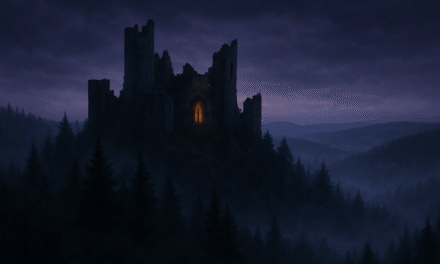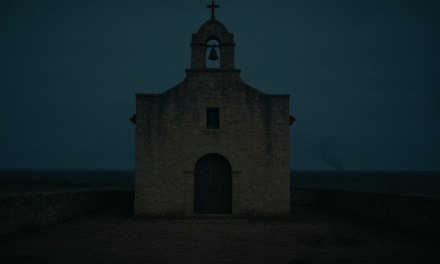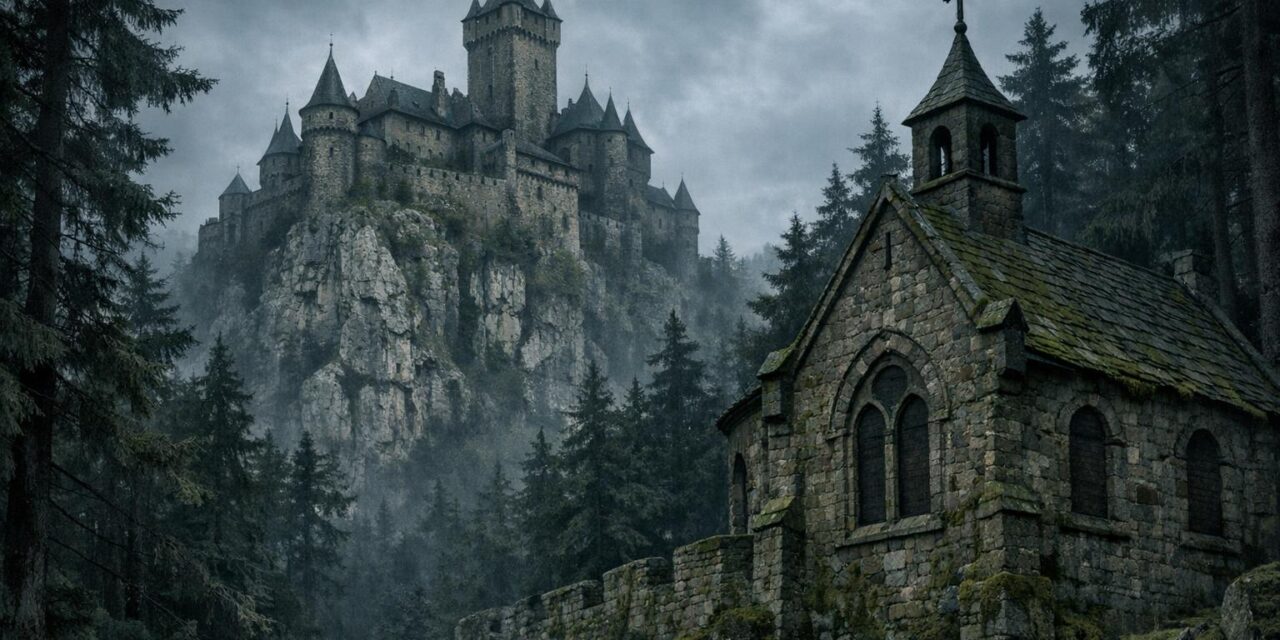
Thirty miles north of Prague, where the Bohemian forest closes around a limestone cliff, Houska Castle stands as a puzzle made of stone. Built between 1253 and 1278 by King Ottokar II, it has no water source, no stairs connecting its upper floors to the courtyard, and defensive works that face inward. According to local folklore preserved by chronicler Václav Hájek in 1541, the castle was built not to manage royal estates but to seal a bottomless pit in the limestone — a crack the surrounding population believed was a gateway to Hell, from which half-human creatures emerged at night to drag villagers into the dark.
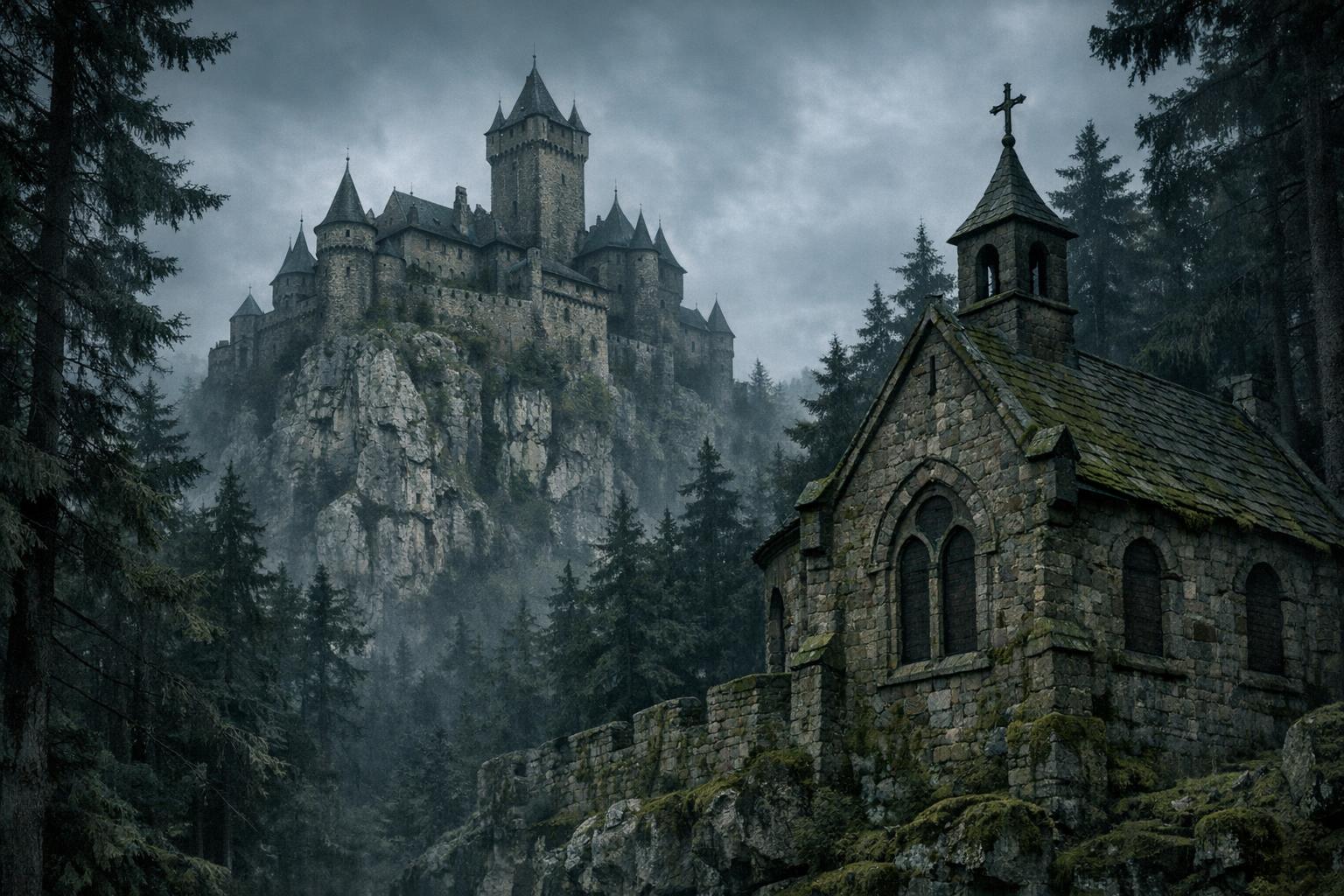
Before the pit was sealed with stone plates, Ottokar reportedly offered condemned prisoners a full pardon if they would be lowered into the abyss by rope. The first volunteer came back seconds later: hair turned white, face aged by decades, mind shattered. He died in an asylum within days. A chapel dedicated to the Archangel Michael was built above the sealed pit; its walls still bear a fresco of a left-handed centaur — left-handedness being, in medieval tradition, the devil’s mark. In the 1640s, a Swedish mercenary named Oronto conducted black magic experiments at the castle until local hunters killed him.
During World War Two, the Nazis occupied Houska, reportedly to secure SS leader Heinrich Himmler’s library of 13,000 occultist manuscripts. Skeletal remains of Nazi soldiers were found in the courtyard afterward, under circumstances never determined. Houska has been open to visitors since 1999, still owned by the Šimonek family. The pit beneath the chapel remains sealed against excavation, with unexploded wartime ordnance cited as the reason. Visitors press their ears to the chapel floor at night and hear what they describe, consistently, as screaming.
Story Source: allthatsinteresting.com
Address: Houska 1, 471 62 Doksy, Czechia
Accessibility Rating: Open to All — Freely accessible to the public with no advance requirement. Includes hotels, restaurants, bars, and public historic sites where visitors may walk in without prior booking.
Google Map
What Others Have Experienced
A visitor to the Okho-ru Pavilion in the palace’s rear compound described the air around the site as having a distinctly different quality from the rest of the grounds — a heaviness that was difficult to attribute to the heat alone. Knowing that the empress was murdered in that exact space in 1895 made the feeling something more than atmospheric, and they described the pavilion as one of the most affecting historical sites they had visited in Korea.
— from KoreabyMe
An NPR journalist who visited haunted sites in South Korea described Gyeongbokgung as carrying a particular historical weight related to the empress’s assassination, with guides and locals noting that the compound where Myeongseong was killed remains a site of unofficial mourning. Visitors frequently leave flowers at the pavilion, and staff who work in that section of the palace have reportedly described an unsettled quality to the space.
— from NPR
A travel writer exploring Seoul’s darker history described the Geoncheonggung compound within the palace — the private royal residence where the empress was killed — as a space where the violence of the 1895 assassination refuses to recede entirely into history. Local legends hold that the spirits of servants who witnessed the murder and later died of shock still wander the area, and multiple visitors have described the atmosphere of the inner compound as one of persistent grief.
— from Dark Side of Seoul
A visitor who joined a ghost and dark history tour of Seoul described the Gyeongbokgung stop as the most historically weighty part of the experience. Learning that the empress was dragged from her chambers, killed, and her body burned in the garden made the palace’s restored grandeur feel like a deliberate erasure of something that was still present in the ground beneath it.
— from Karli in Korea
A visitor described the experience of standing in the spot where Empress Myeongseong was murdered as one that demanded a kind of attention the rest of the palace did not. The pavilion is well-maintained and clearly labeled, and the specificity of that documentation — here, in this place, at this hour — made the weight of the event feel less historical than immediate. They said they had visited dozens of UNESCO sites and had never felt quite that particular feeling before.
— from Medium / Haunted Korea