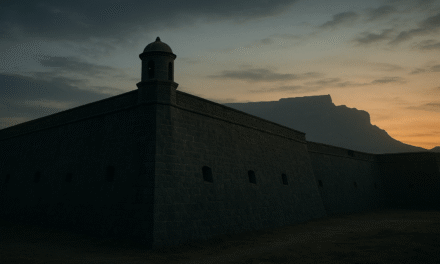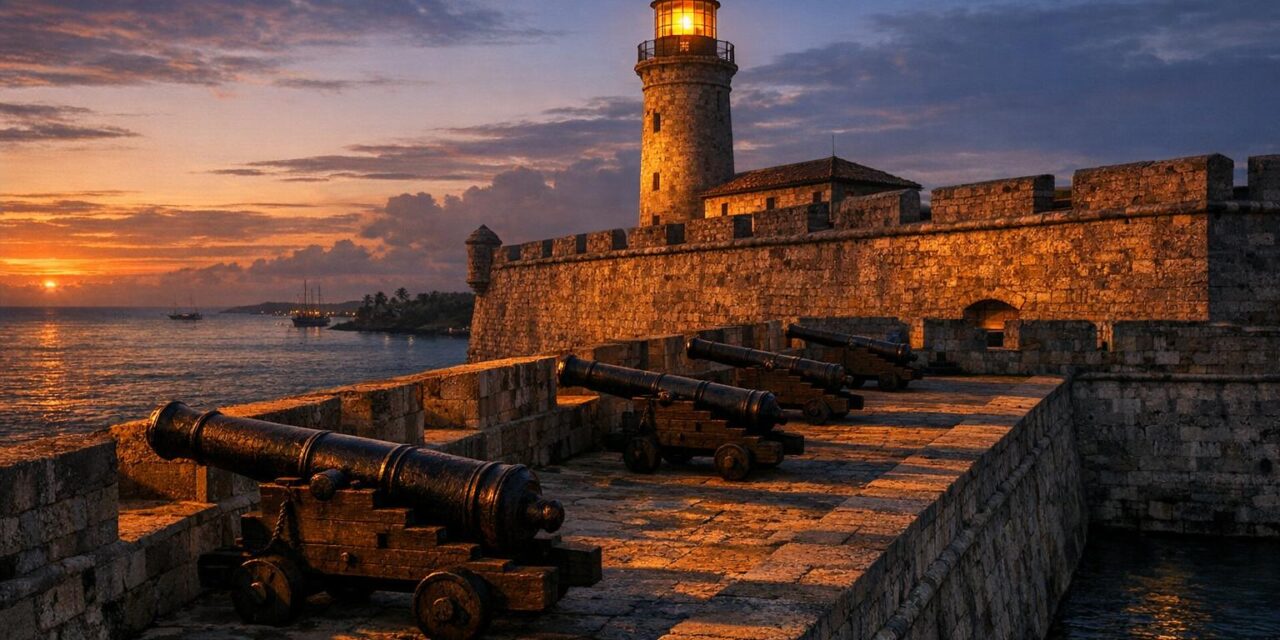
The tunnel into El Morro is narrow, its ceiling blackened by centuries of salt air, and it opens without warning onto the Bay of Havana — blue and wide, the city spread to the south and the cannon-mounted ramparts running north above the water. The Castillo de Los Tres Reyes Magos del Morro was ordered by the Spanish crown in 1589 and completed fifty years later, designed by Italian architect Giovanni Battista Antonelli to prevent any unauthorized ship from surviving the entrance to the port. Soldiers lived inside it, maintained its cannons, and conducted their baptisms and funerals in its chapel, watching the horizon until they died or were replaced by others who came to watch the same water.
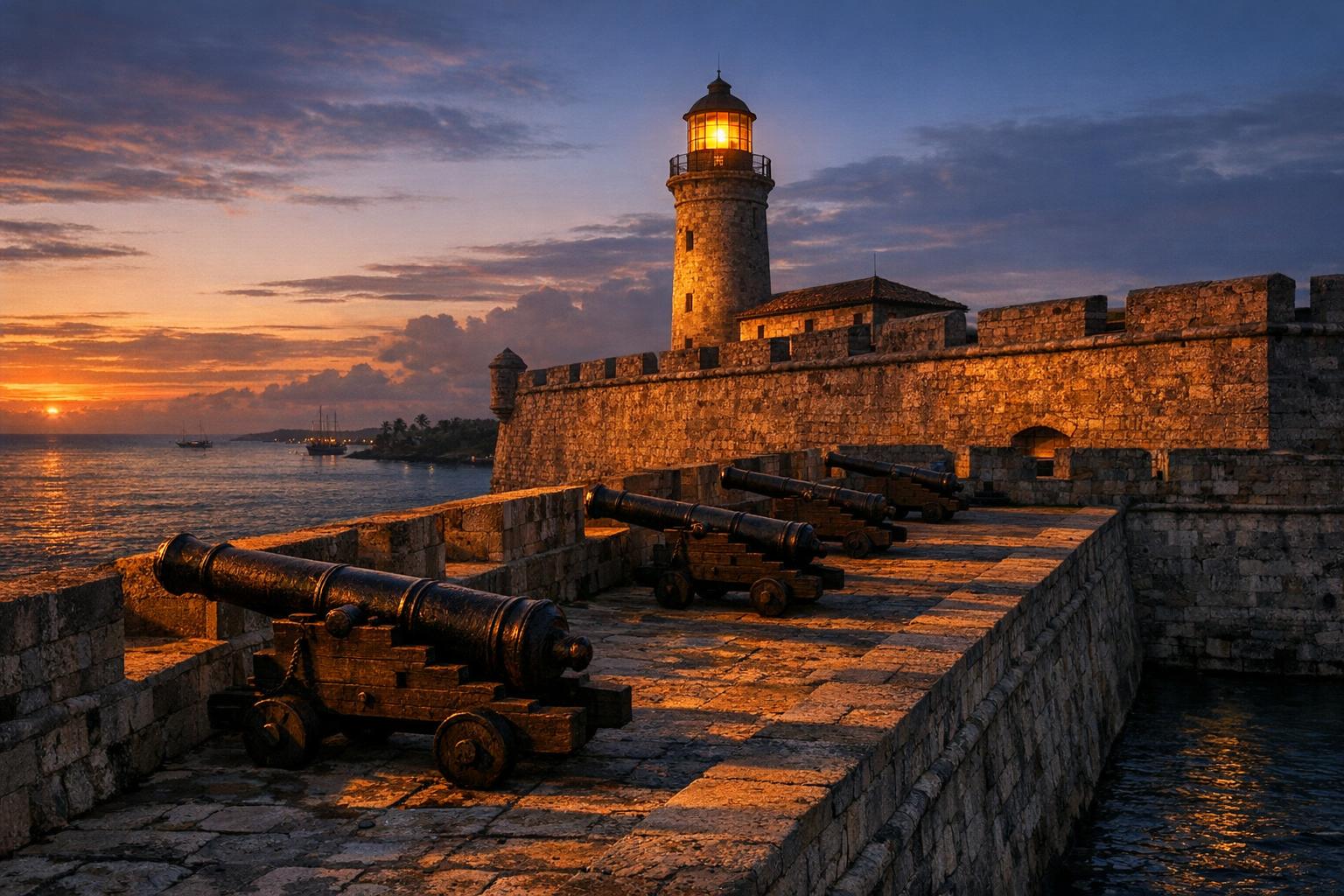
The fortress accumulated four centuries of that watch before it became a museum. A lighthouse was added in 1845 and updated to electric power in 1945 — both additions extending the vigil the original garrison had kept by hand. Every night at 9pm, a cannon fires from El Morro in the Cañonazo de las 9 ceremony: soldiers in period dress, the ritual of preparation, the report rolling across the bay and echoing off Old Havana. People who visit consistently describe a sense that the place is occupied beyond what the museum staff and tourists account for — that the ramparts still have eyes, that something has been watching this harbor for so long it no longer needs to announce itself.
El Morro is open daily, accessible via the Havana Tunnel or by ferry from Old Havana. The 9pm cannon ceremony runs after museum hours, and most visitors stay for it — not because the explosion is spectacular, but because the sound goes across the water the same way it has gone every night for four centuries, and standing there when it fires, the watch is still going.
Story Source: visitcuba.com
Address: Castillo de los Tres Reyes del Morro, Havana, Cuba
Accessibility Rating: Open to All — Freely accessible to the public with no advance requirement. Includes hotels, restaurants, bars, and public historic sites where visitors may walk in without prior booking.
Google Map
What Others Have Experienced
The ceremony begins earlier than you’d expect — soldiers march into the courtyard in full period uniform around 8:30 pm, nearly half an hour before the cannon fires. Arriving at least an hour beforehand is essential; the viewing area was already packed when we got there, and latecomers struggled to see anything. Worth the cab fare across the bay.
— from TripAdvisor
El Morro’s position across the harbour from Old Havana gives you something no attraction in the city center can offer: Havana’s entire skyline at once, the Malécón curving along the waterfront, the lighthouse rotating above you. Climb the tower if you can — the view from there rewards the effort more than any exhibit inside.
— from TripAdvisor
Sunset from the ramparts is a separate experience from the cannon ceremony, and worth arriving early enough to catch both. The walls face directly across to Old Havana, and as the light drains out of the sky and the city’s lights come on one by one over the water, the 400-year-old fortifications feel less like a museum exhibit and more like the reason this city exists where it does.
— from insightcuba.com
The complex holds more than most visitors realize before arriving — a maritime museum documenting the 1762 British siege, rotating contemporary art exhibitions, artisan stalls, and two restaurants with views of the bay. Budget accordingly: a quick circuit takes 90 minutes, but the site rewards spending a full afternoon before staying for the evening ceremony.
— from insightcuba.com
There’s quite a wait, and it’s built around a single cannon — but nothing prepares you for the volume of the shot. Black powder only, no ammunition, and yet when it fires the sound carries across the entire harbour and you feel it before you hear it. For a tradition that’s been running since the 1700s, that hasn’t changed.
— from robfaucher.com