In February 1944, American carrier aircraft launched Operation Hailstone against Chuuk Lagoon—then the most heavily fortified Japanese naval base in the Pacific. In forty-eight hours, more than fifty Japanese ships went to the bottom: warships, freighters, tankers, supply vessels, hundreds of aircraft. The men who went down with those ships were not recovered. The wrecks settled into the seafloor of a remote Pacific lagoon and stayed. The coral came. What had been a strategic disaster became, in time, the largest collection of preserved wartime wrecks in the world.
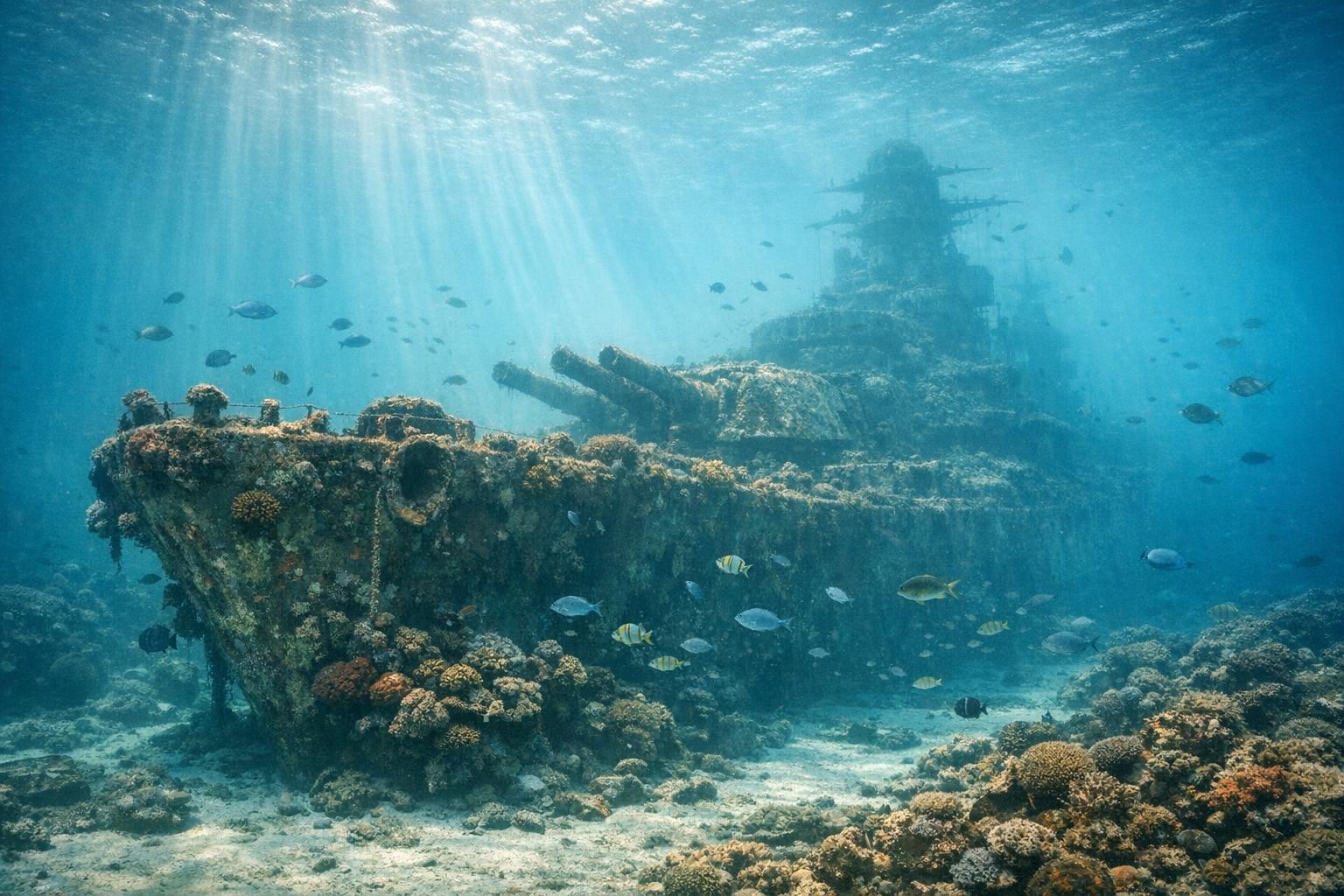
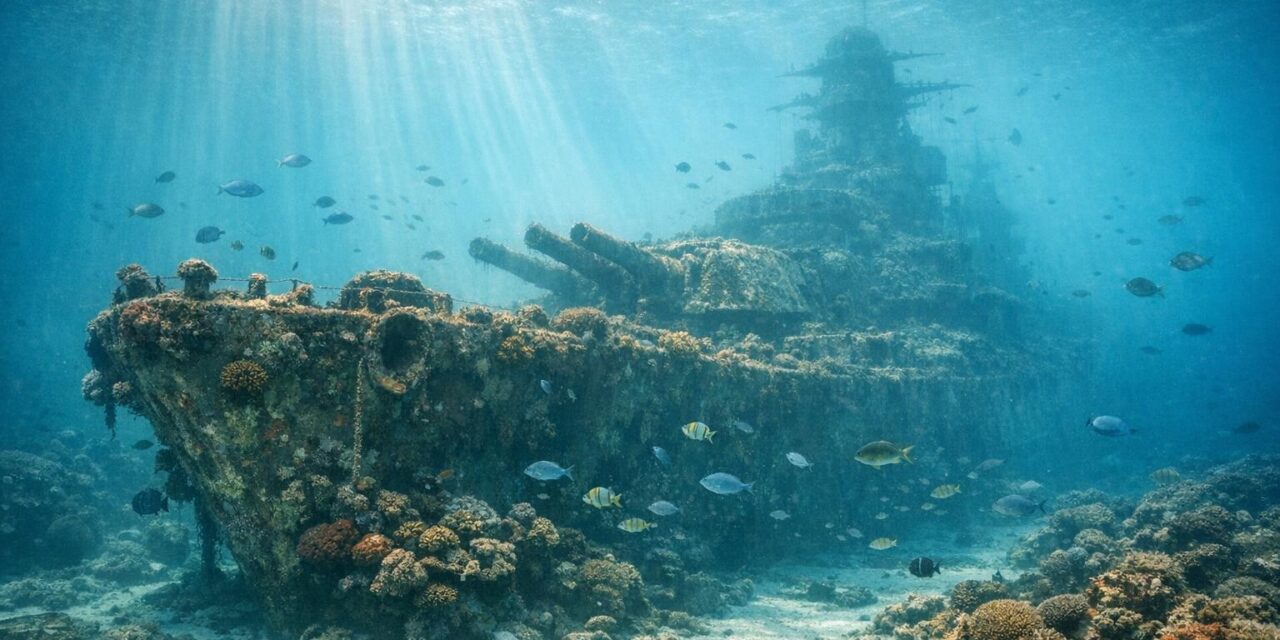
Today, dive operators ring the lagoon and run excursions daily to the wrecks. What divers find is not simply an intact fleet but a preserved moment: cargo holds still carrying their wartime loads, personal objects exactly where they fell, and in the crew quarters of several ships, human remains that no recovery mission ever reached. The men who went down in 1944 are, in documented cases, still aboard. The ocean preserved what the war placed in it. The ships became the tomb. The tomb remains open.
Paranormal accounts from Chuuk Lagoon are consistent across decades: a directed unease in certain crew quarters, peripheral movement that cannot be explained, a sense of being observed in holds that have sat on the seafloor since 1944. Dive guides who have worked the lagoon for years understand this as part of the character of the place. More than fifty ships. Eighty years on the bottom. The dead still among them.
Story Source: visitchuuk.com
Address: Chuuk Lagoon, Chuuk State, Federated States of Micronesia
Accessibility Rating: Booking Required — Open to visitors but requires advance reservation, ticket purchase, or tour booking.
Google Map
What Others Have Experienced
A dive writer described the experience of entering the wrecks as immediately overwhelming — cargo holds still containing the war material that went down with the ships, from tanks and trucks to crated ammunition and soldiers’ personal effects, create a totality of historical preservation that no museum could replicate. The emotional weight comes not from a single dramatic encounter but from the accumulated detail of an entire fleet frozen at the moment of its destruction.
— from Scuba Diver Life
Local dive guides operate with a respect for the site that goes beyond professional conduct — some sing quietly before entering the water as a way of announcing their presence to the spirits they believe still inhabit the wrecks. Divers who learn this practice before their first descent describe it as transforming the experience, shifting it from a diving trip into something closer to a formal act of remembrance.
— from PADI Travel
The living quality of the wrecks distinguishes Chuuk from other dive destinations — the ships are now densely colonized with coral and marine life, so that what was an instrument of war has become an ecosystem. Divers describe a cognitive dissonance in swimming through what appears to be a coral garden before realizing it is the hull of a destroyer, or finding a gas mask resting undisturbed among sea anemones.
— from Scuba Diving Magazine
Divers who research Operation Hailstone before diving the lagoon consistently describe the experience as unlike any other in their career. The knowledge that these ships sank during a two-day American air campaign in February 1944 — taking hundreds of Japanese sailors to the bottom with their cargo — makes entering the holds genuinely emotionally demanding, beautiful and deeply unsettling in equal measure.
— from Ikelite
The remoteness of Chuuk is itself part of the experience — reaching the lagoon requires multiple flights through Pacific hubs, and the difficulty of getting there means the community gathered around the wrecks is unusually focused and serious. Divers who make the journey describe a shared reverence among visitors and local guides that is unlike the atmosphere at more accessible dive destinations.
— from TripXL