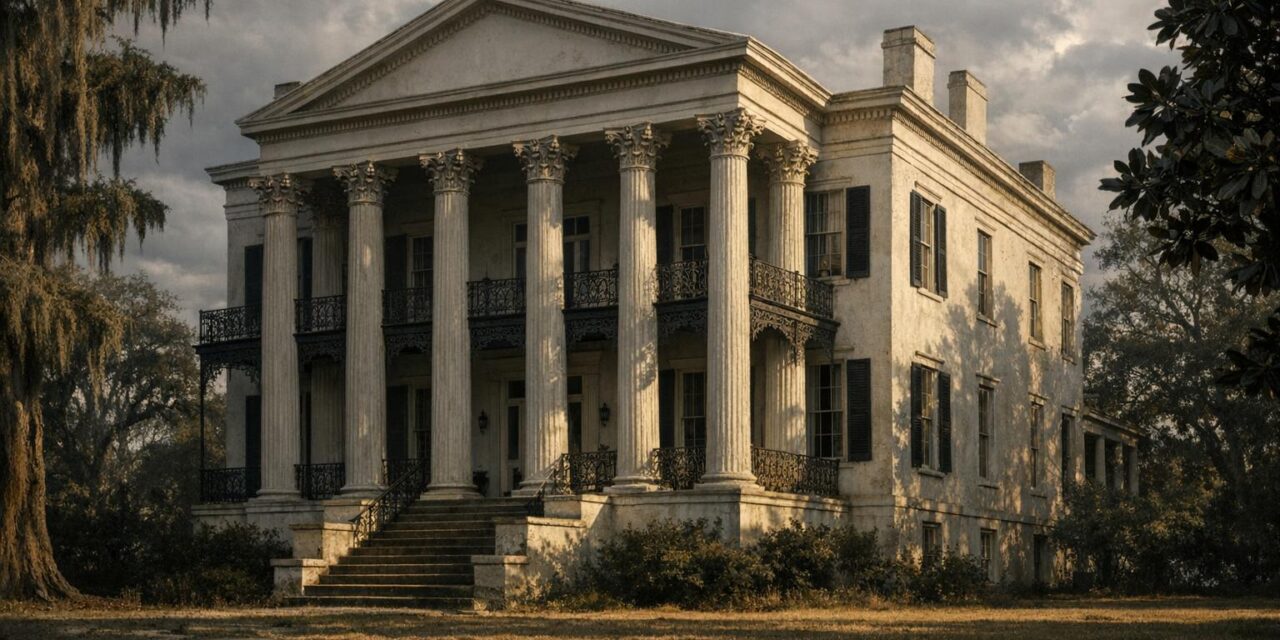
There is a moment, standing on Mabry Street in Selma, Alabama, when Sturdivant Hall seems less like a building and more like a declaration. Six Corinthian columns rise thirty feet against the Southern sky, the white stucco facade glowing, the balcony’s ironwork a dark lace above. Completed in 1856 at a cost of $69,000, designed by Thomas Helm Lee — a cousin of Robert E. Lee — and finished by Italian artisans who imported their marble from abroad, the house was built to last. The question Sturdivant Hall has spent the last century answering is what that permanence has come to mean.
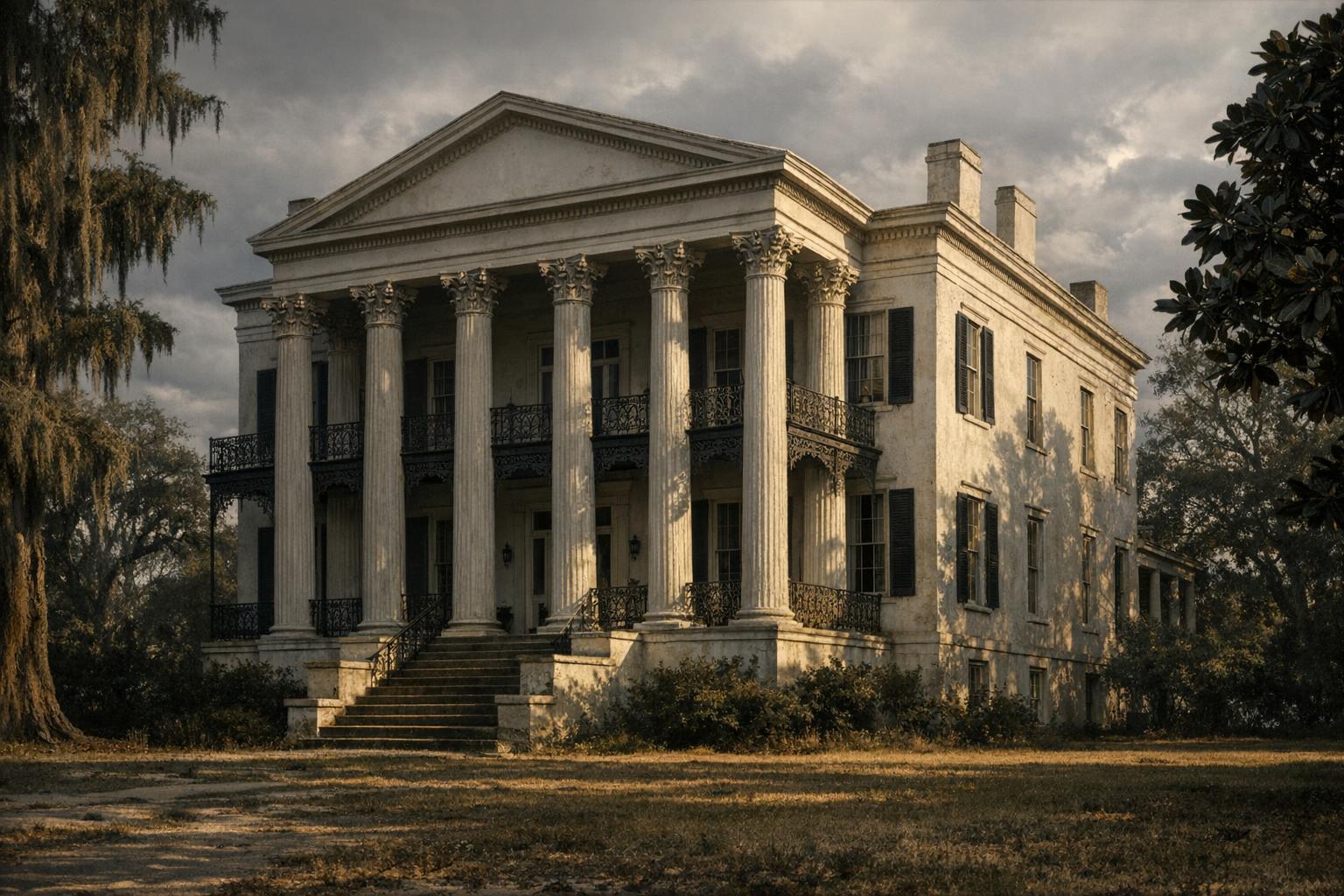
The banker who bought it was named John McGee Parkman. He paid $65,000 for the mansion after the Civil War and rose to become president of the First National Bank of Selma. Then cotton prices collapsed, the bank’s losses mounted, and Alabama’s military governor Wager Swayne had Parkman arrested and seized the institution. Imprisoned at Cahaba Federal Prison, Parkman attempted to escape on May 23, 1867, with the help of friends. He was shot and killed. Before he died, he allegedly vowed that he would never leave his house. Selma native Kathryn Tucker Windham documented the haunting in her book 13 Alabama Ghosts and Jeffrey; reports of footsteps on empty floors, cold spots in furnished rooms, and an apparition on the stairs have continued since.
Today Sturdivant Hall operates as a house museum at 713 Mabry Street, open Tuesday through Saturday from 10:00 a.m. to 4:00 p.m. The heart-of-pine floors and three marble fireplaces remain. Tours move through the main rooms, the former detached kitchen now serving as a gift shop, and the garden. Added to the National Register of Historic Places in 1973, it is a prominent stop on the Historic Selma Pilgrimage tour. Whether Parkman kept his vow is the question that lingers in every room.
Story Source: encyclopediaofalabama.org
Address: 713 Mabry St, Selma, Alabama 36701
Accessibility Rating: Guided Tours Only — Access permitted only as part of an organized tour. Independent exploration not allowed.
Google Map
What Others Have Experienced
During an annual Civil War reenactors’ ball, guests reported seeing children peering from the upstairs windows. When staff investigated, every room was empty — no children had been permitted on the second floor that evening.
— from Alabama Pioneers
An Air Force couple who spent years in the servants’ quarters accumulated a long list of unexplained experiences. Friends and family who visited independently also encountered strange things. Decades later, they still believed the original owner had never truly left.
— from Alabama Pioneers
The museum director described hearing someone pacing across the second floor on multiple occasions when no one else was in the building. Objects move on their own so regularly that the staff has simply come to accept it.
— from Alabama Public Radio