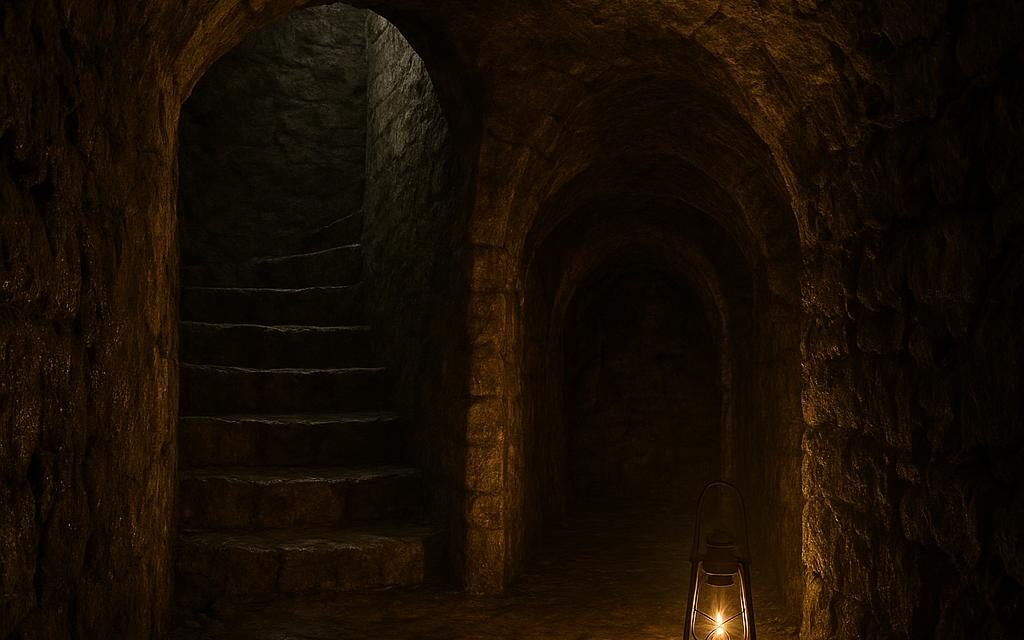
There is a staircase in Maison Tavel that descends below the street level of old Geneva, into stone that has been underground since the twelfth century. The building above it is the oldest surviving private residence in the city, a structure that has absorbed fire and plague and eight hundred years of human habitation, and has come through all of it to stand quietly on Rue du Puits-Saint-Pierre, a short walk from the cathedral, looking like what it is: something very old that has not yet finished its business.
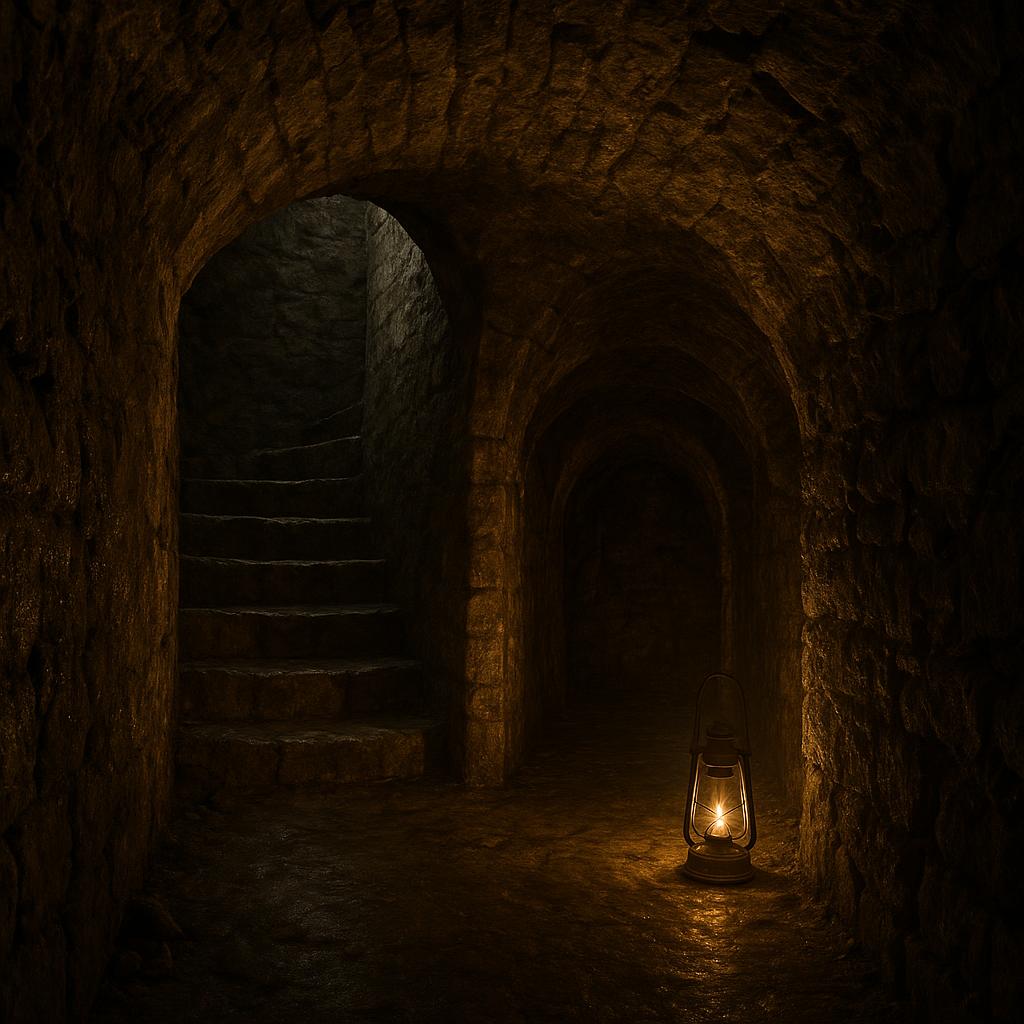
The cellar is where the building’s reputation concentrates. Visitors who make their way down from the museum floors above find an air that is different — cooler, heavier, carrying the weight of enclosed spaces sealed from the weather for centuries. The accounts that accumulate around Maison Tavel tend to come from this level: sounds without clear origin, the sensation of cold that the staff cannot attribute to air circulation, the particular feeling of being watched in a space that shows no one watching. There is no named ghost, no single documented incident around which the legend coheres. There is simply what the cellar does, over time, to the people who stand in it.
Maison Tavel is now a free municipal museum, open to visitors who come to see Geneva’s civic history displayed on its upper floors. The medieval stonework, the evidence of fire and reconstruction in the walls, the deep cellar below — these are the building’s actual contents, and they are considerable. It waits on its quiet street as it has waited for most of a millennium, for whoever is willing to descend.
Story Source: museesdegeneve.ch
Address: Rue du Puits-Saint-Pierre 6, 1204 Geneva, Switzerland
Accessibility Rating: Open to All — Freely accessible to the public with no advance requirement. Includes hotels, restaurants, bars, and public historic sites where visitors may walk in without prior booking.
Google Map
What Others Have Experienced
The building spans nearly 800 years of Geneva’s history across six floors, and a guillotine is among its most arresting exhibits — displayed without ceremony alongside coin collections and medieval furniture as though the instrument of execution is simply another artifact from another era. The effect of encountering it unexpectedly in a free municipal museum is, by multiple accounts, more unsettling than any purpose-built horror attraction.
— from TripAdvisor
The 13th-century cellar beneath the building is not prominently signposted — one visitor discovered it entirely by chance while looking for the restrooms, stumbling into a subterranean stone space that sits apart from the sunlit upper floors in both atmosphere and temperature. The building’s lowest level is described as noticeably damper and darker than anything above, with a quality of accumulated age that the curated exhibits upstairs do not fully replicate.
— from TripAdvisor
The building is the oldest house in Geneva, rebuilt after fire in 1334, and its medieval character is palpable throughout — in the worn stone of its courtyard, the width of its original walls, and a general quality of compressed time. Multiple visitors describe the strange dissonance of emerging from the building’s interior into modern Geneva, having been briefly enclosed in a space where seven centuries of the city’s life seem to press from every surface.
— from TripAdvisor