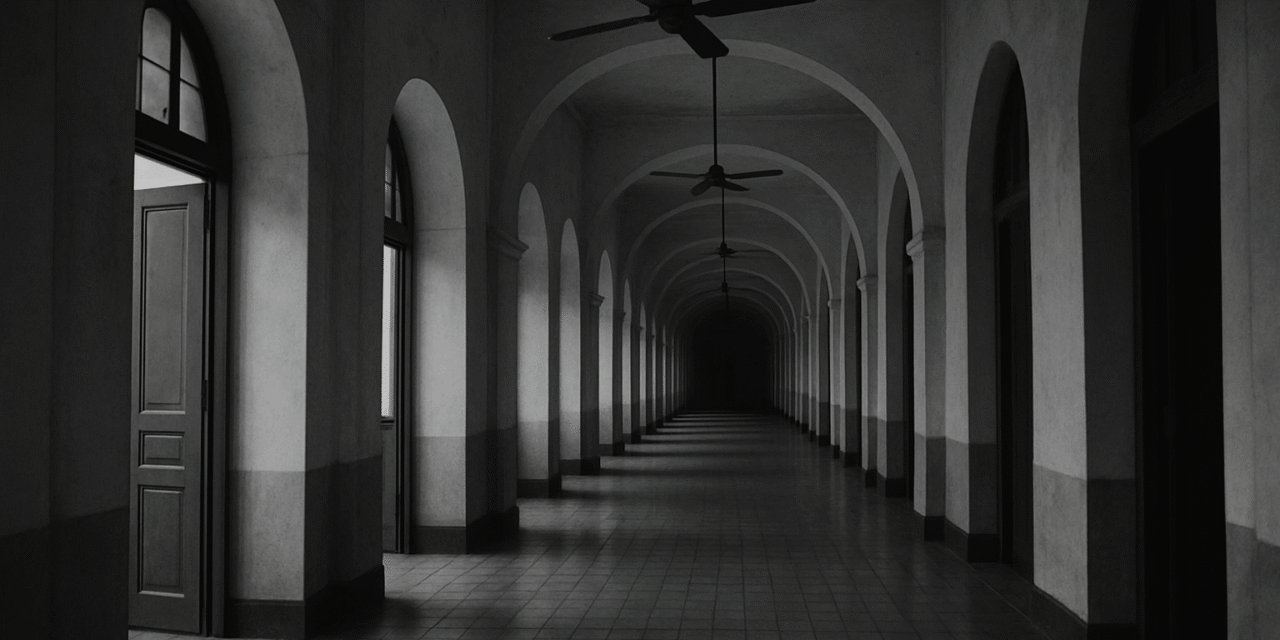
The building is called Lawang Sewu — “Thousand Doors” in Javanese — for the thousands of tall, arched doorways that define its corridors. It stands at Tugu Square in Semarang, Java: twin colonial towers built between 1904 and 1907 as the Dutch East Indies Railway Company’s headquarters, designed to project permanence. What it now projects is something else entirely.
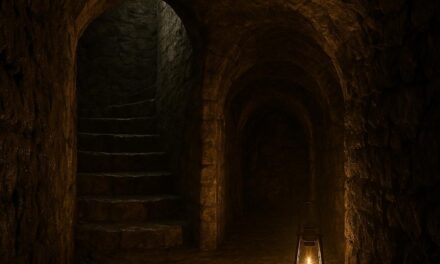
During the Japanese occupation from 1942 to 1945, the basement tunnels were converted into detention cells. Dutch, Indonesian, and Allied prisoners of war were held there; deaths occurred in those spaces, their number never precisely established. The Battle of Semarang followed in October 1945 — five days of fighting between Indonesian pemuda and Japanese forces, with the building at the center of it. After independence the structure fell into decades of neglect; its underground spaces were sealed in 1993. Reports accumulated: knocking from locked rooms, footsteps, and a figure — a woman in white near the stairwells, in European or occupation-era dress, reported by security workers, maintenance staff, and researchers over fifty years.
In 2007, the Indonesian paranormal program Dunia Lain filmed an episode in the basement tunnels, reaching roughly 80 million viewers and making the haunting nationally known. A government renovation began in 2011; the ground floor became a museum, the basement reopened for guided access. The accounts did not quiet. The detention cells are documented. The deaths are in the historical record. Whatever else the building carries, the weight of what actually happened there is present in the architecture and has never left.
Story Source: Book titled “Semarang City, A Glance into the Past” (Jongkie Tio, 2011)
Address: Jl. Pemuda No.160, Sekayu, Semarang Tengah, Kota Semarang, Jawa Tengah 50132, Indonesia
Accessibility Rating: Booking Required — Open to visitors but requires advance reservation, ticket purchase, or tour booking.
Google Map
What Others Have Experienced
A visitor who descended into the underground prison described the atmosphere as immediately and viscerally different from the ornate colonial building above — the air felt heavier, the darkness more oppressive, and the narrow stone corridors seemed to amplify every sound. The guide narrated stories of prisoners who died in the cells during the Japanese occupation while the group stood in the very spaces where those events occurred.
— from TripAdvisor
One reviewer noted the building is genuinely creepy after dark, when the lights throughout most of the structure are extinguished and only the museum areas remain lit. They strongly recommended going with a guide rather than exploring alone, describing the combination of colonial grandeur and wartime darkness as unlike any other historic site they had visited.
— from TripAdvisor
A local visitor emphasized that to truly appreciate Lawang Sewu, one needs to understand the layers of mystery and history behind it — the Dutch colonial era, the wartime repurposing, and the decades of ghost stories that followed. They particularly urged visitors not to skip the underground chambers, calling them the most significant part of the experience.
— from TripAdvisor
A visitor from Singapore reflected that the building’s echoing corridors and wartime history make it easy to understand why the haunted reputation took hold. The sense that thousands of people — railway workers, prisoners, the wounded — had passed through those same dark rooms over more than a century gave the whole site a palpable heaviness.
— from TripAdvisor
A tour guide who regularly leads groups through the building’s basement recalled one late-afternoon session where the air in the old prison cells felt markedly heavier, with a suffocating quality that made the group quiet without being prompted. During that visit, the sound of what resembled chains dragging across the floor was heard by multiple members of the group simultaneously.
— from Javanese Myths