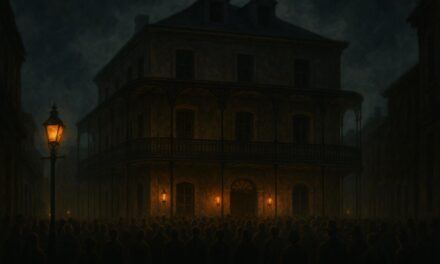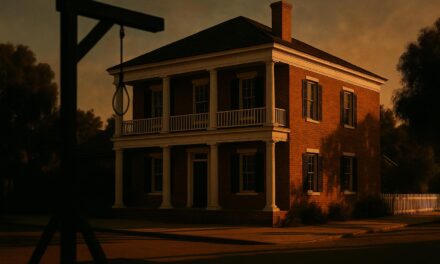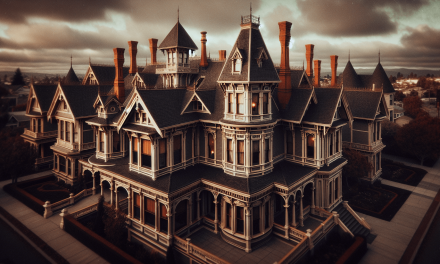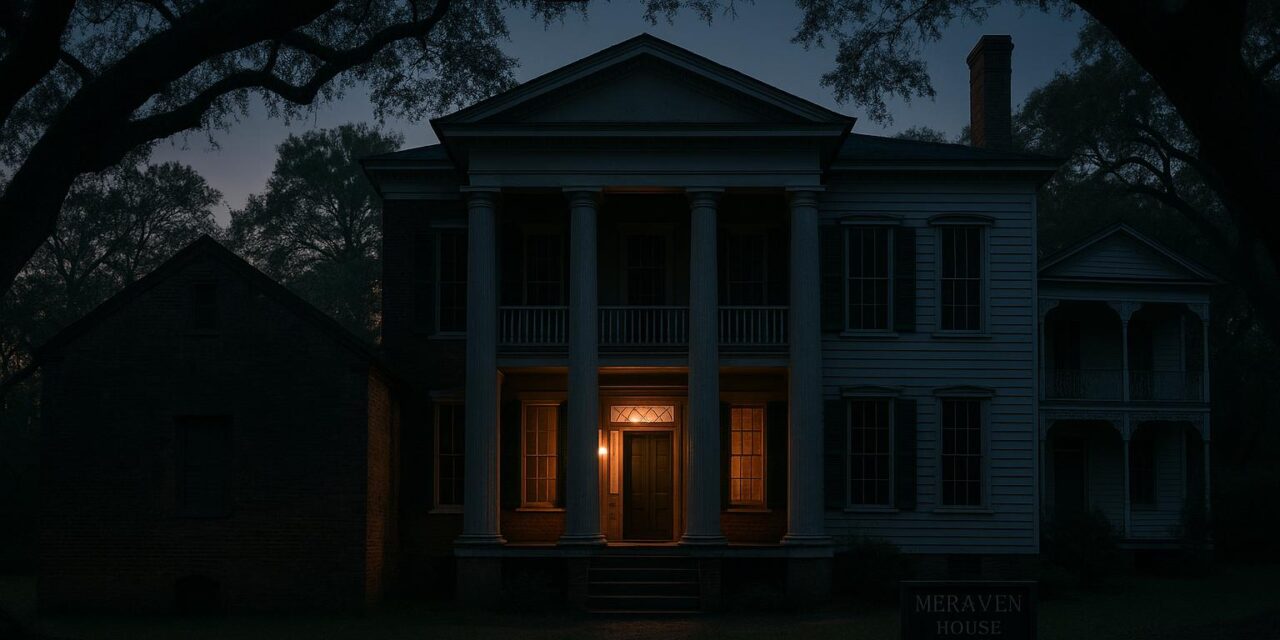
The house on Harrison Street in Vicksburg does not look like a single building because it is not. Three sections built across three eras — 1797, the early nineteenth century, completed in 1849 — press against each other in the Mississippi heat, their architectural styles shifting as you move from room to room. McRaven House survived what most structures in the South did not: the wars, the occupation, the long attrition of time. The seams between eras are still visible in the rooflines. So, by most accounts, is something else.
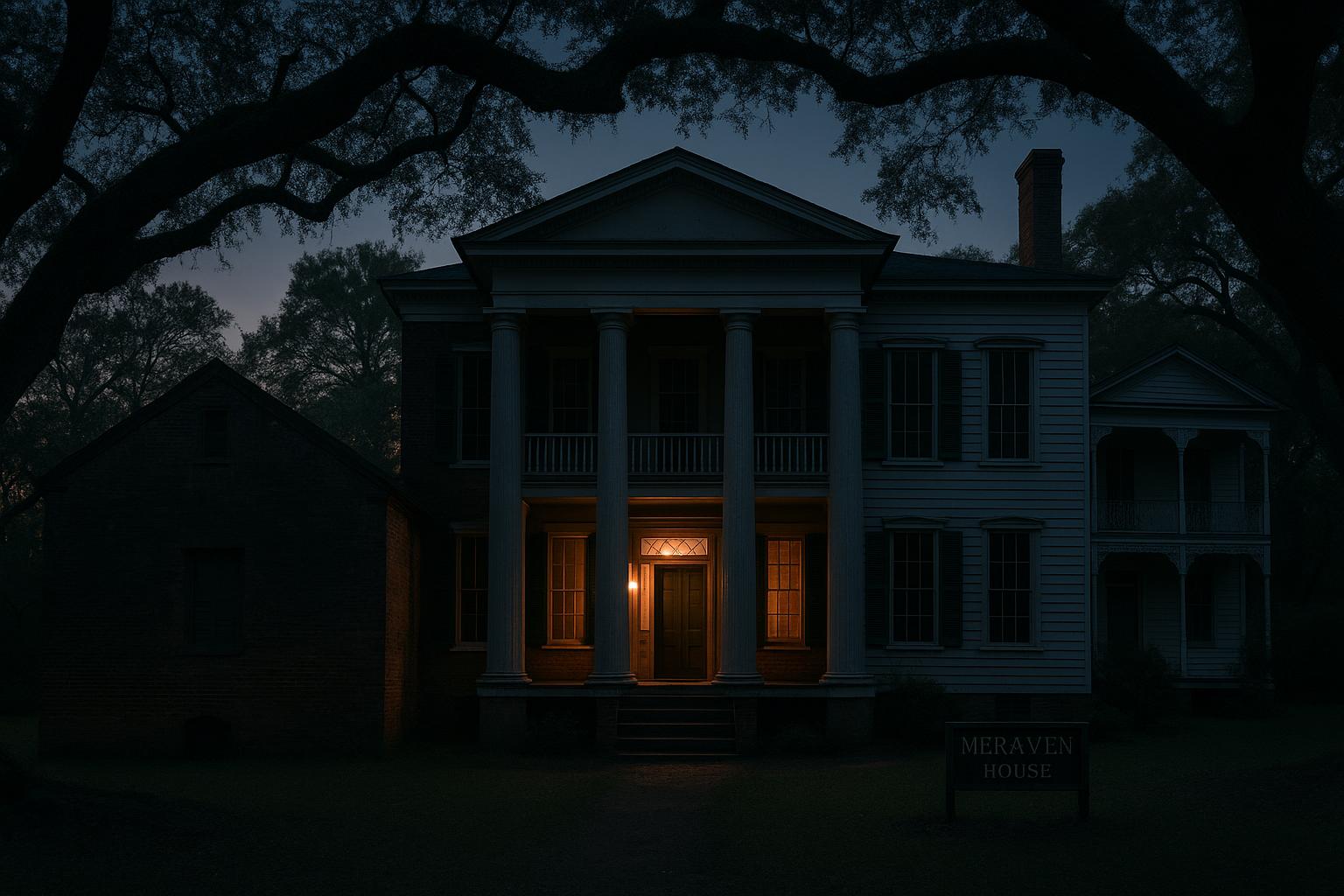
The Civil War reached McRaven in 1863 during the forty-seven-day Siege of Vicksburg. Confederate forces used the grounds. The dead accumulated on the land surrounding the structure, and the house passed through that aftermath bearing evidence the walls have not released. But the Civil War was only one of three wars the building absorbed. Its 1797 origins place it in the contested violence of the Mississippi Territory — ground fought over before a single board was laid. The eras of the house’s construction mirror, with unsettling precision, the eras of bloodshed that surrounded it.
What witnesses have reported at McRaven House is consistent enough to have outlasted skepticism: footsteps on empty staircases, cold concentrations of air in rooms that should be warm, figures glimpsed at the edge of vision, the persistent sense of being observed from doorways. The house operates today as a tour home at 1445 Harrison Street — open to visitors who want to walk through two centuries of American history and feel, in the quality of its silence, the weight of everything that never left.
Story Source: www.mcraventourhome.com
Address: 1445 Harrison St, Vicksburg, MS 39180
Accessibility Rating: Booking Required — Open to visitors but requires advance reservation, ticket purchase, or tour booking.
Google Map
What Others Have Experienced
McRaven House in Vicksburg is built in three distinct sections spanning 1797, 1836, and 1849 — three construction periods that each carry their own layer of documented violence, war, and death. National Geographic has called it the ‘Time Capsule of the South,’ and visitors consistently describe the transition from one period of the house to the next as a shift not just in architecture but in atmosphere, with the oldest section producing a quality of weight that is difficult to account for architecturally.
— from Visit Vicksburg
The room of Mary Elizabeth Howard, who died there in childbirth in the antebellum era, is described as the most spiritually active room in the house — a space where visitors report cold spots, a sense of being watched, and in some cases the visible presence of a female apparition near the bed. The room’s furnishings have been preserved in their period arrangement, and guides describe it as the room where the greatest number of spontaneous visitor reactions occur during both history and ghost tours.
— from US Ghost Adventures
McRaven House has attracted national television coverage from A&E, the Travel Channel, and 48 Hours, each drawn to the density of documented paranormal claims concentrated in a single building. The house’s history of hosting soldiers from multiple American wars — including deaths on its grounds during the Siege of Vicksburg in 1863 — gives paranormal investigators a layered and unusually rich environment that separates it from more typical haunted houses.
— from Magnolia Tribune
The house offers public ghost hunts that run until 2 a.m. and include hands-on instruction in ghost-hunting equipment, a format that consistently produces reports of EVP captures, equipment anomalies, and direct visual encounters that participants describe as genuinely difficult to explain. Overnight investigators describe the garden and the surrounding grounds as distinctly active after midnight, with sounds of movement in areas confirmed to be empty.
— from McRaven Tour Home
TripAdvisor visitors consistently describe the guided history tour as exceptional value even for visitors with no interest in the paranormal, noting that the museum-quality antiques and the layered architectural history are compelling on their own. Those who opted for the evening ghost tour describe the same house feeling fundamentally different after dark — the rooms that read as well-preserved period interiors by day acquiring an atmospheric quality at night that several visitors described as making them genuinely uncomfortable.
— from TripAdvisor