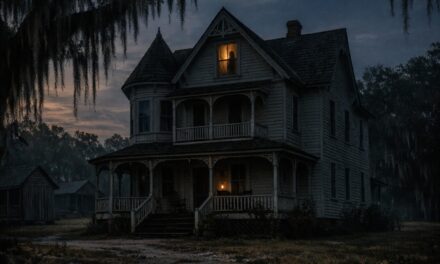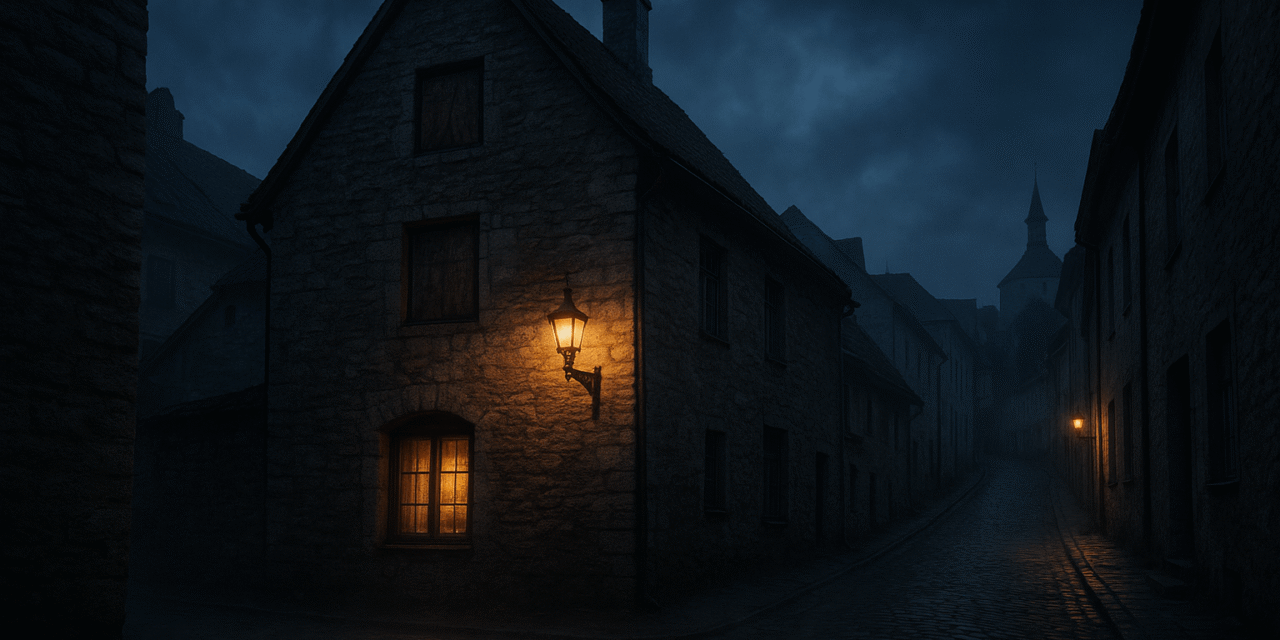
Stand at the lip of the Cat’s Well after dark and the limestone of Tallinn’s Old Town will catch the lamplight in a way it never quite catches it during the day. Walk thirty paces past the well on Rataskaevu Street and look up. House number sixteen rises above you, a fifteenth-century merchant’s house in pale plaster. One window on the top floor is wrong. It is bricked up from the inside, with false curtains painted on the brick. It has been sealed for centuries.
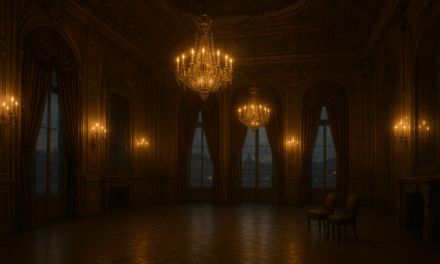
By the 1460s, Tallinn, then known as Reval, was a wealthy port of the Hanseatic League. In 1464, plague returned. Folklore remembers what the council clerks did not record: a cloaked stranger paying gold for a private room, and the owner of Rataskaevu 16 ruined enough to take the offer. That night, footsteps thundered up the staircase. Music played, screams that may have been laughter. The owner’s servant pressed an eye to the keyhole. At one in the morning the noise stopped. The gold left on the table had turned to dung. The servant was discovered mortally ill, and before dying whispered that he had seen the Devil presiding over a wedding feast. The window was eventually bricked up. During modern remodeling, workers found human bones inside one of the back walls.
Today, Rataskaevu 16 stands a few minutes’ walk from Town Hall Square. A restaurant operates in the lower floors. The apartment behind the bricked window is private residential space, by all accounts unremarkable. The painted curtains remain. Local guides lead walking ghost tours after dark, from Rataskaevu 16 through Lühike Jalg to the Stable Tower and the Hueck House. There is no admission. Stand under the fifteenth-century window and decide for yourself what the wall is keeping in.
Story Source: www.visittallinn.ee
Address: Rataskaevu 16, Tallinn 10123, Estonia
Accessibility Rating: Open to All — The building now operates as a highly popular restaurant known by its address, Rataskaevu 16. Widely regarded as one of the best dining options in the city, it is open daily to patrons seeking lunch or dinner, but reservations are strictly required weeks in advance due to its massive popularity.
Google Map
What Others Have Experienced
A visitor on Tallinn’s evening ghost tour described the moment their guide stopped at Rataskaevu 16 and pointed out the bricked-up window with its painted false curtains as the single most unsettling detail of the entire walk — more so than any of the tower stories or churchyard legends. Something about the deliberateness of hiding it in plain sight, they said, made it feel genuinely sinister rather than theatrical.
— from Like a Local Guide
A travel writer staying near the Old Town described walking past Rataskaevu 16 late at night after reading the Devil’s Wedding legend and finding the narrow street around the Cat’s Well far more atmospheric than any guided tour had prepared them for. The painted curtains were visible in the lamplight from below, and the upper floor was completely dark — a detail that, combined with the silence of the street at that hour, made the story feel plausible in a way it had not seemed in daylight.
— from Radisson Blu Blog
A local Tallinn writer noted that the building’s ghost reputation sits within a much larger pattern — almost every house in Old Town carries some story of spectral activity, to the point where the density of hauntings in the medieval quarter feels less like folklore and more like a civic record. Rataskaevu 16 is simply the most famous address in an entire neighborhood that has been accumulating ghost accounts for seven centuries.
— from In Your Pocket Tallinn
A ghost tour participant described their guide’s retelling of the Devil’s Wedding at Rataskaevu Street as the point in the evening where the group fell completely silent — the combination of the narrow cobbled lane, the visible bricked window overhead, and the detail about the servant dying after looking through the keyhole landing differently when you were standing directly beneath the building than it ever could in a book.
— from GuideandGo
A visitor to the VisitTallinn ghost stories page noted that what makes the Rataskaevu 16 legend so persistent is not the supernatural element but the mundane one — a man in financial desperation taking an offer he should have refused. The gold turning to dung at morning is the kind of ending, they observed, that feels less like a ghost story and more like a very old warning about the terms of certain bargains.
— from Visit Tallinn