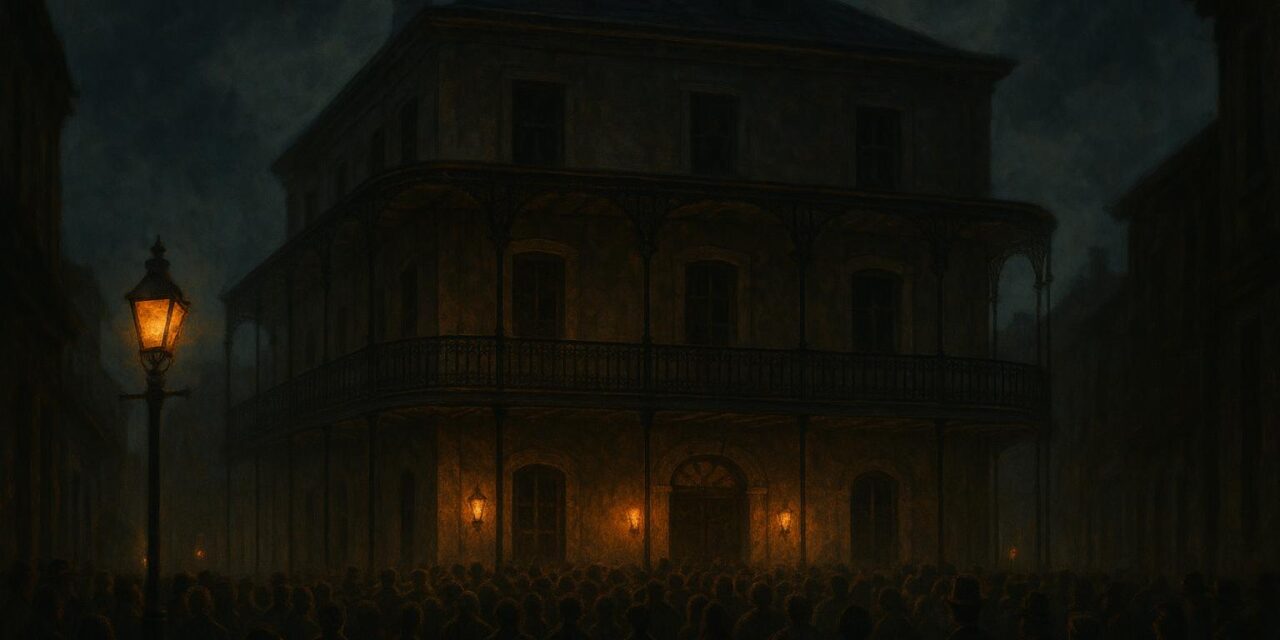
At 1140 Royal Street in New Orleans’ French Quarter, there is a mansion with wrought-iron balconies that looks, from the street, like the other grand structures built by the city’s nineteenth-century elite. It was completed around 1832 and became the home of Delphine LaLaurie, a prominent socialite whose elegant parties were among the most sought-after invitations in New Orleans. What happened behind the facade was something else entirely.
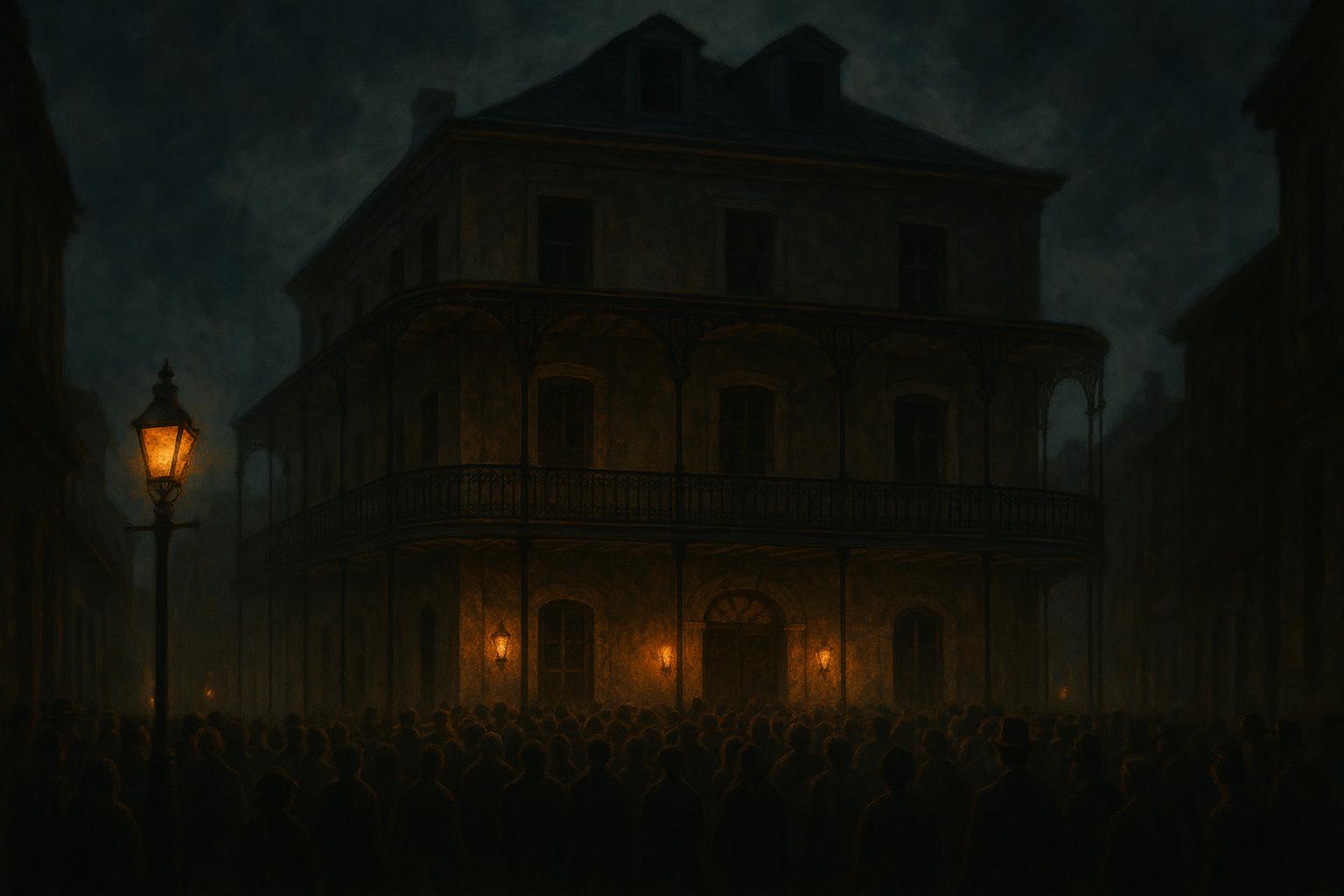
In April 1834, a fire in the kitchen brought firefighters into the upper floors of the mansion. In the attic, they found at least seven enslaved people who had been subjected to prolonged, systematic torture — conditions that the firefighters and subsequent public accounts documented in terms that spread through the city within hours. A mob gathered and drove the LaLauries from the house. Delphine fled to France and never returned. The enslaved survivors were brought to the jail, where witnesses came to see the evidence of what had been done to them. The historical record is specific: people saw, and they wrote down what they saw.
The building has changed hands many times since — school, apartments, bar, furniture store, the brief ownership of Nicolas Cage — and through every iteration, accounts of what happens in its upper floors have remained consistent. Sounds that witnesses describe as crying. Figures in period dress seen in the attic and on the stairs. The mansion is privately held and not open for tours, but it sits at its address on Royal Street unchanged. Walking past it, you are standing where the events of 1834 occurred. The building makes that very clear.
Story Source: neworleanshistorical.org
Address: 1140 Royal St, New Orleans, LA 70116
Accessibility Rating: No Public Access — Private property, active restricted site, or location no longer physically accessible to visitors.
Google Map
What Others Have Experienced
The LaLaurie Mansion at 1140 Royal Street is a private residence not open to tours, but the sidewalk in front of it has become a gathering point for ghost tour groups and curious visitors who describe feeling an unusual heaviness near the building even from the street. Reports of moaning coming from within the structure and phantom footsteps audible from outside have been noted by pedestrians and tour guides who stop in front of the building on a near-nightly basis.
— from Ghost City Tours
Former residents of the building have described figures appearing in upstairs windows that vanish when observed directly, sudden temperature drops in specific rooms that do not match the building’s air conditioning patterns, and shadowy shapes crossing the interior hallways. One account describes a group of people living in the mansion during a period of apartment conversion who refused to occupy the upper floors after multiple independent encounters with apparitions in those spaces.
— from French Quarter Phantoms
Ghost hunters who have been permitted access to the building have reportedly captured audio evidence including what sounds like moaning, the word ‘help me’ spoken clearly, screaming, and the sound of chains being dragged across the attic floor — all consistent with accounts of the horrors documented in the 1834 fire that exposed Madame LaLaurie’s chamber. The attic, where enslaved people were discovered in extreme conditions, is described as the most active area of the building.
— from American Ghost Walks
Nearly 200 years of paranormal reports at the mansion span every ownership period since LaLaurie fled to France in 1834, suggesting the activity is tied to the property itself rather than any individual occupant. Ghost tour guides who stop outside the building nightly describe the most common visitor reactions as unease, an instinctive reluctance to remain directly in front of the building, and in some cases physical sensations of pressure or cold that begin and end at the property line.
— from Haunted History Tours
The LaLaurie Mansion’s notoriety drew Nicolas Cage to purchase it in 2007, though he sold it within two years. Ghost tour visitors who pass the building on walking tours of the French Quarter consistently describe it as the stop where the atmosphere changes most distinctly — the grandeur of the architecture doing nothing to soften what many describe as a palpable wrongness in the air directly outside.
— from Strange and Twisted