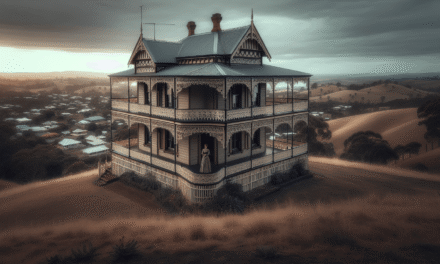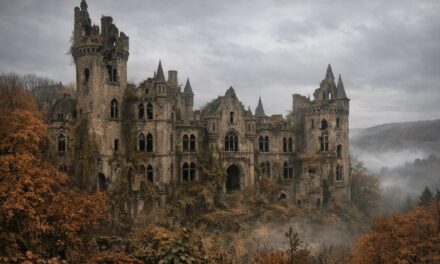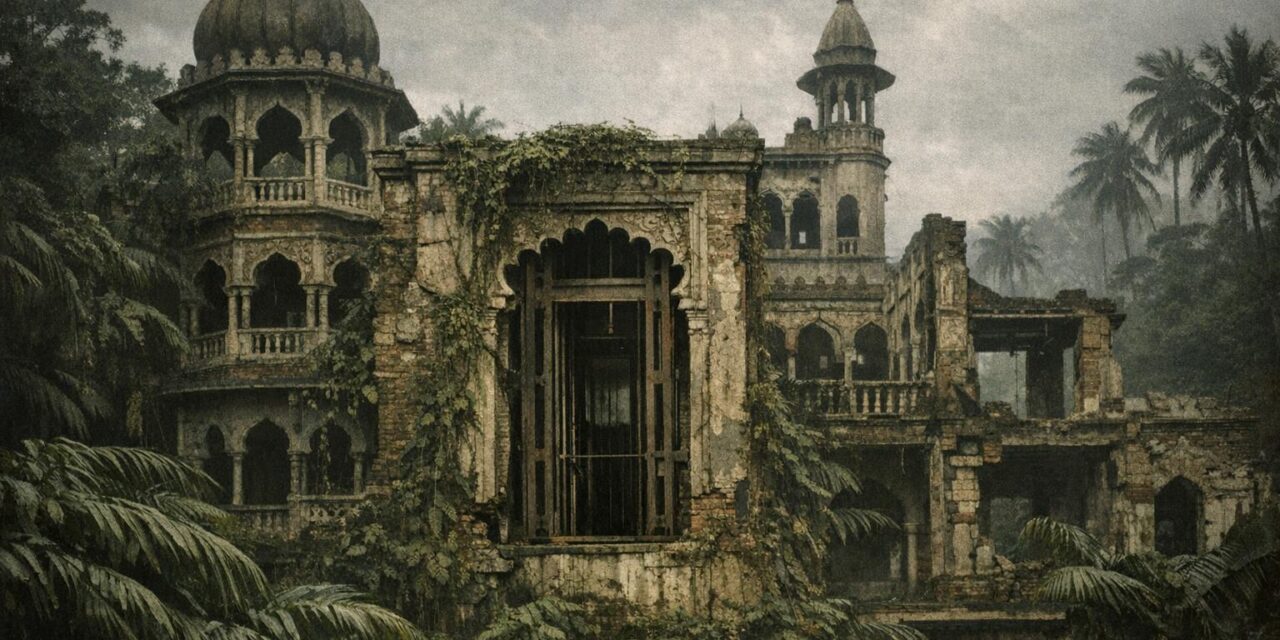
The elevator shaft runs through the center of Kellie’s Castle like a confession. Designed to carry passengers from the rooftop terrace to the basement — Malaya’s first lift — it was never filled. The lift was on its way when the man who built it died in Lisbon in 1926, and the shaft has been open to the Malaysian sky ever since: a hollow column at the heart of four stories of Moorish arches and Indo-Saracenic ornament, rising from the rubber country of Batu Gajah in Perak, vines advancing along the stonework, the jungle pressing in with the patience of things that have time.
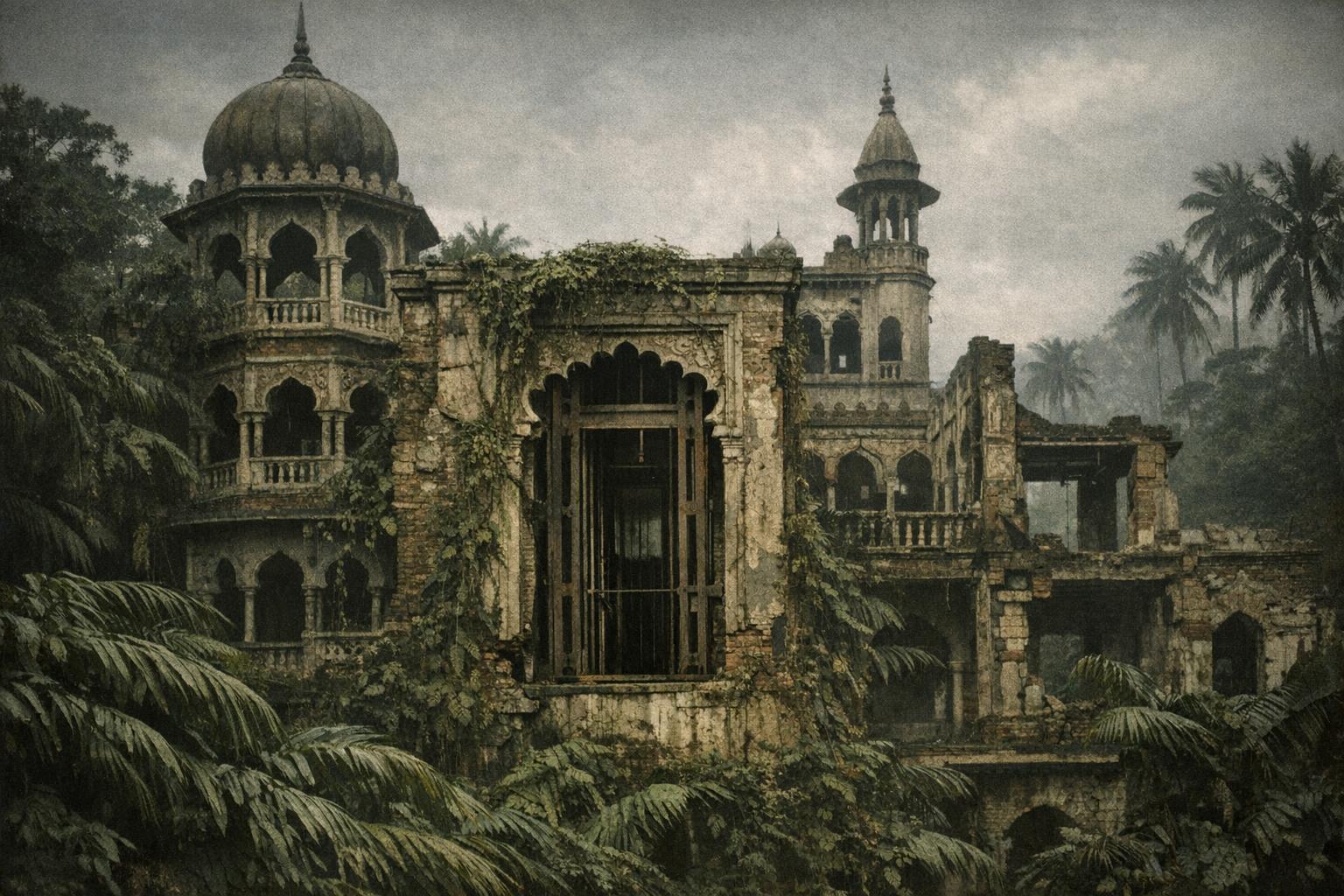
William Kellie-Smith was a Scottish civil engineer who arrived in Malaya around 1890 and found his fortune in rubber. He built this castle as a statement — four floors, fourteen rooms, secret passages, underground tunnels, seventy workers brought from Chennai — to answer the British planters who had spent years looking down on him. Construction began in 1915, the year his son Anthony was born. The 1918 influenza pandemic slowed it. By 1926, with finances strained and his health failing, Kellie-Smith traveled to Lisbon to collect the elevator himself. He contracted pneumonia and died at fifty-six. His wife Agnes took their children home to Britain, leaving the unfinished castle to the jungle. Since then, visitors have reported a figure in the upper windows described as Kellie-Smith himself, and a ghostly child at play in the room that once belonged to his daughter Helen.
Today Kellie’s Castle operates as a tourist site in Batu Gajah, with walkways, exhibits, and operating hours nine to five. The elevator shaft is still empty. The dream is still visible in the stonework — a sentence interrupted mid-word, held in the jungle air of Perak, still making its case after a hundred years.
Story Source: www.freemalaysiatoday.com
Address: Kellie’s Castle, Jalan Gopeng, 31000 Batu Gajah, Perak, Malaysia
Accessibility Rating: Open to All — Freely accessible to the public with no advance requirement. Includes hotels, restaurants, bars, and public historic sites where visitors may walk in without prior booking.
Google Map
What Others Have Experienced
A visitor from Malaysia described the castle as historically significant but noted only the main building survived intact, while the surrounding structures have crumbled to rubble. Despite the decay, they found it worth visiting for its haunted reputation and striking mix of Moorish and Scottish architecture.
— from TripAdvisor
One visitor highlighted the wine cellar as the most atmospheric part of the site, noting that guides regularly share stories about William Kellie Smith’s ghost roaming the grounds, and that the castle felt far more mysterious in person than any photograph suggested.
— from TripAdvisor
A travel blogger recommended visiting early before tour groups arrive, describing the abandoned rooms as genuinely eerie. The unfinished tower looms in the distance as a constant reminder of the construction that halted abruptly and was never resumed.
— from Phoenix Trails
A travel writer described the visit as surreal, pointing to broken tiles, rusted gates, and a Hindu shrine built for the Indian labourers nearby — details that give the site an unexpectedly layered cultural atmosphere setting it apart from typical castle ruins.
— from Where Jasz Explores
Several visitors have reported hearing footsteps in empty corridors and spotting shadows near the wine cellar entrance, while guides consistently recount stories of Kellie Smith’s spirit still waiting for the family that never arrived to occupy his dream home.
— from Young Pioneer Tours