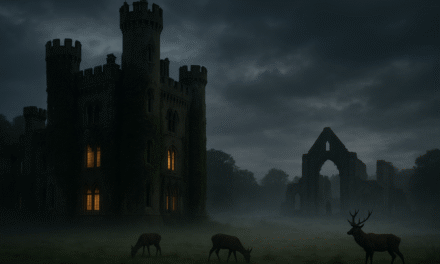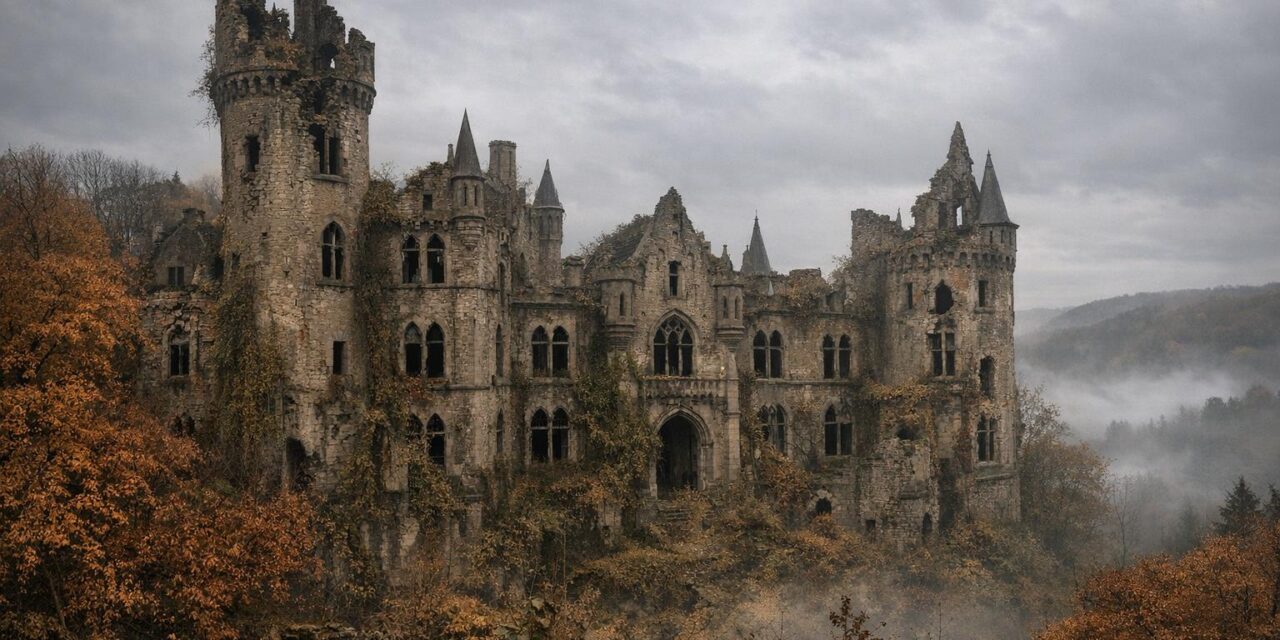
Chateau Miranda—also called Chateau de Noisy—stood on a forested ridge in the Belgian Ardennes near Celles, province of Namur, for over a century before it was demolished in 2017. It was built in Gothic Revival style for the Liedekerke-De Beaufort family, aristocrats displaced by the French Revolution from their ancestral Vêves Castle, and completed in 1907 after its original English architect Edward Milner died in 1884 before finishing it. The final structure had approximately 500 windows, a working clock tower, and the elaborate silhouette of something built to announce permanence. The Belgian National Railway Company (SNCB) took control in 1950 and converted it into an orphanage and summer camp for ill children, renaming it Chateau de Noisy. Children lived there through the late 1970s. Some sent home postcards the SNCB printed of the castle. Some, later, told other stories.
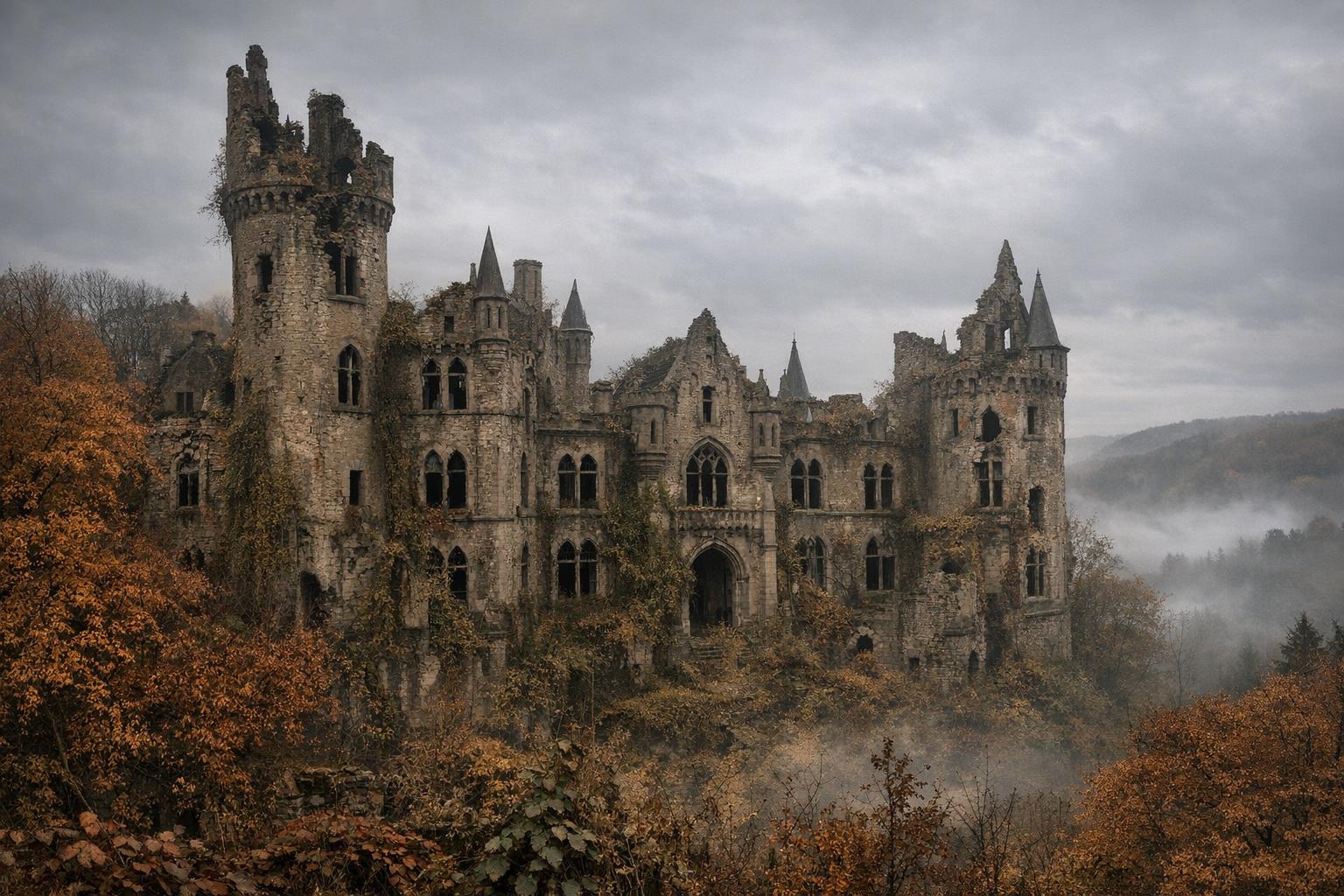
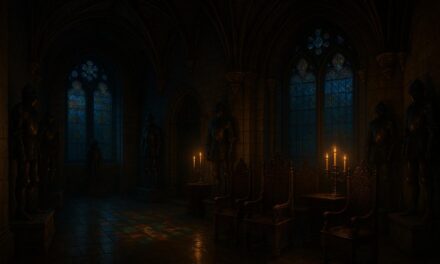
Abandoned since 1991, the castle became one of the most photographed ruins in Europe. Urban explorers documented the collapsed ballrooms, rotting dormitories, and broken furniture still in place. Among the debris, they repeatedly found dolls in unexpected locations, positioned in ways that seemed deliberate. Multiple independent visitors reported hearing children’s voices—screams or laughter, sometimes indistinguishable—from within empty rooms. Demolition began in 2016. The roof came off first, then the towers, then the central spire in October 2017. The working clock stopped when its tower was removed. The site is now cleared.
The castle no longer exists, but the question it raises does: is a haunting attached to a building, or to a place? The children’s voices visitors heard in the empty rooms were heard in those rooms. The rooms are gone. The ridge in the Ardennes where the castle stood is still there, and the forest is growing back across it, and people who come to look at the cleared site report that it does not feel like nothing happened here.
Story Source: www.revisitinghistory.com
Address: Celles, Houyet, Province of Namur, Belgium
Accessibility Rating: Site Demolished (Oct 2017)
Google Map
What Others Have Experienced
One explorer who visited before demolition described arriving at sunrise after climbing through the forest to reach the castle undetected. Spending time inside — moving through the high tower and feeling the mystical atmosphere of the decaying rooms — was described as one of the most unforgettable experiences of their exploring life.
— from Pepper Urbex
Standing inside the entrance hall, an urban explorer noted that the ornate ceiling had somehow survived decades of decay while the rest of the structure collapsed around it. The contrast between what had endured and what had been lost gave the ruin an almost elegiac quality.
— from Behind Closed Doors
A visitor in 2014 described the twin baths hidden on an upper floor as a hidden gem — accessible only by walking across exposed wooden joists over a partially collapsed floor. The risk of getting there made the discovery feel like uncovering something the castle had intentionally tried to conceal.
— from Behind Closed Doors
One explorer described the castle as one of their favorite sites long after visiting. The sheer scale of the decay — a Gothic castle slowly returning to the hillside — gave the place a gravity that purely aesthetic appreciation could not account for.
— from Behind Closed Doors
A visitor who went back in winter noted that the hike through the woods to reach the castle would be harder in snow but the spectacle would be more magical for it. The isolation and effort required to reach the building felt like part of the experience itself.
— from Behind Closed Doors