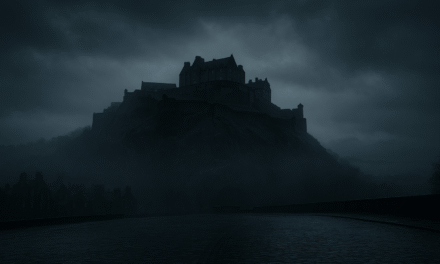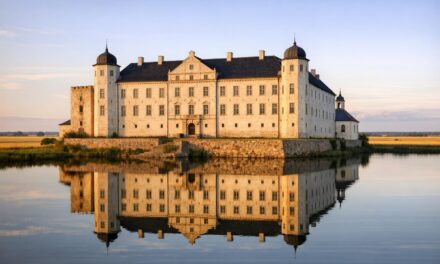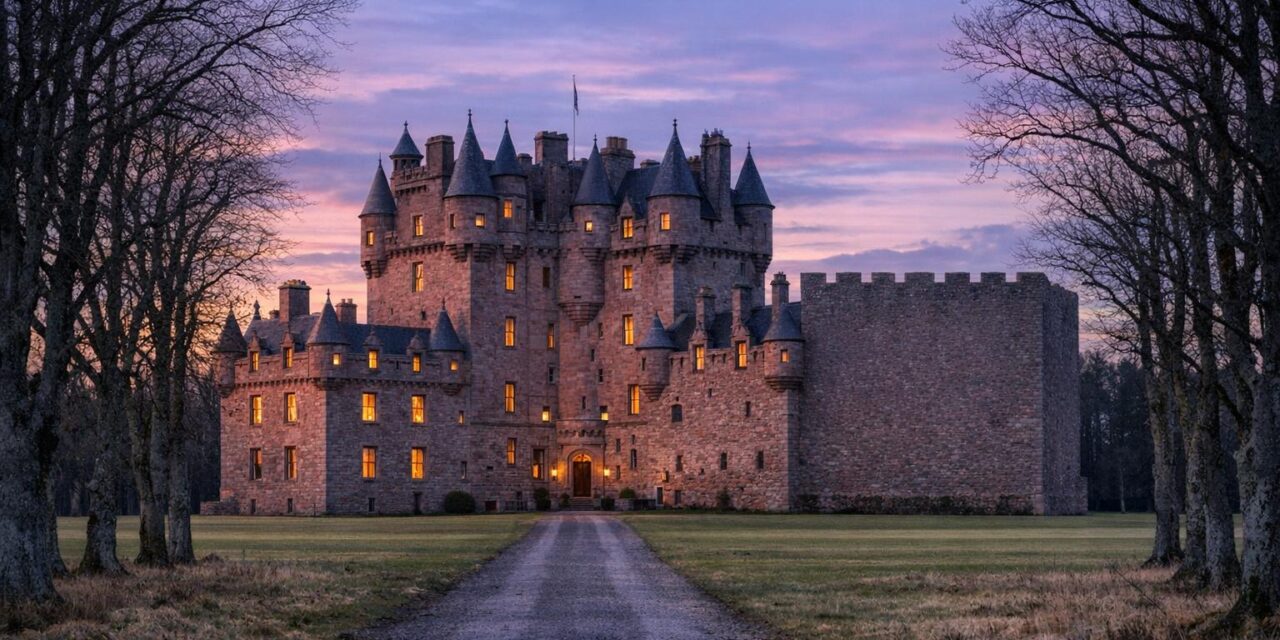
Glamis Castle rises out of the parkland of Angus, Scotland, its irregular towers announcing themselves from a distance — a building assembled across centuries until it no longer entirely knows what it contains. It is the ancestral seat of the Earls of Strathmore, the childhood home of the Queen Mother, and the keeper of a secret maintained through deliberate inheritance for at least three hundred years: a sealed room, and what is in it.
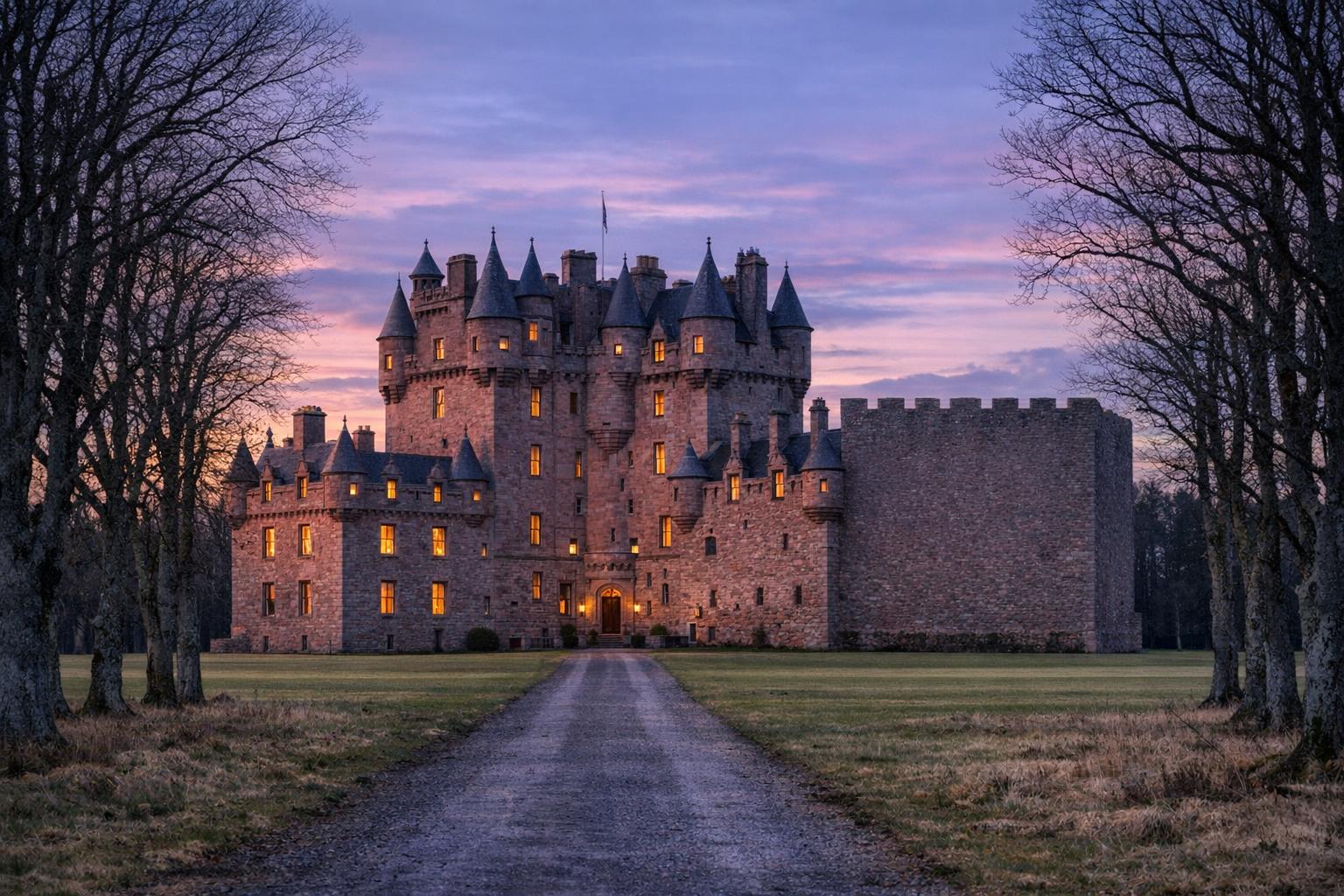
The legend holds that every Earl of Strathmore, on his twenty-first birthday, was told the nature of the Monster of Glamis — a deformed heir allegedly hidden within the castle’s walls rather than allowed to die or be sent away. Women were never told. The thirteenth Earl reportedly emerged from his disclosure visibly aged and stated that if people knew the secret, they would feel nothing but horror. A nineteenth-century houseguest hung towels from every identifiable window and walked the exterior, finding a section of outer wall for which no interior room could be accounted. The Grey Lady — Janet Douglas, burned at the stake in 1537 in an almost certain miscarriage of justice — haunts the chapel. Earl Beardie’s card game with the Devil echoes in the walls.
Glamis Castle, Glamis, Angus, DD8 1QJ, Scotland is open to visitors year-round, with tours through the documented rooms, chapel, crypt, and state apartments. The sealed room is not included — because it cannot be found. For the adventure traveler, Glamis offers something rare: a building entirely accessible and entirely withholding. The secret passed to each Earl is held by no one living, unless someone is living who has not said so.
Story Source: www.glamis-castle.co.uk
Address: Glamis Castle, Glamis, Angus, DD8 1QJ, Scotland
Accessibility Rating: Booking Required — Open to visitors but requires advance reservation, ticket purchase, or tour booking.
Google Map
What Others Have Experienced
The Grey Lady of Glamis Castle — believed to be the ghost of Janet Douglas, Lady Glamis, who was burned at the stake on the orders of James V of Scotland in 1537 on fabricated charges of witchcraft — has been seen by visitors and staff kneeling in silent prayer in the castle chapel. Witnesses describe her as a shimmering, translucent figure who exudes an atmosphere of profound sadness rather than menace, and the chapel is specifically identified by multiple independent accounts as the room where her presence is most consistently felt.
— from Haunted Rooms UK
Earl Beardie, a seventeenth-century lord said to have made a wager with the Devil and lost, is believed to be trapped playing cards in a secret room within the castle’s walls to this day. His shouts have been reported throughout the castle across generations, and the legend of the sealed card game has given Glamis its most distinctive claim — that somewhere in its ancient stone walls there is a room that has not been entered in centuries, and that the sounds from within it have never fully stopped.
— from Great Castles
The ghost of a young pageboy has been seen sitting on the stone seat beside the door to the Queen’s room on multiple occasions, appearing as a full-bodied apparition but never making a sound and never seen anywhere else in the castle. Paranormal investigators who have conducted overnight investigations at Glamis describe this area of the castle as consistently producing the most anomalous readings on their equipment.
— from Scottish Paranormal
During a clan conflict in 1486, the Ogilvy clan fled to Glamis seeking refuge from the Lindsays, and the Earl welcomed them before sealing them alive in a secret chamber as a political calculation. The skeletons were not discovered until generations later, when sounds heard coming from the sealed room led someone to finally open it. This documented historical atrocity is widely cited by paranormal researchers as the source of one of the castle’s most persistent and troubling unexplained noises.
— from Spooky Isles
Glamis Castle’s most enduring secret — known simply as the Monster of Glamis — is a tradition maintained across centuries by the earls of Strathmore, who are said to pass a dark secret about the castle to their heirs when they come of age, and who have uniformly refused to divulge it regardless of how they are asked. The castle’s floor plan is widely noted to have more windows on the exterior than rooms on the interior, which has led structural analyses to conclude that at least one space within the walls has no known entrance.
— from Ghosts and History