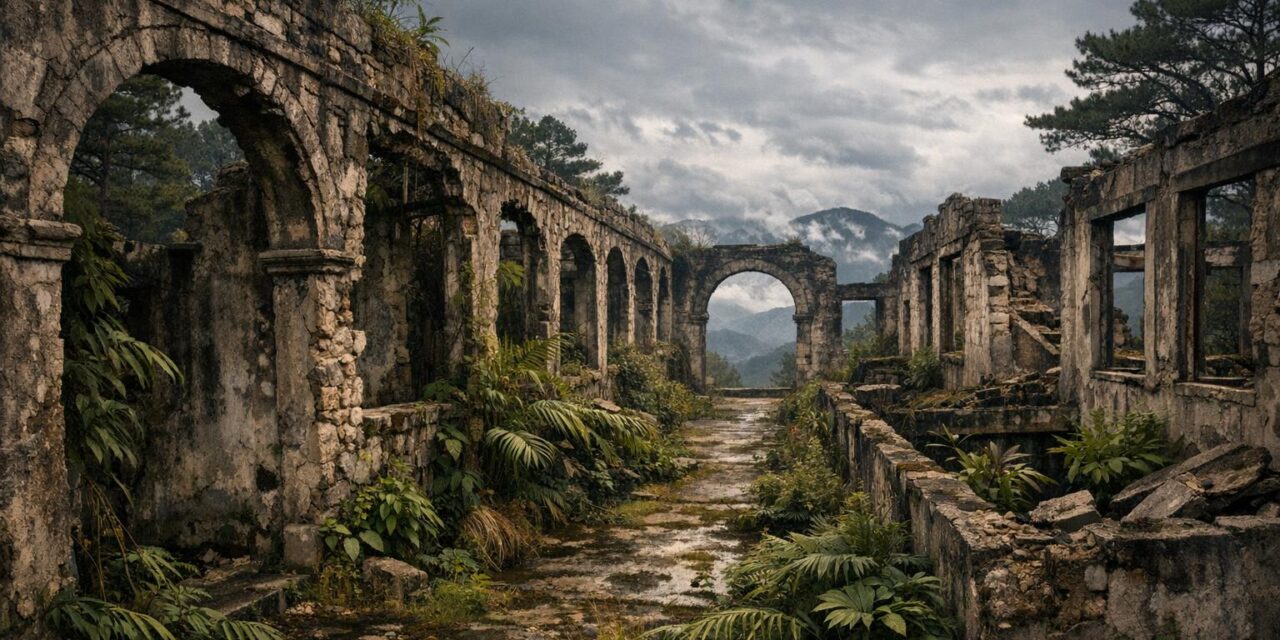
Dominican Hill Road climbs out of central Baguio City through pine forest and morning mist until it reaches a plateau where the ruins of the Diplomat Hotel stand against the sky. Built in 1911 during the American colonial period as a place of Dominican retreat, the stone building at the top of the hill was built to last. It has lasted. What it has become is something its architects could not have anticipated: one of the most unsettling ruins in the Philippines, a structure whose history is inseparable from the sounds that visitors still report hearing in its empty corridors and the shapes they describe seeing in its roofless rooms.
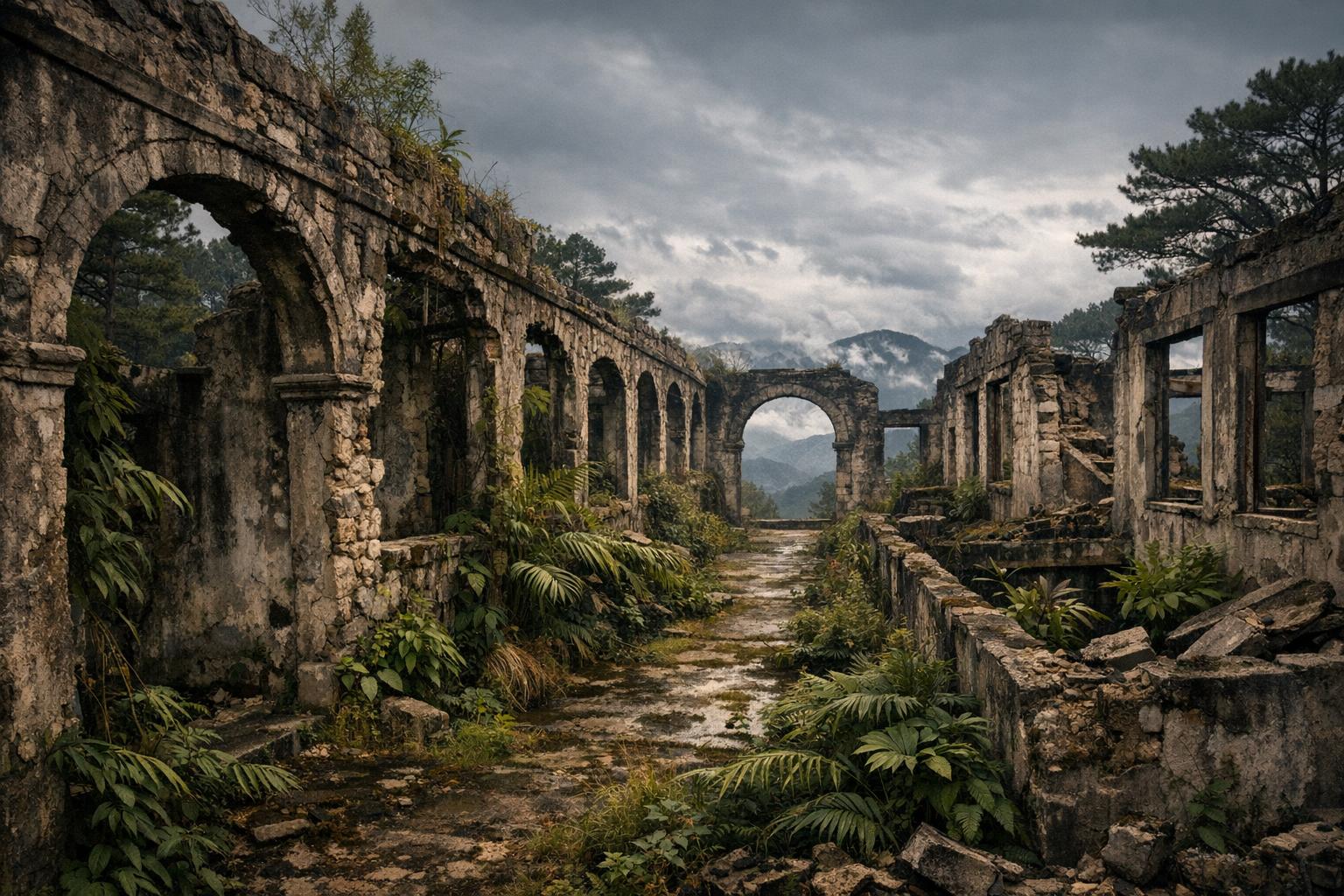
Baguio fell to Japanese forces in December 1941, and the Kempeitai — the Imperial Army’s military police — established their operations on Dominican Hill. The priests were beheaded on the grounds. How many, and under what specific circumstances, belongs to the category of wartime history that was never fully documented: events witnessed by people who were themselves in danger, recorded imperfectly if at all. What survived was the memory, which in a mountain city holds differently than it does in larger places. The paranormal accounts that accumulated in the decades after the war are consistent in their central horror: headless figures in the hallways, cold that descends in specific rooms regardless of weather, voices where no one walks. The ghosts of Dominican Hill, as Baguio tells it, wear the evidence of how they died.
The Diplomat Hotel is accessible today at the top of Dominican Hill Road — open, unguarded, in an advanced state of tropical decay. Upper floors are unstable. Ceilings have opened to the sky. The building is genuinely dangerous to explore, which has not discouraged visitors, who come for the views over the mountain city and for something less easily described. Baguio itself — its highland architecture, its markets, its position as gateway to the Cordillera — is worth the journey independent of any ghost story. Dominican Hill adds a vertical dimension. The priests have been waiting at the top of the road since 1941.
Story Source: outoftownblog.com
Address: Dominican Hill Road, Baguio City, Benguet 2600, Philippines
Accessibility Rating: Open to All — Freely accessible to the public with no advance requirement. Includes hotels, restaurants, bars, and public historic sites where visitors may walk in without prior booking.
Google Map
What Others Have Experienced
A visitor described arriving at the ruin expecting a standard abandoned building experience and being unprepared for how unnerving the space felt independent of any paranormal expectation. The roofless corridors and shattered rooms — combined with the knowledge of what occurred there during the Japanese occupation — produced an atmosphere they described as genuinely disturbing rather than merely eerie.
— from TripAdvisor
A paranormal investigator described the Diplomat Hotel as among the most atmospherically intense sites she had visited in Southeast Asia. Standing in the interior rooms she encountered an oppressive quality to the air that made prolonged exposure to certain areas of the building feel deeply uncomfortable, regardless of any specific paranormal activity.
— from Amy’s Crypt
A group of paranormal investigators described capturing photographic anomalies in several interior rooms and hearing unexplained rhythmic sounds — as if someone were moving through sections of building they had confirmed were empty — over several hours. They described the experience as among the most active they had conducted, with phenomena occurring in multiple locations throughout the night.
— from TripAdvisor
Multiple visitors have reported sighting headless apparitions near areas associated with deaths of priests and nuns during the WWII occupation, along with the sounds of children crying and disembodied screaming coming from empty rooms. The consistency of these reports across visitors who had no prior knowledge of the specific legends is among the most frequently cited aspects of the site’s reputation.
— from Vocal Media
A paranormal writer who visited the hotel noted that its combination of hilltop isolation, wartime history, and the specific nature of the deaths that occurred there — priests and nuns executed by Japanese soldiers during the 1945 occupation — created a confluence of factors unlike other haunted locations. He described it as historically weighted in a way that demanded a different kind of attention than atmosphere alone.
— from John Kachuba