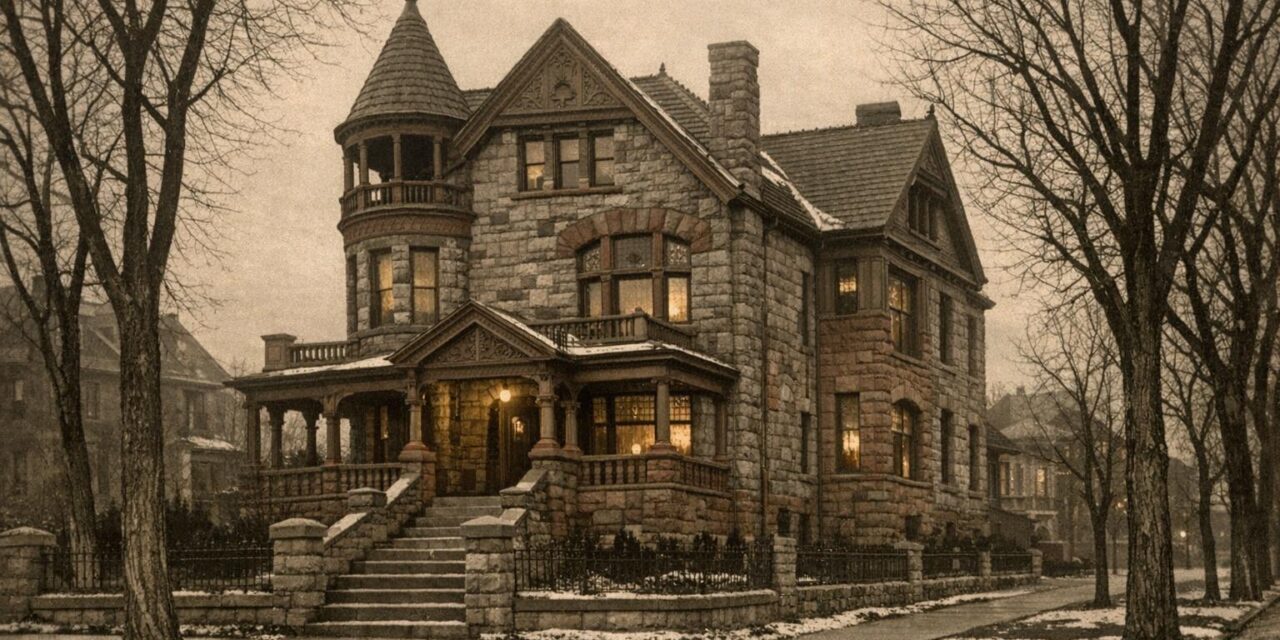
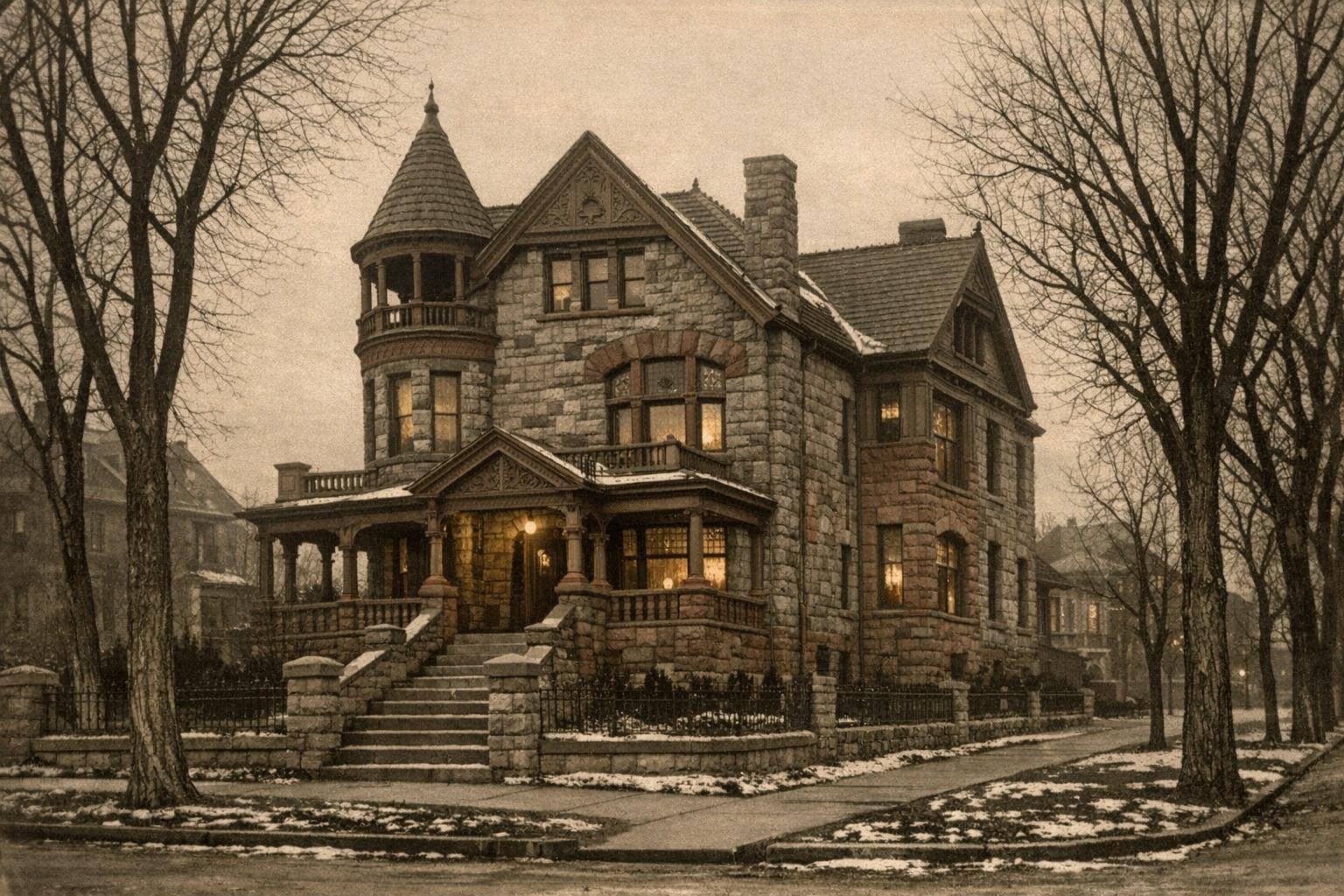
There is a smell in certain rooms of the Molly Brown House that has no source anyone can locate—pipe smoke, warm and unmistakable, curling through doorways where no pipe burns and no one has smoked indoors for decades. J.J. Brown was partial to pipes and cigars during his lifetime, and apparently the habit follows him still through the Queen Anne Victorian he and Margaret purchased in 1894, the gray rhyolite house on Pennsylvania Street in Denver’s Capitol Hill where the Browns installed their fortune and their ambitions.
Margaret herself—the woman who survived the Titanic’s sinking on April 15, 1912, organized Lifeboat 6 in the freezing darkness, and became “The Unsinkable Molly Brown” to every headline writer who followed—is most often reported in her own bedroom, where cold spots gather regardless of season and figures turn corners that lead to empty rooms. Her daughter Catherine Ellen is believed to raise and lower the blinds in her room on no schedule the living can predict. A ghost cat pads through the kitchen, felt against ankles, occasionally caught at the edge of photographs before the next frame shows only tile.
The house nearly came down in 1970 before preservationists formed Historic Denver, Inc. and pulled it back from demolition. The restoration crews who followed reported unease in the rooms long before the tourist season began. Whether it is grief—Molly’s mother Johanna died here, a young nephew from scarlet fever, the slow loss of a marriage—or simply the residue of a personality too large for any space to contain entirely, the house on Pennsylvania Street makes one thing clear: Molly Brown intended to be permanent, and she has been.
Story Source: mollybrown.org
Address: 1340 Pennsylvania St, Denver, CO 80203
Accessibility Rating: Open to All — Freely accessible to the public with no advance requirement. Includes hotels, restaurants, bars, and public historic sites where visitors may walk in without prior booking.
Google Map
What Others Have Experienced
Margaret ‘Molly’ Brown and her husband J.J. were both known to smoke, and both are believed to have remained in their former home after death — the most consistent paranormal report at the museum is the smell of pipe or cigar smoke in rooms where smoking has been strictly prohibited for decades. Staff describe the scent as appearing without pattern in different parts of the house, always in spaces where no tobacco has been present, and sometimes strong enough that visitors ask whether something is burning.
— from Ghost City Tours
Visitors and guides have reported glimpsing Molly Brown herself — described as a figure in period dress turning a corner ahead of them and then disappearing when they round it. Her daughter Catherine Ellen is believed to haunt her own former room, and witnesses have described the room’s blinds raising and lowering by themselves during tours when no one was near them and there was no breeze.
— from Beyond Haunted
A dark figure reported at the foot of the main staircase is among the more frequently documented visual anomalies at the house, appearing during guided evening tours and vanishing when observed directly. Thermal and night-vision cameras operated by paranormal teams have captured movement in that area that could not be attributed to tour group members or equipment, and the phenomenon has been documented across multiple unconnected investigations.
— from Haunted US
Sudden and significant temperature drops around the dining table are reported specifically during guided evening tours, with visitors noting the cold appearing and disappearing quickly in a way that does not match the building’s ventilation system. The museum director has spoken on record about the paranormal experiences at the house, confirming that they are taken seriously by staff rather than dismissed, and that unexplained events have been documented by people working in the building across many years.
— from FOX31 Denver
The Molly Brown House Museum holds the distinction of being one of the most haunted locations in Denver while simultaneously being one of its most beloved historic sites — a house where the personality of its most famous resident is said to be as present as ever. Visitors who join the guided tours describe leaving with an impression not of a house emptied by death but of one still occupied, the rooms carrying a quality of inhabitation that several accounts describe as warmly rather than menacingly strange.
— from Denver Terrors