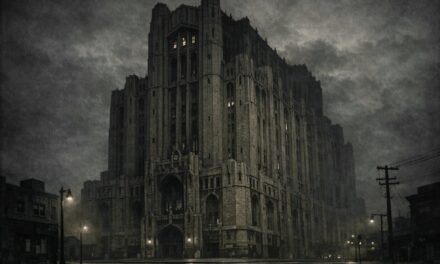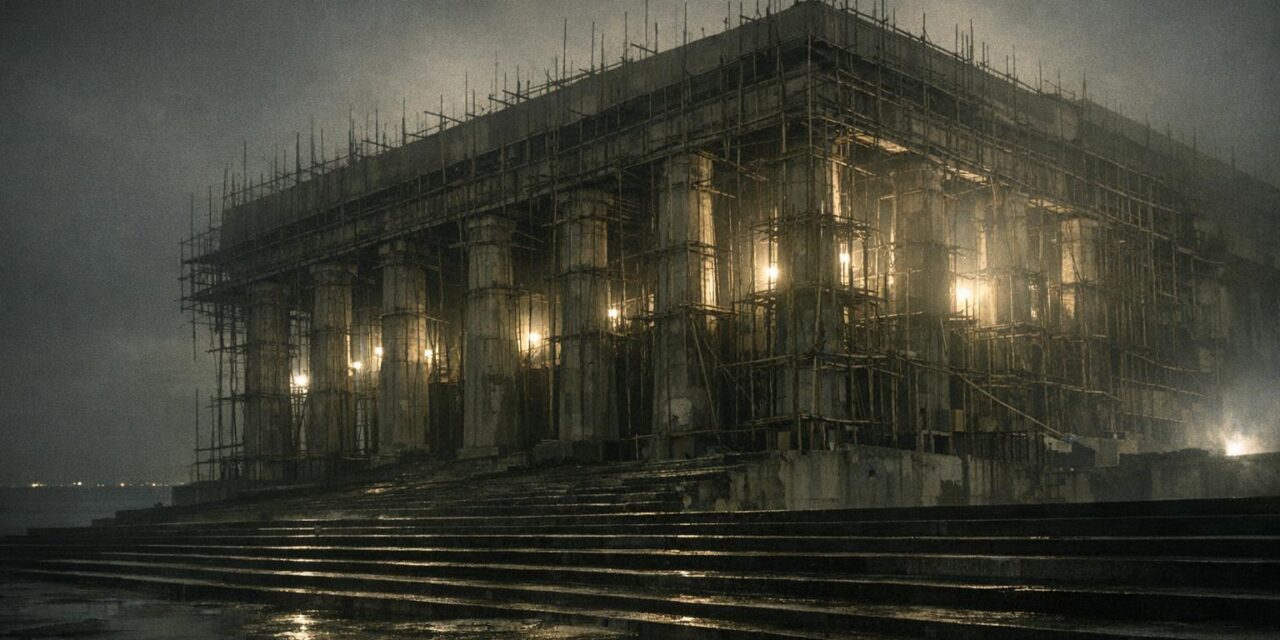
It rises on reclaimed land at the edge of Manila Bay, a pale, columned mass modeled on the Parthenon, its long steps facing the water. More than 900 piles hold it to the soft ground beneath. The Manila Film Center was built to announce a glittering new Manila to the world. In this city, it is remembered for the night shift that never finished.
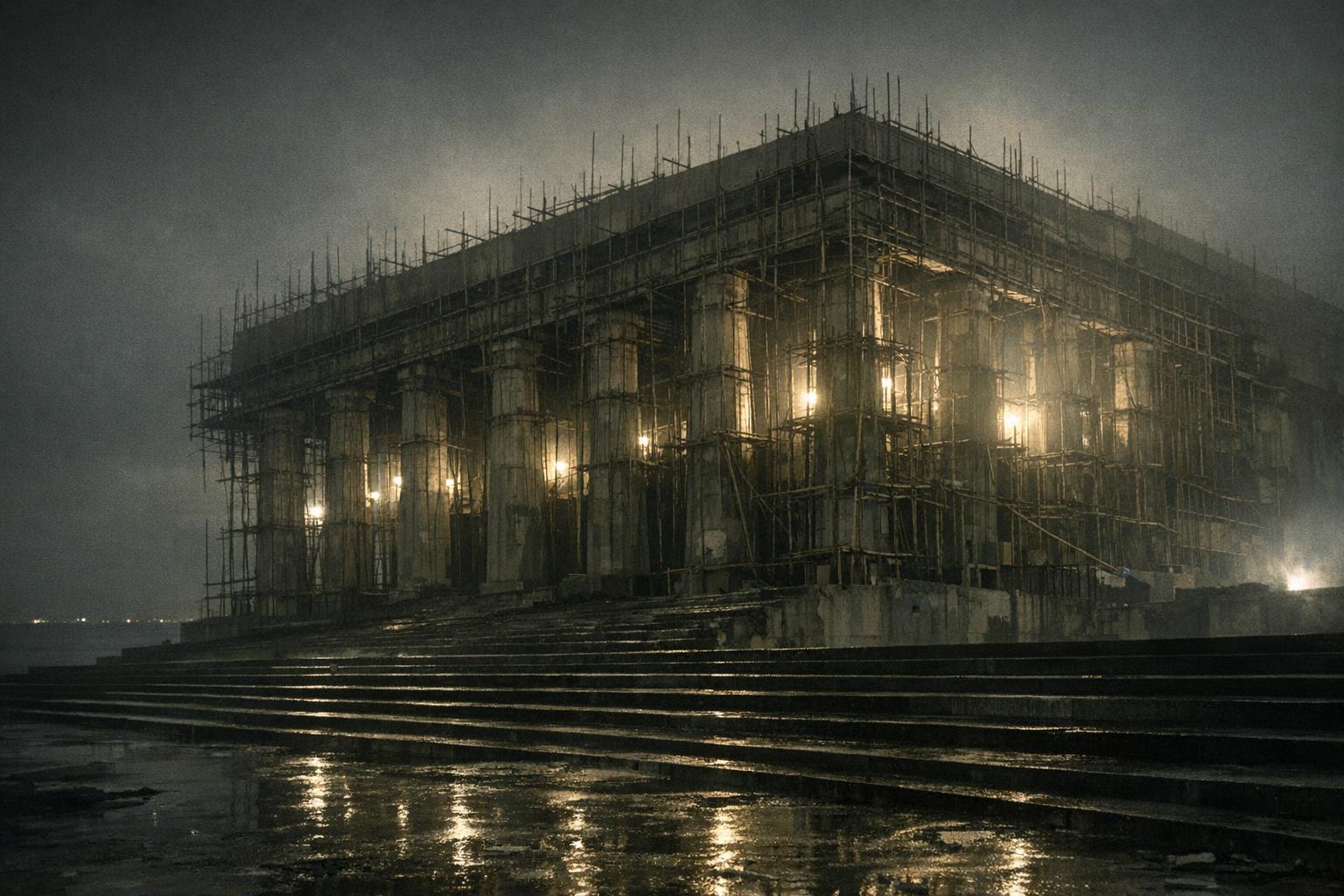
In 1981, Imelda Marcos wanted a home for her film festival, and she wanted it in months. Some 4,000 laborers worked around the clock, pouring quick-drying cement floor upon floor. At about 3 a.m. on November 17, the scaffolding gave way. Workers fell into concrete still hardening around them. Rescuers were kept out for nine hours. A witness later described a man half buried, kept awake by Christmas songs. Accounts put the dead at 168 or more; the architect reportedly said seven. Work did not stop. The festival opened on January 18, 1982, after exorcisms and a dawn sacrifice of pigs and chickens. Usherettes reported a strange smell backstage and cold air on their skin.
An earthquake emptied the building in 1990. A revue later filled it, then left. A fire burned through it in 2013. Today it stands closed to the public, owned by the government, its steps still facing the bay. Whether anything walks its halls, no one can prove. But the cement set around real people, and the building has never been allowed to forget them.
Story Source: www.esquiremag.ph
Address: Manila Film Center, Cultural Center of the Philippines Complex, Roxas Boulevard, Pasay, Metro Manila, Philippines
Accessibility Rating: No Public Access — Private property, active restricted site, or location no longer physically accessible to visitors.
Google Map
What Others Have Experienced
A performer with the show once staged in the building said goosebumps would sometimes rise on their skin while working there. They tied the feeling to stories about the construction deaths they had heard from their mother while growing up.
— from Philippine Daily Inquirer
An executive of the theater company that leased the building admitted to an occasional sense of eeriness in its halls. A psychic who visited warned him that the place drew restless spirits, and he said staff sometimes sensed presences they could not explain.
— from Philippine Daily Inquirer
A former festival publicist who was on site after the 1981 collapse watched workers being carried out on stretchers, some still encased in cement. She recalled one half-buried man being kept conscious by having him sing Christmas songs while rescuers worked to free him.
— from The Ghost in My Machine